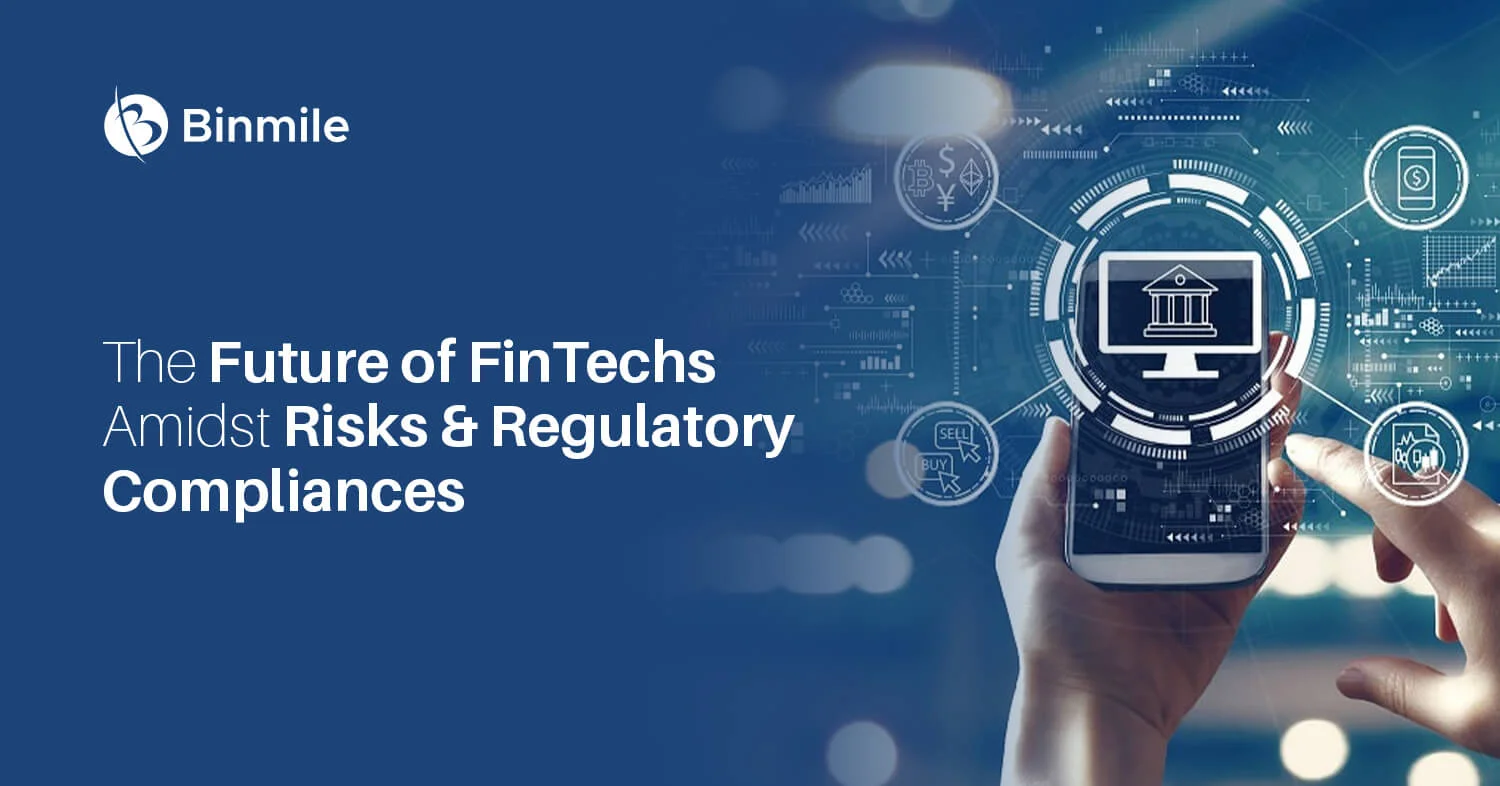
Though the future of FinTech shows promising growth, it also brings increased exposure to regulatory compliance, requirements, sanctions, and legal formalities. Meaning that the players in the FinTech landscape have to grapple with regulatory and industry developments, subjecting them to more scrutiny and a new set of rules. Let’s understand these compliances and what they mean for the FinTech industry.
What Does Regulatory Compliance Stand for in FinTech?
FinTech compliance means adherence to regulatory laws that dictate or govern new business models and financial technologies. These laws are a set of guidelines, rules, restrictions, and regulations requiring mandatory compliance for FinTech companies. In practice, these laws differ from one company to another. It may also appear as wading through a labyrinth of legal formalities and protocols for a FinTech startup.
These legal guidelines protect the interests of consumers and investors’ capital. They provide security to companies, clients, and customers while helping businesses avoid costly or potentially devastating penalties for non-compliance with regulatory standards. These compliances may seem pesky, but they are in practice to discipline the wrongdoers.
Therefore, every FinTech startup is expected to have a better understanding of financial laws and their legal implications set out by their local and international government regulators. You can either hire a compliance expert or a team at your side to get to the bottom of the regulatory guidelines to avoid risks in the future.
Key Risks FinTech Regulations Must Address
1. Data Breach
Regulatory bodies penalize FinTech companies that fail to comply with data protection requirements. These violations may involve customers’ account numbers and security information. They may also include names, Social Security numbers, contact details, and other personal data.
The penalty consists of a defaulter’s two to three percent of revenue, as per the law. The motive behind the penalization is to make top FinTech companies more responsible and vigilant about maintaining the data safety of their customers, clients, stakeholders, etc.
2. Cyberattacks
The regulatory authorities concern themselves with the vulnerability of both FinTech and traditional banks to cyberattacks. Therefore, they have relevant laws in place for these financial companies to protect the interests of customers and their sensitive data from unauthorized access. Remember that the nature of cyberattacks also varies. Some target the data while some aim to completely paralyze the whole system until a ransom is paid.
3. Money Laundering
According to the report, around $800 billion to $2 trillion is laundered every year. The report indicates different stages of money laundering adopted by criminals, such as –
- Placement (i.e., transacting money from direct criminal association).
- Layering (i.e., concealing the trail to thwart pursuit)
- Integration (i.e., seemingly legitimate sources but making the money available to the criminal).
It is believed that companies and government agencies suffer more than $2 trillion in annual losses due to money laundering. Regulatory bodies in place ensure synergizing data and operations to fight against money laundering.
A Review of Fintech Regulatory Compliances
With regulatory compliance for financial companies getting more stringent, many experts believe that law enforcement agencies will come up with more legal terminology and laws to ensure that compliance is maintained. Here is our brief review of these regulations covering four different regions, including the US, UK, Australia, and Western Europe.
-
Fintech Regulations in the United States
The United States has the largest FinTech ecosystem and one of the most extensive regulatory frameworks for FinTech startups. The Consumer Financial Protection Bureau (CFPB) enforces consumer protection laws in the financial sector and safeguards consumers across the financial marketplace.
Here is a brief rundown on each of them and other regulatory bodies –
| Regulators | Responsibilities |
| FinCEN | It combats money laundering, protects the financial system from illicit use, and maintains financial transaction data to prevent financial crime in the future. |
| OCC | It is an independent bureau of the U.S. Department of the Treasury that regulates and monitors banks to ensure that they work safely and soundly. |
| CFTC | It maintains a robust enforcement program, such as making rules and taking action against fraud, market manipulation, disruptive trading, and violations of regulatory compliance. |
| FDIC | The Federal Deposit Insurance Corporation is authorized to maintain stability and public confidence in the financial systems of the United States. |
| SEC | The Securities and Exchange Commission monitors securities exchanges, investment advisors, securities brokers, dealers, etc., to encourage fair dealing, prevention of fraud, and disclosure of key market information. |
| FTC | The Federal Trade Commission is authorized to protect against unfair, deceptive, and fraudulent business activities. For this, it conducts investigations, collects reports from consumers, takes legal action against lawbreakers, and makes regulations to maintain a fair marketplace. |
Mind that breaking these federal regulations results in serious penalties for the perpetrators. For instance, regulators can penalize a company up to $775,000 for failing to report stock fraud. This penalty applies to fraud occurring on its online trading platform. The laws discussed above are not an exhaustive list. You can discover many more regulations through extensive research.
-
FinTech Regulations in the UK
The UK policymakers do not impose stringent regulations on FinTech companies. The UK is the most FinTech-friendly destination, having no specific legislation to safeguard the FinTech industry. However, FinTech businesses and banking application developers must comply with applicable laws and regulations.
For instance, the Prudential Regulation Authority (PRA) or the Financial Conduct Authority (FCA) regulates the startups that come under the purview of the Financial Services and Markets Act 2000 (FSMA). The goal of this regulatory body (FSMA) is to prohibit unauthorized people from conducting regulated activity in the UK.
A brief review of FinTech regulators in the UK
- Financial Conduct Authority: It is a financial regulatory body, but it works independently of the UK government. It regulates financial services firms, FinTech companies, and financial markets while safeguarding consumers, enhancing market integrity, and promoting competition in consumers’ best interests.
- Prudential Regulation Authority: This is a financial services regulatory body that regulates and monitors banks, credit unions, building societies, insurers, and major investment firms. The regulatory body requires financial firms to maintain adequate capital and implement sufficient risk controls. It also monitors insurers to ensure they protect policyholders effectively.
- Payment Systems Regulator: It works with the vision of ensuring payment systems are safe, accessible, and value for money. It aims at revolutionizing the payments industry, injecting innovation where it is required the most, and safeguarding the interests of people and businesses using the payment systems.
This was a brief review of FinTech regulators in the UK.
-
FinTech Regulations in Western Europe
The FinTech Regulations in Western Europe are as follows:
- The General Data Protection Regulation: Considered the strongest privacy and security law in the world, it governs how companies or organizations should process and transfer the personal data of people in the EU. The regulation covers the fundamental rights of people in the digital age, methods to ensure GDPR fintech compliance, sanctions on violators of the rules, etc.
- European Anti-Money Laundering Directives: The AMLD intends to accentuate the exigency of preventive steps against money laundering by setting up a consistent regulatory environment across the EU.
- The New Payment Service Directive: The PSD2 works with objectives, such as ensuring a more integrated and efficient European payments market, and safe and secure payments, protection for consumers and businesses.
This was a brief review of FinTech regulators in Western Europe.
-
FinTech Regulation in Australia
Keep in mind that FinTech companies offering financial services in Australia must obtain a financial services license or secure a direct exemption from this requirement. The Corporations Act of Australia authorizes this regulation and governs company formation, business operations, officers’ duties, takeovers, and fundraising. According to the law, you as a FinTech startup will come under its purview if you create a financial product that offers financial advice, operate registered schemes, and provide custodial or depository services.
A brief review of FinTech regulators in Australia:
- The Australian Transaction Reports and Analysis Centre: It detects, deters, and responds to the abuse of the financial system to protect the community from serious and organized crime through strong regulation and enhanced intelligence capabilities.
- The Australian Securities and Investments Commission: It is an independent Australian Government body with various roles, including maintaining and improving the performance of the financial systems, administering the law effectively, and making information about companies available to the public.
- The Australian Prudential Regulation Authority: The APRA employs a wide spectrum of tools to monitor FinTech businesses to ensure the establishment of a broader financial system. According to its rules, regulated financial institutions should comply with requirements such as financial soundness, governance, and risk management.
What is the Future of FinTech Regulations?
The future of FinTech startups is highly promising despite stringent regulations and legal challenges. In the United States, the Federal Reserve introduced FedNow to support faster payments for FinTech startups. FinTech companies should implement robust risk management strategies. They should do so whether they operate as chartered institutions or follow their existing business model.
FinTech startups undoubtedly face challenges related to regulatory compliance and mandatory legal requirements. Once they understand compliance requirements, they can strengthen their operations. By ensuring data security and serving customers effectively, they can earn greater public trust. The lingering fear of compliance is on those financial companies that default or show contumacy to the laws through violations. Otherwise, they are bound to drive great revenue growth in the market and stay competitive in their niche.
Conclusion
When it comes to determining the future of FinTech startups, we can safely say that it is promising. However, this does not mean the future will become easier for them. They will likely face more rigorous regulations and legal challenges in the years ahead.
At first glance, these financial laws may seem daunting and difficult to understand and comply with. However, once you understand them, you can conduct business with confidence and ease. The existence of regulatory compliance makes FinTech institutions more accountable. It encourages them to serve their clients responsibly. It also helps them protect customers’ interests and safeguard sensitive data.
Instead of viewing regulations negatively, financial institutions should create value from them. They should transform regulations into business opportunities. They should learn to lead, navigate, and innovate in a regulated environment. Effective regulatory and operational risk management can improve overall business performance.
Lastly, for FinTech firms, choosing a FinTech app development company would mean reaping the benefits in terms of automated efficiency in their core business functions. Binmile delivers a broad spectrum of custom software solutions that streamline your internal processes and help your business stay ahead of the curve.
Frequently Asked Questions
FinTech Regulations are legal and compliance frameworks that govern financial technology services. They protect consumers, strengthen data security, prevent financial crimes, and help businesses operate within industry standards.
Depending on their market, FinTech companies may need to comply with KYC, AML, GDPR, PCI DSS, PSD2, Open Banking standards, data privacy laws, and industry-specific financial regulations.
Businesses can leverage AI, automation, cloud platforms, identity verification, fraud detection, real-time monitoring, and compliance management systems to simplify regulatory processes and reduce operational risks.
Organizations often struggle with evolving regulatory requirements, cross-border compliance, cybersecurity threats, legacy systems, integration complexities, and increasing customer expectations for secure digital services.
An experienced development partner builds secure, scalable, and compliance-ready FinTech solutions with robust security, seamless integrations, regulatory expertise, and future-ready architecture that supports long-term business growth.