Machines typically provide indications that they may fail prior to actually failing; however, traditional maintenance systems are not timely enough to detect when these machine indications occur. This is why more companies are investing in digital twin technologies to create smarter and more proactive maintenance systems. According to Fortune Business Insights, the global predictive maintenance market was valued at USD 13.65 billion in 2025 and is projected to reach USD 97.37 billion by 2034, growing at a CAGR of 24.3% during the forecast period.
Digital twin technology in predictive maintenance enables companies to real-time monitor assets, predict failures, optimize maintenance schedules, and increase operational performance. In this blog, we will see how digital twins work, key advantages, industry use cases, challenges of implementation, and future business opportunities.
What is Digital Twin Technology?
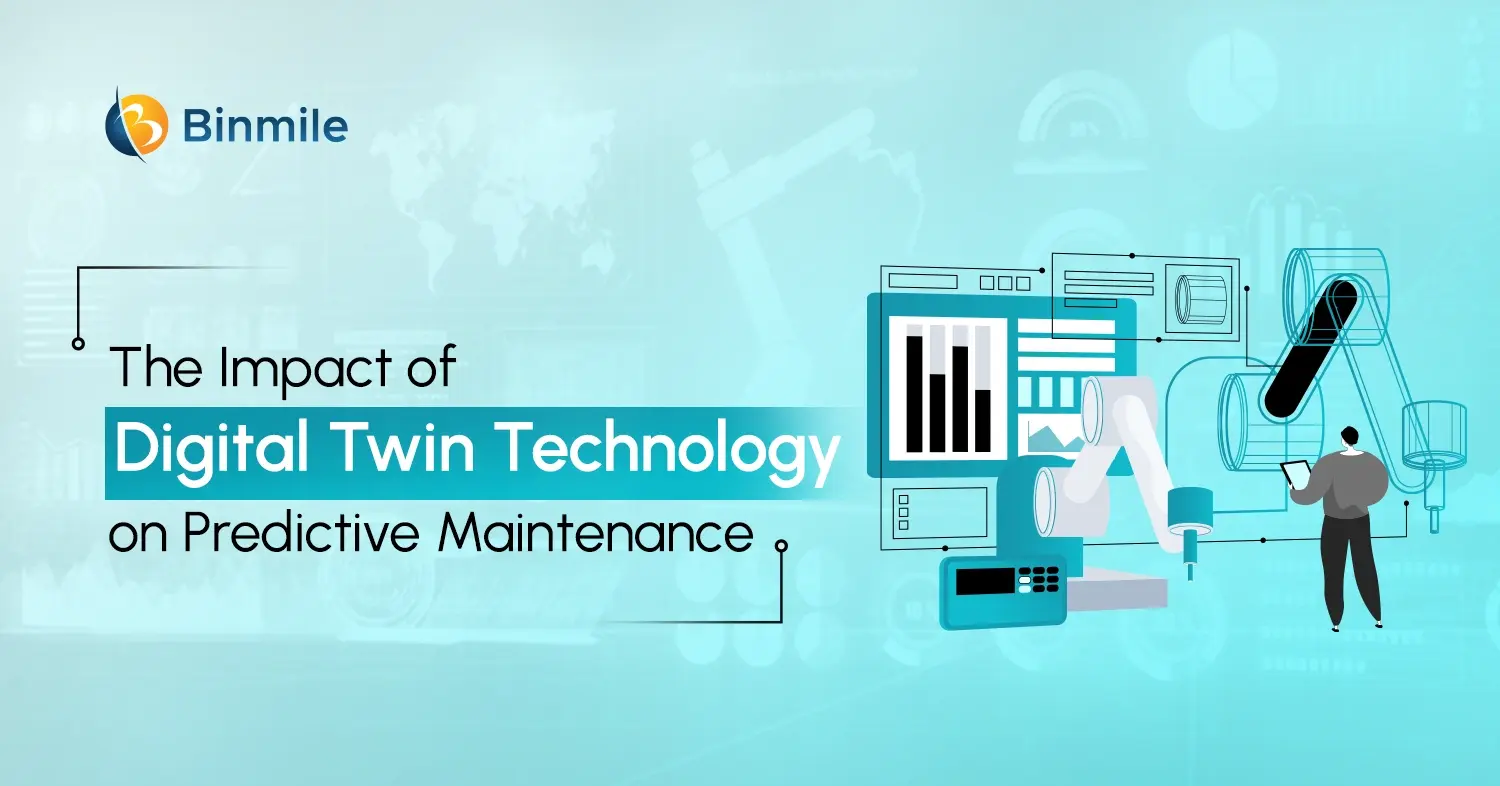
Digital twin technology is a virtual representation of a physical asset, machine, process, or environment that continuously receives real-time operational data from connected systems. This virtual model behaves like the actual system and helps organizations monitor performance, analyze operational behavior, simulate outcomes, and identify issues before they occur.
In contrast to the traditional monitoring systems, digital twin technology consists of continuously evolving environments by means of utilizing live operational data. Some modern digital twin technologies utilize machine learning, predictive analytics, and big data, as well as AI, to create intelligent ecosystems providing predictive maintenance capabilities and optimization.
What is Digital Twin for Predictive Maintenance?
Digital Twin for Predictive Maintenance refers to the use of virtual replicas of machines and operational systems to predict equipment failures before they occur. Instead of relying only on fixed maintenance schedules, organizations use digital twins to monitor actual equipment conditions in real time.
Sensors that are mounted on machinery, equipment, and the operating environment provide continual operational data for various parameters such as temperature, pressure, vibration, energy consumption, speed, how long the equipment has been in operation, and wear-and-tear/and performance patterns. Through the use of AI and predictive analytics, the operational data collected through the sensors can be analyzed to identify outliers and to anticipate possible failures of the equipment.
For example, if a turbine motor begins operating outside its normal vibration range, the digital twin system can detect the abnormal behavior early and recommend maintenance before operational downtime occurs. This shift from reactive repairs to predictive intelligence is transforming how enterprises manage operations.
How Digital Twin Technology Works in Predictive Maintenance
The implementation of predictive maintenance using digital twins involves multiple connected technologies working together.
1. IoT Sensor Integration
Assets and machines are installed with Internet of Things solutions that capture live data related to heat, pressure, vibration, runtime, equipment stress, and output efficiency. This data allows for continuous visibility into how well an asset is functioning.
2. Creation of the Digital Twin Environment
The data collected can be used to create a digital representation of the physical system (digital twin). The digital twin model automatically receives continuous updates from the IoT sensors that provide real-time operational data.
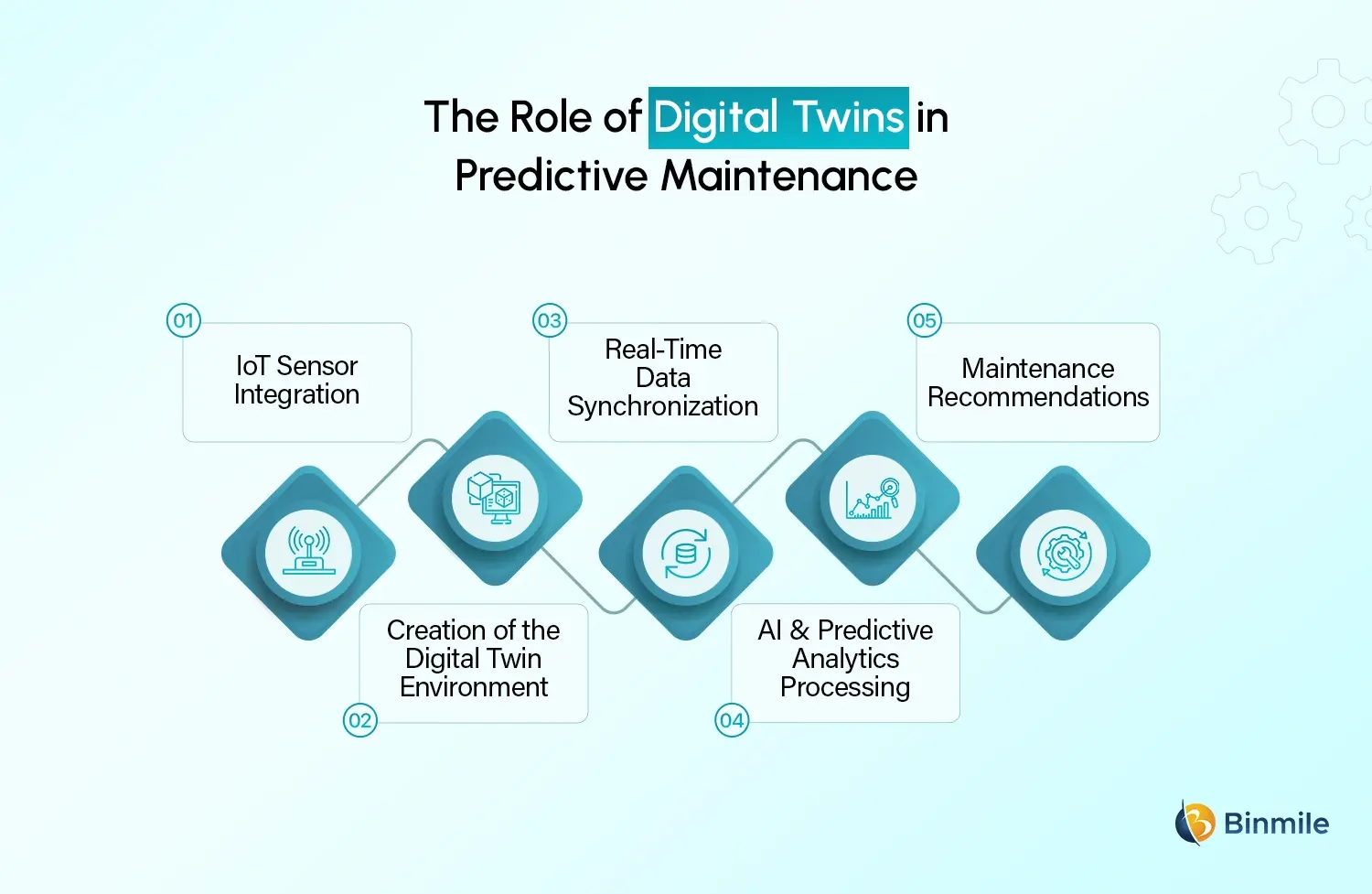
3. Real-Time Data Synchronization
The physical asset and the digital twin change in real-time so that companies can remotely view current operating conditions of their assets.
4. AI and Predictive Analytics Processing
Using AI algorithms, historical and real-time data from the asset are processed so the asset can be monitored for abnormal behaviour, predicted failure probabilities, detected anomalies, predicted future maintenance, and optimized performance.
5. Maintenance Recommendations
The predictive maintenance system can automatically provide recommendations for maintenance based on anticipated behaviour of the asset using a data-driven framework that integrates with the digital twin software to predict when maintenance is needed. The predictive maintenance framework allows companies to reduce downtime while increasing maintenance efficiency.
Why Traditional Maintenance Approaches Are No Longer Enough
Many enterprises still rely on preventive maintenance schedules where equipment is serviced after fixed intervals. While this approach is better than reactive maintenance, it still creates inefficiencies.
Traditional maintenance models often lead to:
| Traditional Maintenance Challenge | Business Impact |
|---|---|
| Unplanned equipment failure | Operational downtime |
| Unnecessary routine servicing | Increased maintenance costs |
| Limited asset visibility | Delayed issue detection |
| Manual monitoring processes | Slower response times |
| Lack of predictive insights | Reduced operational efficiency |
Modern enterprises need systems capable of understanding equipment behavior continuously rather than periodically.
This is one of the biggest reasons why digital twin in predictive maintenance is becoming a core investment area for organizations pursuing Digital Transformation in Business.
Benefits of Digital Twin Technology in Predictive Maintenance
The benefits of digital twin technology extend far beyond operational monitoring. Enterprises are using digital twins to improve decision-making, increase productivity, and optimize long-term business performance.
-
Reduced Equipment Downtime
The greatest operational expense for an enterprise is unexpected downtime. Digital Twin technology provides constant monitoring of the condition of an organization’s equipment and identifies potential failure points prior to their occurrence. Consequently, maintenance personnel have an opportunity to take action earlier to prevent major disruption to operations.
-
Lower Maintenance Costs
Many companies have to pay for unnecessary servicing and replacement of parts because of their old maintenance strategies. Digital twin predictive maintenance eliminates waste by only performing maintenance when necessary.
-
Improved Asset Performance
Constant monitoring helps companies improve machine performance while extending the life of their equipment. This results in greater operational efficiency and utilization of assets.
-
Faster Decision-Making
Having a centralized view of your organization’s operations through the use of Digital Twins can allow leadership to make quicker, more knowledgeable decisions regarding preventative maintenance.
-
Better Workplace Safety
Failure of equipment can cause a serious risk to staff in the workplace. By using predictive maintenance, organizations can identify unsafe working conditions in advance.
-
Increased Operational Efficiency
Organizations can become more operationally efficient through improved planning of maintenance activities, workforce allocation, and planning of continuity of production through the use of real-time operational insights.
The benefits of predictive maintenance become even more valuable in industries where equipment reliability directly impacts business continuity.
Want to improve operational visibility and reduce maintenance costs using AI-powered predictive maintenance strategies?
Predictive Maintenance vs Preventive Maintenance
Many enterprise leaders compare predictive maintenance with preventive maintenance before investing in digital twin systems.
| Factor | Preventive Maintenance | Predictive Maintenance |
|---|---|---|
| Maintenance Timing | Fixed schedules | Based on real-time conditions |
| Downtime Reduction | Moderate | High |
| Operational Visibility | Limited | Continuous |
| Cost Efficiency | Medium | Higher long-term savings |
| Failure Prediction | Limited | Advanced AI forecasting |
| Resource Optimization | Moderate | Highly optimized |
This comparison clearly shows why enterprises are shifting toward Digital Twins and Predictive Maintenance strategies.
Digital Twin Use Cases Across Industries
Here are the use cases of digital twins across different industries.
-
Manufacturing
In general terms, a digital twin in manufacturing will enable predictive maintenance enterprises to monitor production equipment, reduce downtime, optimize energy utilization, improve quality control, and enhance factory output efficiency in all industrial operations.
-
Healthcare
Digital twins technology in healthcare will help hospitals monitor their medical equipment, forecast the need for services, improve operational efficiency, and minimize disruptions in patient care and healthcare infrastructures.
-
Agriculture
In agriculture, digital twin technology in agriculture allows businesses to check equipment, run irrigation optimally, analyze crop conditions, and better manage other resources toward improved yield and sustainability.
-
Energy and Utilities
Digital Twin in Energy and Utilities facilitates predictive maintenance of power plants, turbines, grids, and energy infrastructure. The technology improves operational reliability and reduces the scope of large-scale disruptions.
-
Aerospace
Digital Twin in Aerospace technologies helps businesses monitor aircraft systems, predict maintenance needs, reduce downtimes, improve fuel efficiency, and increase safety standards for operations.
-
Retail and Supply Chain Operations
Digital twins in retail and Digital Twins Technology in Supply Chain support enterprises in optimizing warehouse operations, better inventory visibility, mitigating logistics inefficiencies, and enhancing supply chain resilience.
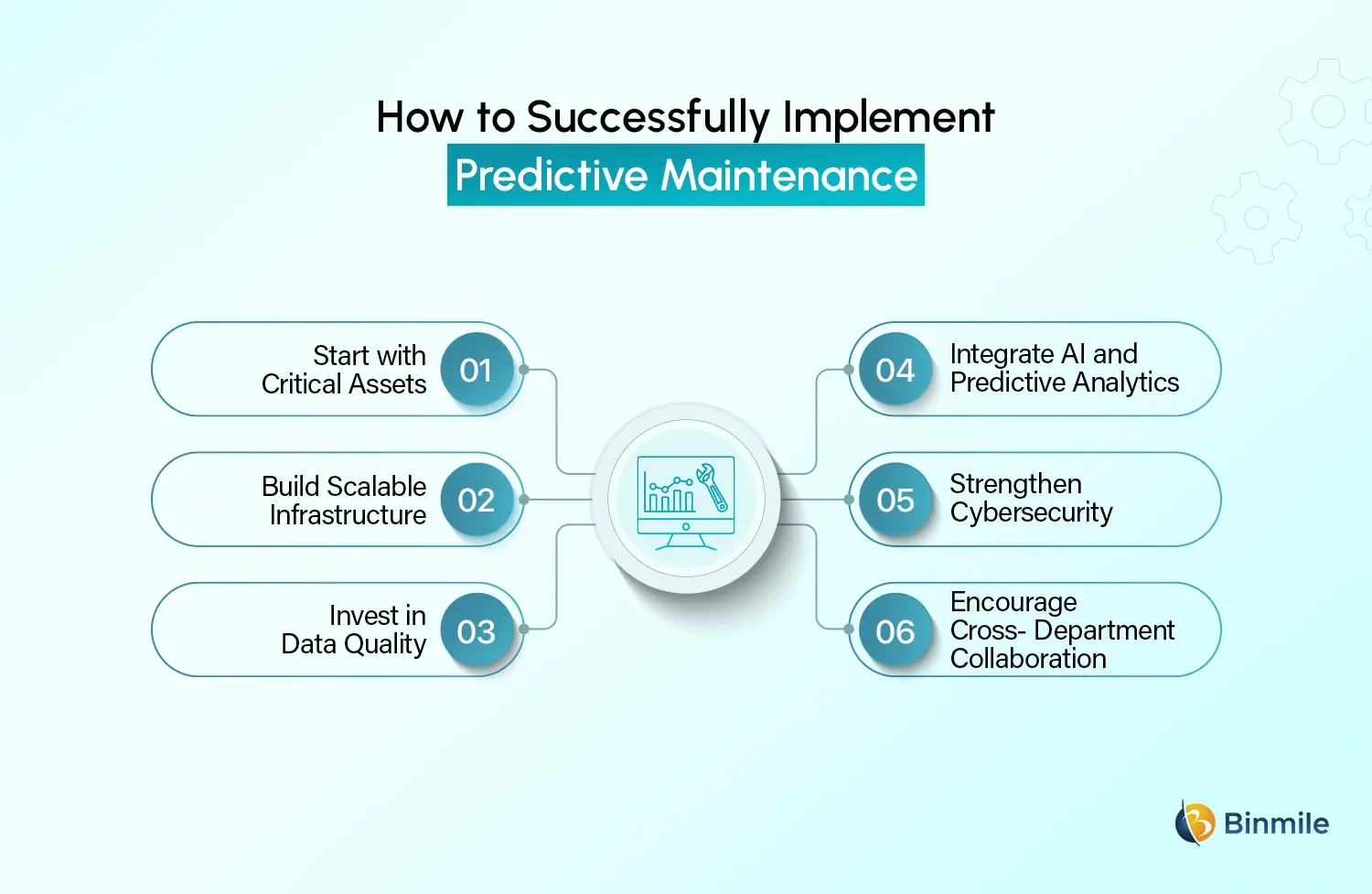
Best Practices for Predictive Maintenance Implementation
Successful implementation requires a clear operational strategy rather than just technology adoption.
-
Start with Critical Assets
Organizations should prioritize their investment in equipment based on which ones have the most operational importance or the highest maintenance costs to get the best return on investment and make the greatest operational impact.
-
Build Scalable Infrastructure
Companies should be sure their digital twin platforms can be implemented at scale across multiple facilities and operational environments with no degradation of performance.
-
Invest in Data Quality
Successful predictive maintenance solutions rely heavily on the accuracy and reliability of the operational data collected from connected systems and IoT infrastructure.
-
Integrate AI and Predictive Analytics
The combination of digital twins and Predictive Analytics Services offers an increase in forecasting accuracy, operational intelligence, and maintenance decision-making.
-
Strengthen Cybersecurity
As connected operational systems establish new points of vulnerability and therefore risk to organizations, strong security frameworks are required for the enterprise to deploy these solutions successfully.
-
Encourage Cross-Department Collaboration
Maintenance organizations, IT departments, operational leaders, and executives must work collaboratively during the planning process in order to ensure the successful deployment of predictive maintenance solutions.
Following these best practices for Predictive Maintenance improves long-term operational success and ROI.
Challenges Enterprises Face in Digital Twin Implementation
Along with advantages, deploying Digital Twin Technology has operational and technical challenges. Many organizations continue to face challenges in integrating legacy systems with modern Digital Twin platforms. Organizations also need scalable cloud infrastructure and advanced analytics capabilities to handle and manage the data they create from their operations.
Another challenge is the need for significant initial capital investment for organizations intending to deploy sensors, artificial intelligence as a service systems, and connected operational infrastructures. Businesses will also require a skilled workforce to possess the skill sets needed, including the use of AI, IoT, predictive analytics, and cloud computing.
While connected operational systems create an increased risk from data vulnerabilities and cyber threats, cybersecurity concerns continue to grow. Enterprises that take steps early to address the challenges cited above are more likely to be successful with long-term Digital Twin Technology adoption.
Future of Digital Twin Technology
The development of digital twin technologies and their applications will continue to be impacted by the advancement of AI and emerging technologies such as automation, Machine Learning (ML), and edge computing. As more and more companies are transitioning to AI-based autonomous maintenance, hyper-realistic operational simulations, comprehensive digital twin forecasting, real-time operational optimization, smart infrastructure automation, and the establishment of connected enterprise ecosystems, the increasing adoption of AI-based predictive maintenance solutions will change the way organizations manage their operations across all sectors.
As organizations pursue their long-term strategies for transitioning digitally, digital twins will play a pivotal role in transforming how intelligent businesses operate.
How Digital Twin Development Services Accelerate Enterprise Transformation
Building enterprise-grade predictive maintenance systems requires a high degree of expertise in integrating AI, establishing cloud infrastructures, enabling IoT connectivity, and using operational analytics. Therefore, many organizations rely on digital twin development services for the following services in order to accelerate deployment and reduce the complexity of implementing digital twins.
Organizations can count on digital twin development services to help them accelerate their deployment schedules by creating scalable digital twin platforms, integrating IoT/AI systems, modernizing operational infrastructure, developing predictive maintenance models, and enhancing operational visibility and operational excellence across their entire enterprise.
Looking to reduce downtime, improve asset reliability, and modernize enterprise maintenance operations with intelligent digital twin solutions?
Supporting Enterprise Predictive Maintenance with Intelligent Digital Twin Solutions
Modern enterprises need more than traditional monitoring systems to remain competitive. They require intelligent operational ecosystems capable of delivering real-time insights, predictive intelligence, and long-term scalability.
Binmile helps businesses develop customized Digital Twin Technology solutions that align with enterprise operational goals and predictive maintenance strategies. By combining expertise in AI in Manufacturing, Internet of Things Solutions, Custom Software Development Services, Artificial Intelligence as a Service, and Predictive Analytics Services, organizations can build scalable systems that improve equipment reliability, reduce operational downtime, and strengthen operational efficiency.
For enterprises planning long-term digital transformation initiatives, adopting digital twin technology in predictive maintenance can create measurable improvements in asset performance, operational visibility, and business continuity across manufacturing, healthcare, energy, aerospace, retail, and supply chain ecosystems.
Frequently Asked Questions
Digital Twin for Predictive Maintenance uses virtual replicas of physical assets to monitor equipment performance in real time, identify operational anomalies, and predict failures before they occur. This helps businesses reduce downtime and improve maintenance efficiency.
Enterprises are investing in digital twin technology to improve operational visibility, reduce maintenance costs, optimize equipment performance, and support data-driven decision-making. It also helps businesses strengthen operational efficiency and reduce unexpected disruptions.
Digital twins continuously monitor machine conditions through IoT sensors and AI analytics. The system identifies early warning signs of equipment failure and recommends preventive maintenance before operational breakdowns occur.
Yes, digital twin technology improves asset performance by analyzing operational behavior, identifying inefficiencies, and optimizing maintenance schedules. This helps extend equipment lifespan while improving operational productivity and reliability.
Yes, scalable cloud-based digital twin platforms make predictive maintenance solutions more accessible for small and mid-sized businesses. Organizations can implement digital twins gradually based on operational priorities and budget requirements.