Financial Technology applications are innovative tech solutions that deliver banking services and accessibility without requiring a visit to a banking firm or intermediaries. With extraordinary growth in recent years, the fintech market is predicted to continue growing rapidly, and so is the complexity of handling an organization’s security. A recent survey forecasted ransomware attacks to be poised to cost US$ 265 billion by 2031, from US$ 20 billion in 2021.
This issue raised the need for a proper foundation, that is, cybersecurity in fintech. The use of cybersecurity best practices is crucial for fintech firms as it helps them to safeguard their sensitive financial and personal data. This data protection technique ensures that the customer’s trust is maintained. It also fosters a secure environment for all the necessary transactions. This guide will help you understand the common cybersecurity challenges, best practices, and top industry-specific tools, helping your fintech firm stay risk-free.
Why is Cybersecurity in Fintech so Important?
Fintech firms are adopting emerging financial industry trends, including the use of open banking APIs, third-party integrations, and digital-first banking solutions, etc. These solutions are efficient and innovative and enable faster transactions without the need for bank official intermediaries. But if not secured properly, these solutions can lead to cybersecurity attacks.
The fintech platforms that manage sensitive data like identities, banking credentials, and transaction details are often at risk of phishing and data breach incidents. Due to handling personal and financial data, fintech security has become an essential foundation, not just a regular feature. It is like the backbone of your organization’s security that protects users’ data and maintains trust.
Common Cybersecurity Challenges in the Fintech Industry
The BFSI sector uses fintech models to streamline the delivery process of financial services. However, while handling sensitive financial data, there are numerous cybersecurity challenges you need to keep in mind. Complete following of the challenges helps in prioritizing your users’ trust and managing the data efficiently. Below are some of the common challenges for fintech firms.
-
Cyber Threats and Data Breaches
Problem: Cyberattacks are intensified so much that they now push the boundaries of attacking sensitive information or data. From advanced cybersecurity phishing campaigns to ransomware and DDoS attacks, fintech companies face these data breaches. Additionally, these attacks are not limited to basic scams, but some cybercriminals demand millions of dollars for ransom payments. If their demands are not fulfilled, they try to threaten the firms that they will change the data from the crucial transactions.
Solution: To mitigate these risks, financial companies have to rely on enhanced security measures like monitoring new updates, security audits, and awareness programs on cyberattacks.
-
Involvement of APIs and Third-Party Apps
Problem: APIs are the strongest components of fintech development, enabling the creation of efficient and innovative solutions by seamlessly interconnecting necessary data. However, financial companies are at risk when an insecure API is compromised and grants access to malicious attacks. This results in complete reputational damage and major financial losses. Leveraging the APIs and integration of third-party services can be a vulnerability instead of being an asset if it lacks optimal security measures.
Solution: For secure and seamless integration of APIs and third-party apps, firms should implement strong API protection practices and rework the user-authentication functionalities.
-
Regulatory Compliance
Problem: Fintech companies need to comply with legal and regulatory requirements. These often include complying with frameworks like GDPR (General Data Protection Regulation), the Personal Data Protection Act, and RBI’s digital guidelines. These regulatory guidelines cover the most important aspects, such as user authentication, secure transactions, and other data protection measures. With these requirements changing constantly, firms must adapt rapidly to reduce unforeseen risks. Non-compliance with these regulations results in reputation damage and heavy fines.
Solution: With the help of dedicated compliance teams, firms can constantly seek new updates to their industry-specific regulations. This can help them train their staff about the new attacks and enforce policies effectively.
Best Practices for Cybersecurity in Fintech: Top 5 Picks
The fintech industry must implement some proactive cybersecurity solutions to protect sensitive data at every level, from concept to the implementation phase. By leveraging cybersecurity measures, fintech firms can adopt the best practices, entrusting and gaining the customer’s trust and funds. So, let’s explore the best practices for the prevention of fintech security.
1. Cybersecurity Audits and Testing
Conducting regular audits and a rigorous testing phase helps identify vulnerabilities before someone attacks and exploits the sensitive data. Cybersecurity audits refer to the process of assessing the organization’s security policies in the existing environment. The testing phase includes penetration testing, which helps in detecting any abnormalities. After identifying the issues, it allows the cybersecurity engineer to fix them instantly.
Performing these measures and keeping the software up-to-date helps identify issues before they grow into a full-scale data breach.

2. Multi-factor Authentication
To ensure a robust architecture and a seamless user experience, enabling MFA (Multi-factor Authentication) is critical for defense against unauthorized access or attacks. MFA includes parameters such as fingerprint recognition, biometric authentication, passwords, or tokens that fintech firms should invest in. With the correct implementation, fintech companies can boost their efficiency by working with innovative trends without any fear of security attacks.
Additionally, firms can increase the credibility of the software by consistently using MFA across mobile, web, and APIs. This strengthens security in a broader spectrum, reaching every user’s touchpoint area.
3. AI/ML in Cybersecurity
With AI’s powerful compatibility with cybersecurity tools, the fintech industry can redefine its approach, handling protection systems with much more safety. AI can analyze the specific malicious entries, spot irregularities in transactions, and block access to ensure security against future attacks.
The main confusion that centers around AI is that it replaces human expertise; no, it does not. AI strengthens the organization’s system by providing accuracy and speed, but to fix the issues, penetration testing is done by experienced testers.
4. Cloud Security Strategy
Many fintech companies maximize the use of cloud infrastructure for building efficient and competitive solutions. However, if the cloud is not secure, it could lead to emerging threats and a risk of financial losses. Securing the cloud means encompassing continuous real-time monitoring, data encryption, and regular updates for secure configurations.
Additionally, implementing a strong cloud security approach that applies an automated threat detection system will help reduce the likelihood of data breaches.
5. Incident Response Plan
After all these measures’ implementation, there is still a high probability that your system will fail when confronted by advanced security breaches. For this reason, a detailed incident response plan is needed with a specialized team and plan. The response should be smooth and strategic enough to minimize the fallout.
Measures such as isolation of the affected system, finding the scope for it, and clear communication with stakeholders reduce the financial and reputational damage.
Get a tailored risk management strategy that provides your app a competitive edge and stands out in the marketplace.

Top Fintech Security Tools for Efficient Data Protection
Now, let’s discuss some of the top cybersecurity tools for data protection and risk-free applications.
1: CrowdStrike Falcon
CrowdStrike Falcon is a data-centric, AI-native cybersecurity platform. It specializes in collecting data from everywhere, reusing and repurposing it, and identifying the issue. After the identification phase, it trains the AI models to protect the data from suspicious attacks. Before any serious attack happens, it catches and stops the breaches with greater accuracy.
Key Features:
- It targets the endpoints and cloud workloads with the help of advanced EDR (Endpoint Detection and Response) scanning capabilities.
- It uses a single, lightweight agent with a unified console for protecting all key areas of risk or data breaches.
- With its open and extensible ecosystem, you can integrate data from multiple sources, even partner with and build low-code tools.
2: Vanta
Vanta simplifies the security management process at each level. It protects the user data with streamlined processes such as evidence collection, continuous monitoring, security reviews, risk assessment, etc. It supports various compliance frameworks such as SOC2, ISO 27001, HIPAA, GDPR, etc. Also, it allows fintech firms to maintain audit readiness overall, directly improving the customer experience and trust.
Key Features:
- It is an automated compliance tool that provides AI-powered trust management services for the accurate identification of security gaps in your organization.
- It uses continuous monitoring for compliance and integrates well with tools like AWS, Jira, Slack, Azure, and more.
- It works with pre-built workflows and streamlines the audit preparation process.
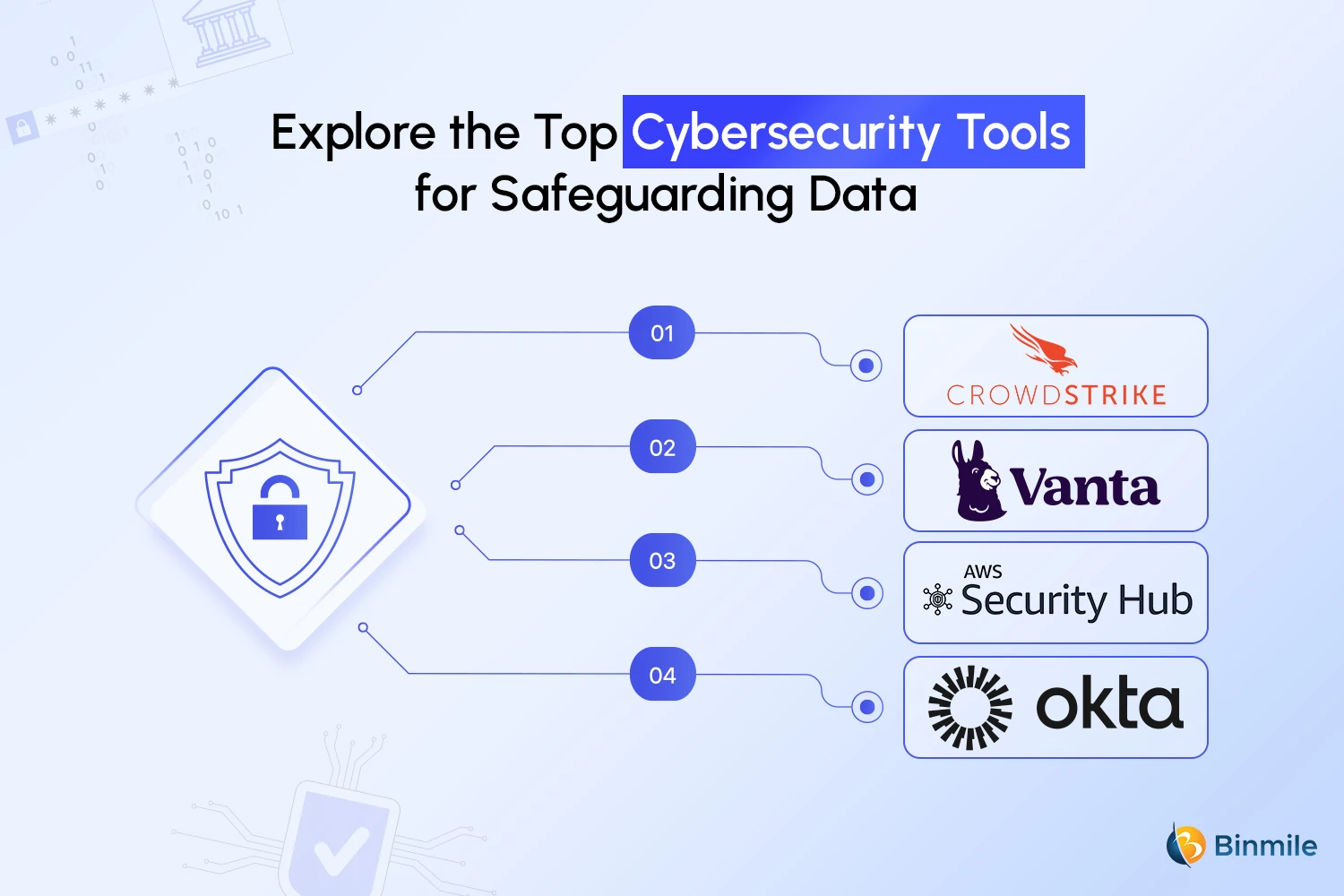
3: AWS Security Hub
AWS Security Hub offers assessment measures against security industry standards and best practices. It helps you analyze your security posture, collects security data across AWS accounts and services, and identifies the most prioritized security issues. This enables you to have streamlined security visibility, overall improving the risk management system.
Key Features:
- It uses a cloud security posture management service that supports automated remediation and aggregates alerts for best practices in security checks.
- It supports integration with AWS Services, GuardDuty, third-party tools via APIs, etc.
- It offers a centralized security dashboard for continuous real-time monitoring and an efficient incident response plan.
4: Okta
Okta is a leading identity management platform (IAM) for seamless and secure access. For protecting sensitive data, it manages user identities and access with a centralized solution. It enables a smooth user experience across multiple systems by following control access policies. This enhances the security and efficiency of your fintech application.
Key Features:
- It uses techniques such as Single Sign-On (SSO) and adaptive Multi-factor Authentication (MFA) for managing the system with enhanced scanning capabilities.
- It can be well-integrated with 7,000+ prebuilt applications and APIs.
- For an enhanced security architecture, it complies with frameworks such as PCI, SOC2, HIPAA, ISO 27001, and other such frameworks.
Enhance your business with cutting-edge cybersecurity tools and expert recommendations.

Conclusion
The importance of cybersecurity in the fintech industry will keep evolving with future fintech trends. Now, with rapid digitalization, fintech initiatives require even more robust cybersecurity frameworks to thrive in a competitive industry. Proper implementation of best practices will result in reduced cyberattacks and more efficient fintech applications.
This blog has helped you understand cybersecurity challenges, the best practices, and cybersecurity tools to use for safeguarding your financial data. However, partnering with an experienced fintech development company will help you with tailored solutions according to your business needs.
Frequently Asked Questions
AI plays a crucial role by detecting threats, analyzing patterns, and preventing fraud in real time. It helps identify unusual behavior and potential vulnerabilities. AI-driven tools improve response time and accuracy. This makes cybersecurity systems more proactive and efficient.
Best practices include data encryption, multi-factor authentication, regular security audits, and employee training. Implementing zero-trust security models enhances protection. Continuous monitoring helps detect threats early. Following these practices ensures a secure fintech environment.
Cybersecurity is critical for fintech companies because they handle sensitive financial data and transactions. A single breach can lead to financial loss and damage to brand reputation. Strong security measures help build customer trust and ensure regulatory compliance. This makes cybersecurity a top priority for sustainable fintech growth.
Yes, fintech startups should prioritize cybersecurity from the early stages of development. Early investment helps prevent vulnerabilities and reduces future risks. It also ensures compliance with industry regulations. Building secure systems from the start creates a strong foundation for growth.
Fintech businesses can improve cybersecurity by adopting multi-layered security approaches, including encryption, authentication, and monitoring tools. Regular security audits and vulnerability assessments are essential. Implementing best practices like zero-trust architecture enhances protection. This ensures better defense against evolving cyber threats.