Enterprise AI is no longer about experimentation. It is about deployment, scale, and measurable impact. According to Microsoft’s Work Trend Index, more than 70% of organizations are already using AI in some form, and adoption is accelerating across functions.
With this change and new level of AI adoption comes new challenges for businesses; they need not only powerful but also secure, scalable, and easily integrated AI in their existing infrastructure. In this blog, we will look beyond basic definitions and give you a comprehensive overview of how it works with real enterprise customers, what organizations are adopting it, an overview of the architecture/technical aspects, pricing logic, potential use cases, some challenges, as well as useful tips regarding enterprise-level applications of the Azure OpenAI Service.
What Is Azure OpenAI Service?
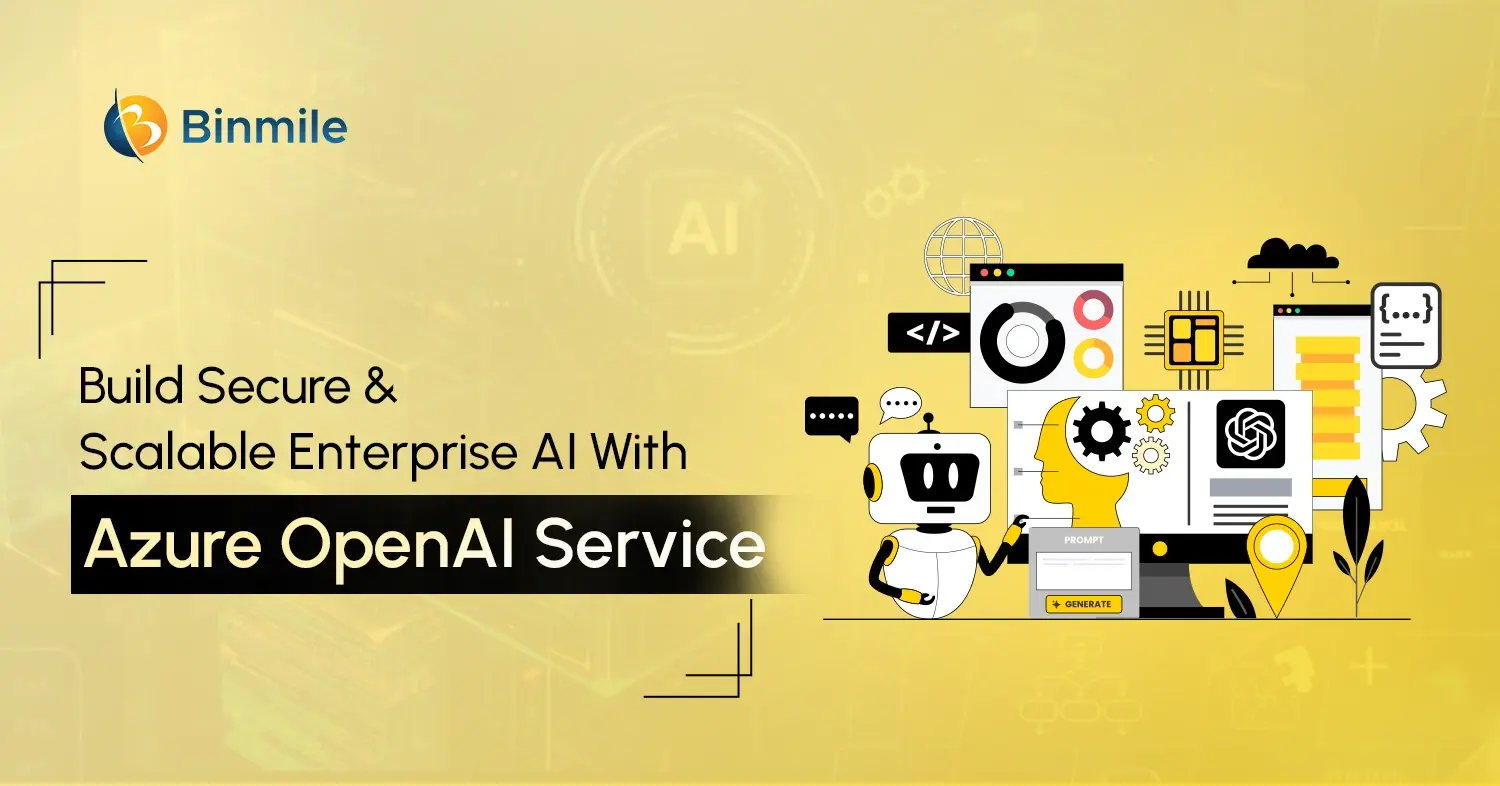
Microsoft Azure OpenAI Service is a cloud-based platform that provides access to advanced AI models like GPT within the Microsoft Azure ecosystem. It allows businesses to build applications like conversational agents, intelligent assistants, and automated workflows without having to build their own complete AI model from scratch.
What sets the Microsoft Azure OpenAI Service apart from typical public cloud AI offerings is its ability to deliver advanced generative AI while providing enhanced security, regulatory compliance, and scalability for enterprise customers. By leveraging an entirely secure and privately hosted environment within Azure, users can focus on building their application and have complete control over data privacy and governance.
In practice, this means developers can develop and deploy solutions much faster, deploy them more securely, and integrate them more easily with other enterprise applications.
Why Enterprises Are Adopting Azure OpenAI Service
The decision to adopt AI is no longer experimental. It is strategic. Organizations are turning to Microsoft Azure OpenAI Service because it solves real operational challenges.
-
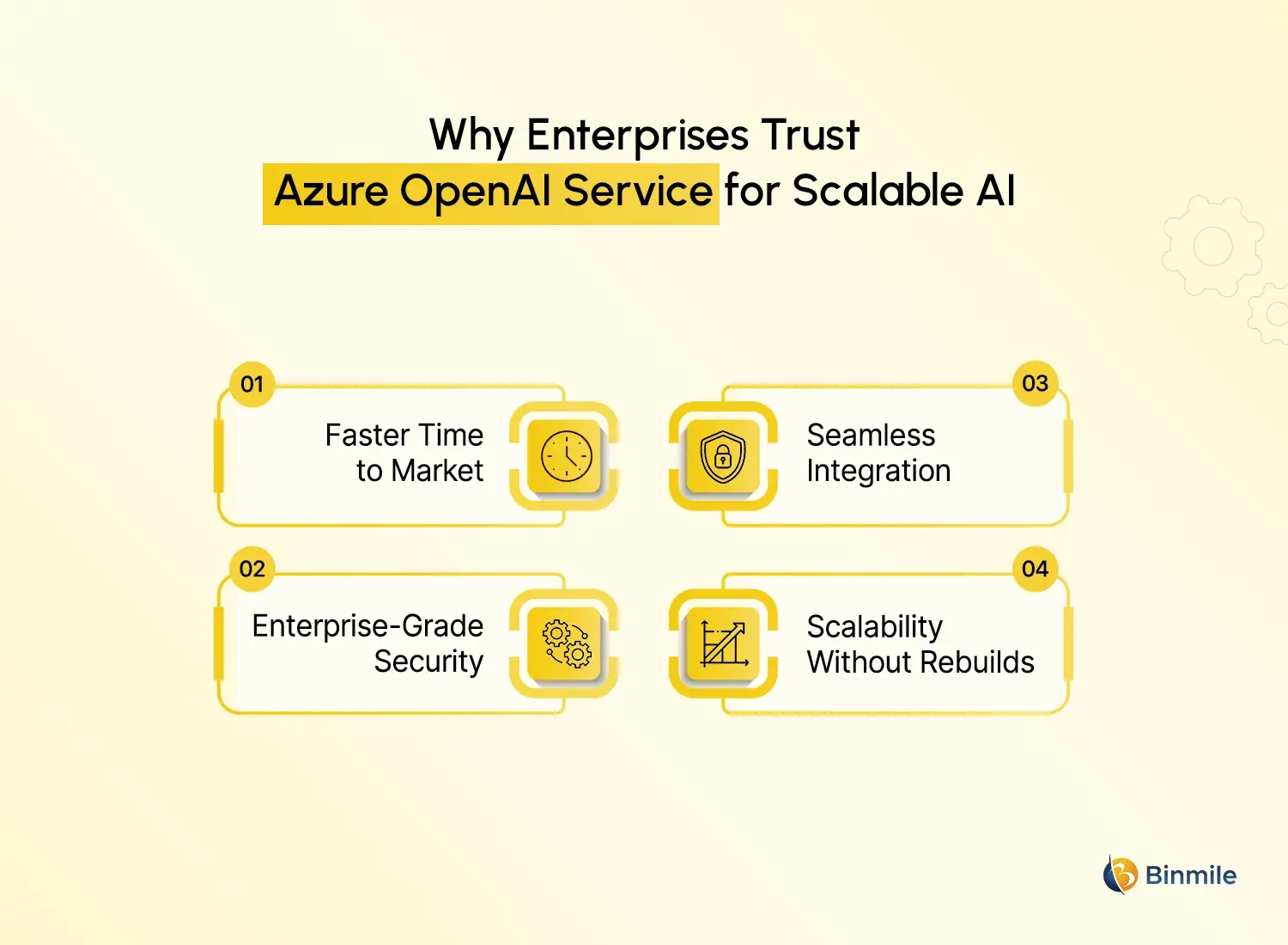
Faster Time to Market
Both modeling and training come with an array of resources and technical complexities. However, Azure OpenAI shortens such configurations by providing off-the-shelf models that take a whole lot less time to develop.
-
Enterprise-Grade Security
For many companies, security is the primary hindrance to adopting AI. Microsoft Azure OpenAI ensures that corporate data is never used for the training of public models, making it very suitable for regulated industries.
-
Seamless Integration
Easily connect with CRMs, ERPs, and internal systems, so less cumbersome and tedious to deliver integration services for other software.
-
Scalability Without Rebuilds
From piloting to full deployment across departments, scaling with Azure Cloud is smooth and does not require reengineering systems.
Azure OpenAI Service Architecture: How It Works in Practice
Most explanations of Azure OpenAI Service architecture stay at a surface level. In reality, it functions as a controlled and structured AI pipeline designed for enterprise use.
1. Input Layer
This is where requests originate. It can be a chatbot, internal tool, or customer-facing application.
2. Application Logic Layer
This is one of the most critical components. Here, businesses can structure prompts, add context, and apply rules. This ensures outputs are aligned with business needs rather than generic responses.
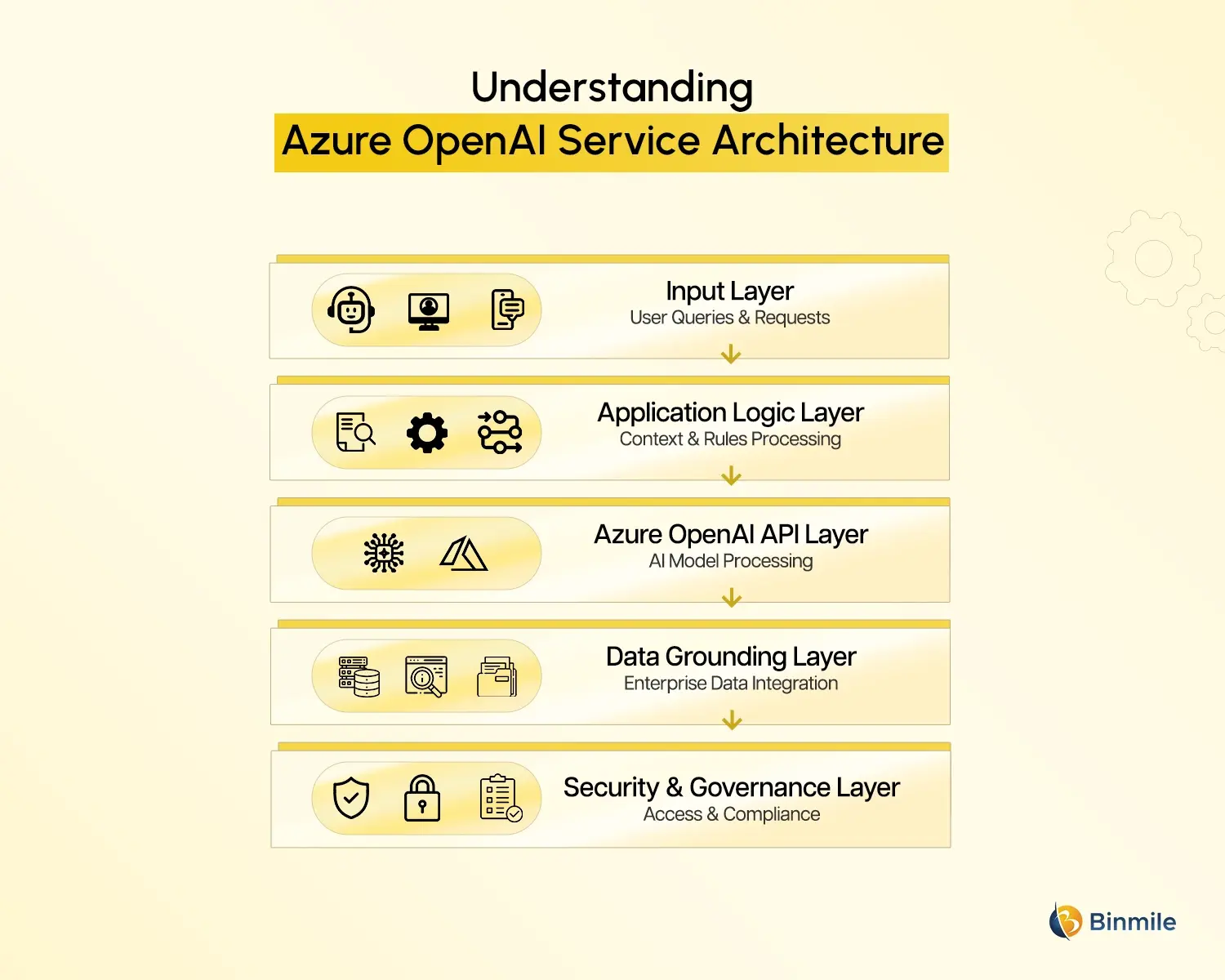
3. Azure OpenAI API Layer
This is where the AI model processes the request. The major advantage here is that all processing happens within a secure Azure environment.
4. Data Grounding Layer
Enterprises connect internal data sources like documents and databases. This enables context-aware responses instead of generic outputs.
5. Security and Governance Layer
Controls access, monitors usage, and ensures compliance with industry standards. This structured Azure OpenAI architecture is what makes enterprise deployment reliable and scalable.
Azure OpenAI Cost: What Businesses Should Actually Expect
One of the most misunderstood aspects is the Azure OpenAI cost. It is not fixed and varies based on how the service is used.
Key Cost Drivers
1. Token Consumption
Tokens are how Microsoft prices its Azure OpenAI models; the amount of data an input/output combination consists of is how the stated expense of a token is calculated. The less your input and output is, the less expensive the use of the token will be. Therefore, creating your prompt should be one of several key areas in managing costs.
2. Model Selection
Pricing per model will vary based on how much performance your specific model provides. More advanced models tend to provide better overall performance and accuracy, but are therefore priced accordingly. Businesses must weigh the performance needs versus the budget requirements in their decision.
3. Deployment Scale
As more businesses adopt AI across their teams and departments in the workplace, so will the overall usage of AI increase; while it will cost more money to use AI will provide more overall value through improved efficiencies and automation.
4. Infrastructure and Integration
In addition to using Azure OpenAI, you will incur costs associated with other Azure services, such as storage fees, API fees, and hosting fees. In addition to Azure services, the integration of your Azure services into your currently existing systems could incur additional costs.
Practical Insight
Those businesses that optimize and/or reuse their prompts and leverage caching methods will see decreased expenses associated with using Azure OpenAI. However, without the proper monitoring of expenses, it will be easy for your costs to become excessively high. Therefore, developing a sound cost control plan around your current data and your total Azure OpenAI usage will be a key to developing a positive adoption strategy.
How Azure OpenAI Service Supports Enterprise AI Adoption
Service by breaking down technical barriers to utilizing and making AI accessible to teams throughout an organization. Azure OpenAI does this by providing the ability to create solutions with API access and pre-trained models in addition to more complex AI infrastructure, and then enables teams to use AI in cross-functional applications (e.g. marketing uses AI in its campaigns; HR uses AI in its people/culture initiatives; operations use AI to automate their operations; IT uses AI within its IT development), rather than requiring new, dedicated systems to implement AI.
Additionally, AI-enabled assistants help organizations improve productivity by automating repeatable processes, enabling individuals to focus on higher-value activities. Organizations also benefit from real-time access to data and facilitators to accelerate the decision-making process so that businesses can respond quickly to changing conditions. This method of enabling AI for enterprise adoption is what drives successful Azure OpenAI enterprise adoption by increasing the ability of the enterprise to leverage AI solutions, tools, and techniques to operate more efficiently and effectively and create increased enterprise value.
Want to integrate secure generative AI into your existing systems without disruption?

Azure OpenAI Service vs Traditional AI Deployment Models
| Aspect | Traditional AI Deployment | Azure OpenAI Service |
|---|---|---|
| Development Time | Long due to model building and training | Faster with pre-trained models |
| Infrastructure | Requires heavy setup and maintenance | Managed within Azure Cloud |
| Cost Structure | High upfront investment | Pay-as-you-go model |
| Scalability | Requires redesign and upgrades | Easily scalable without rebuilds |
| Security | Depends on internal setup | Built-in enterprise-grade security |
| Integration | Complex and time-consuming | Seamless API-based integration |
What Are the Benefits of Azure OpenAI Service
The benefits extend beyond technology and directly impact business performance.
-
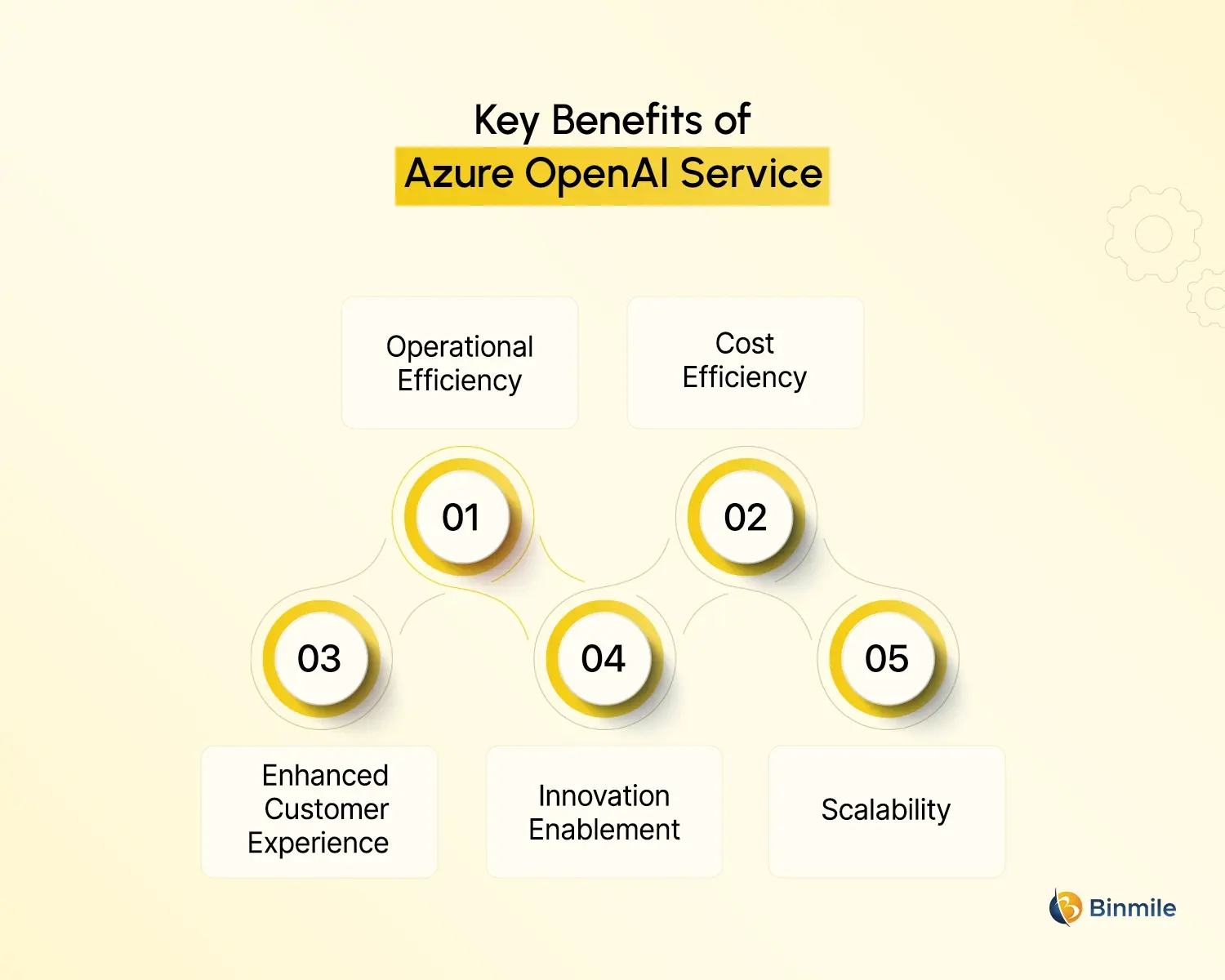
Operational Efficiency
Automating repetitive tasks through computers accelerates, streamlines, and improves the accuracy and consistency of all aspects of the operation; for example, automating customer service responses to inquiries, processing data on time, and generating content quickly and accurately.
-
Cost Efficiency
An organization can build an artificial intelligence as a service from scratch, but this requires an initial large capital investment for both hardware and specialized skills to develop the software application. Using Azure OpenAI as a pay-as-you-go service, businesses can lower the upfront cost of developing an AI system while still benefiting from advanced technologies.
-
Enhanced Customer Experience
Customers can interact with chatbots and other automated systems, receiving personalized responses in near real time, resulting in increased customer satisfaction and shorter response times.
-
Innovation Enablement
With generative AI tools such as those available through Azure OpenAI services, teams can leverage the ability to experiment with new concepts without investing significant resources in building new infrastructure, further supporting an organization’s pursuit of innovative methods of developing quality products and services quickly.
-
Scalability
As an organization grows and develops new systems to meet its growing customer base, Azure OpenAI Services are capable of scaling with the business and providing ongoing flexibility without needing to make large investments into the development of new systems.
What Are the Best Practices for Azure OpenAI Service
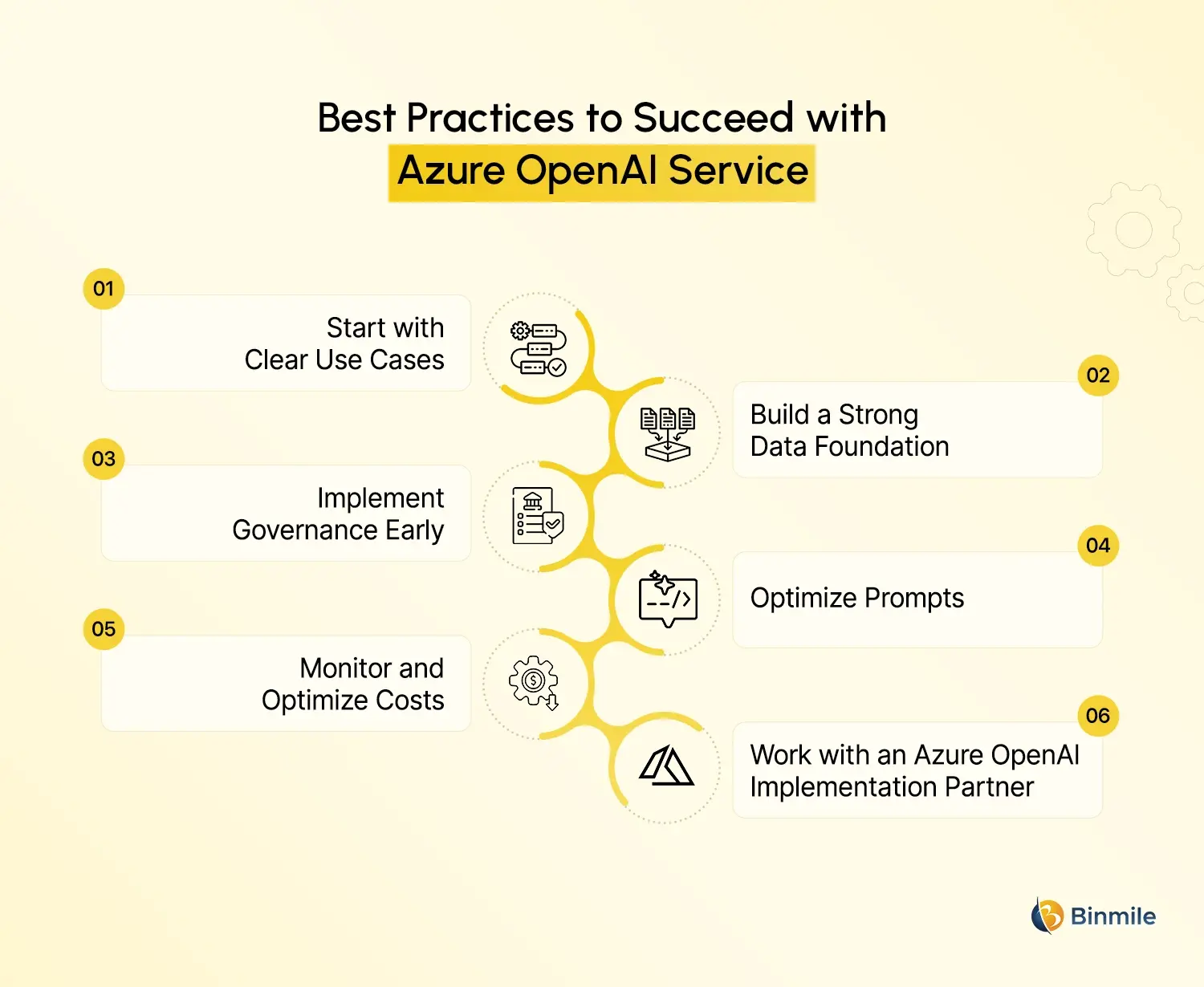
To get real results, implementation must be structured. Here are some best practices:
-
Start with Clear Use Cases
Do not begin to use Azure OpenAI Service unless you have a specific use case in mind. The best way to identify these is by defining solutions to specific pain point areas, such as reducing response time for support requests or automating current workflows. Clear use cases will enhance your ability to establish KPIs and measure meaningful results.
-
Build a Strong Data Foundation
AI is only as good as the data it utilizes. You must have clean, structured, relevant data in order for the output generated to be accurate, relevant, and contextual in nature, which is critical when leveraging enterprise data as the basis of an AI solution.
-
Implement Governance Early
Make sure that you have established access control and monitoring processes as well as data utilization policies prior to utilizing Azure OpenAI Service. This will ensure you are compliant, avoid abuse, and build confidence in AI solutions.
-
Optimize Prompts
Strongly phrased prompts will enhance the quality of output while minimizing unnecessary token utilization. For example, including clear instructional messages and contextual information will improve the consistency and overall quality of results generated.
-
Monitor and Optimize Costs
Continuously track token utilization and optimize usage regularly, such as utilizing techniques like caching, limiting output length, and selecting the best models to effectively manage costs associated with Azure OpenAI.
-
Work with an Azure OpenAI Implementation Partner
An experienced partner can work with you to create the architectural framework, integrate and scale your Azure OpenAI Service deployment, which will reduce time to implement and align with your long-term business goals.
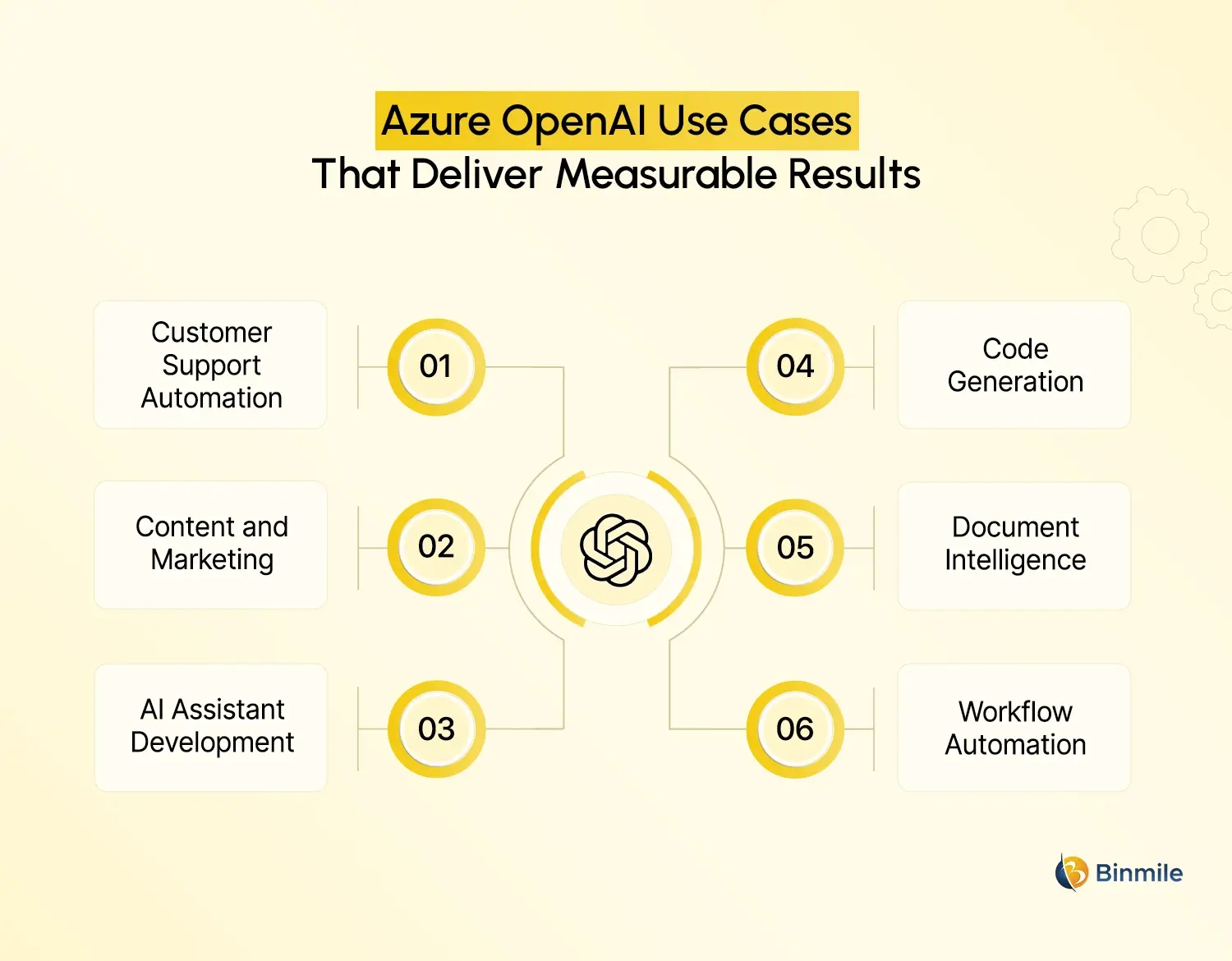
What Are the Azure OpenAI Use Cases That Deliver Real Value
Azure OpenAI use cases are practical and widely applicable across industries.
-
Customer Support Automation
AI chatbots allow for the immediate resolution of many customer inquiries, which improves efficiency by providing quicker response times while concurrently reducing operating expenses and providing better consistency within customer service delivery.
-
Content and Marketing
Marketing teams utilize Generative AI to expedite the generation of blogs, email campaigns, product descriptions, and social posts, which improves both the quality of work produced and the overall productivity of employees who produce material for marketing purposes.
-
AI Assistant Development
Many companies are going for AI assistant development to allow for the retrieval of information from various resources, the automation of work processes, and the improvement of overall employee productivity daily.
-
Code Generation
Developers leverage AI technology to write code, review it, and optimize it meaningfully, resulting in shorter implementation cycles and improved quality of the software developed as a result of AI.
-
Document Intelligence
AI technologies allow for the intelligent processing/digitalization of many thousands of documents, such as contracts, reports, etc., resulting in rapid and accurate consumption of the data contained within them.
-
Workflow Automation
GenAI ServiceNow capabilities allow for improved operational efficiency and response times in automating IT Service Management-related tasks and processes.
Struggling to turn AI ideas into real business outcomes and scale Azure OpenAI solutions?

Accelerating Enterprise AI with the Right Approach
Successful AI adoption is not about using the most advanced tools. It is about using them correctly with a clear strategy. Enterprises need to focus on readiness, architecture, integration, and long-term scalability to unlock real value from AI.
With the right support across DevOps as a Service, Generative AI, AI Assistant Development, and Software Integration Services, organizations can move from experimentation to meaningful outcomes much faster. A structured approach to Azure OpenAI readiness ensures that risks are minimized, costs are controlled, and performance remains consistent.
Companies like Binmile help bridge the gap between AI potential and execution by enabling businesses to design, implement, and scale solutions that align with real business goals rather than just technical capabilities.
Frequently Asked Questions
Azure OpenAI Service is a cloud-based platform that provides access to advanced AI models within Microsoft Azure, enabling businesses to build secure, scalable, and intelligent applications without developing AI systems from scratch.
It simplifies AI implementation by offering ready-to-use models, secure infrastructure, and seamless integration, allowing organizations to deploy AI solutions faster while improving productivity, scalability, and cross-functional usage.
Yes, it provides enterprise-grade security with data encryption, compliance certifications, and strict access controls, ensuring sensitive business data remains protected and is not used for training public AI models.
No, it is designed for accessibility. Teams can use APIs and pre-trained models without deep AI expertise, though technical understanding helps in optimizing performance and building advanced applications.
Integration is done through APIs that connect AI models with existing applications, enabling automation, ChatGPT integration, and enhanced functionality across enterprise platforms and workflows.
Common use cases include chatbots, content generation, AI assistants, document processing, workflow automation, and code generation, helping businesses improve efficiency, decision-making, and customer experience.