Most businesses do not suffer from a lack of software. They suffer from a lack of clarity regarding what their software can do. Unused licenses, overlapping tools, compliance gaps, and outdated systems quietly increase the costs and reduce efficiency over time. According to Flexera, 45% of organizations have spent over $1 million on software audits in the past three years, highlighting the significant financial impact of poor software visibility and compliance gaps.
This clearly shows that audits are no longer routine checks; they have become critical for businesses. A well-planned software audit helps businesses stay ahead of the challenges by improving visibility, reducing unnecessary costs, and ensuring compliance before issues escalate. This blog will cover the importance and the means of a software audit to give businesses a competitive edge beyond the potential compliance audit.
What is a Software Audit
A software audit comprehensively evaluates all software applications used within an organization, focusing on licensing, usage, performance, compliance, and associated risks. Although the initial thought is that this is just an inventory count of software, in reality, it will require a lot more thought than just counting how many software applications the organization has.
A modern IT software audit will assist a company in identifying whether or not the company is purchasing too many software tools that they never use, if their software tools match their operational needs, and if any “hidden” risks may cause security or regulatory compliance problems.
Rather than simply identifying what software the company has, the software audit is an examination of the effectiveness of each of the company’s software tools as related to the overall business outcomes of the company. Many organizations utilize third-party software audit services to obtain a complete and unbiased view of their total software ecosystem. The final result of the software audit services is a comprehensive software audit report identifying inefficiencies, compliance gaps, and other areas for improvement. You can perform an internal software audit for continuous monitoring, but experienced third-party software audit companies conduct external software audits that provide a more detailed examination of the entire software ecosystem and offer a more objective view compared to internal audits.
Why a Software Audit is Important for Modern Businesses
Software directly influences how efficiently a business operates. Without a structured software audit management approach, organizations often lose visibility and control over their technology landscape. A well-executed software audit process not only prevents operational issues but also delivers measurable business value.
-
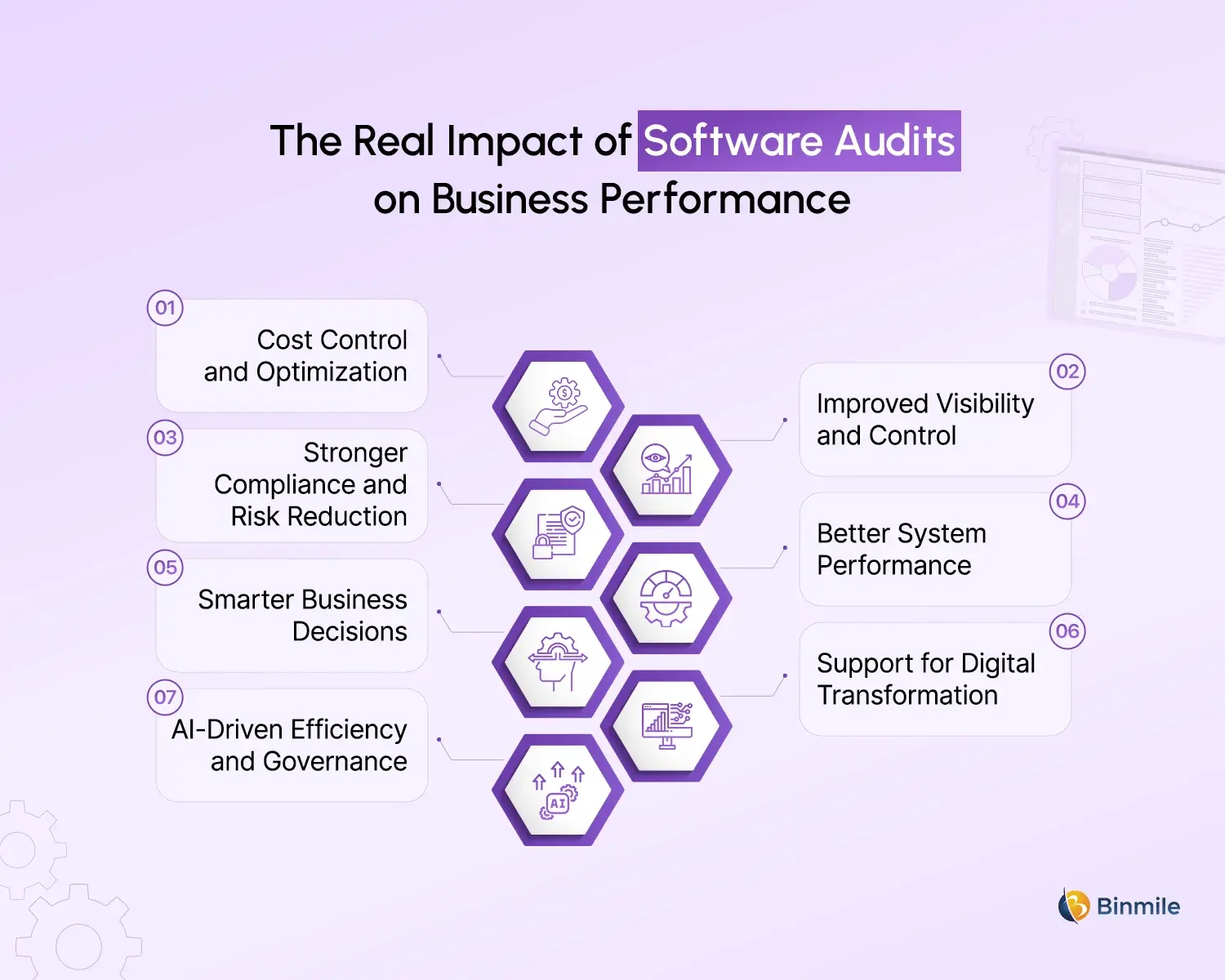
Cost Control and Optimization
Most organizations do not realize that they pay for unused licenses or use multiple software products that a single application could handle. A software audit can help identify these inefficiencies and help decrease wasted spending and increase overall IT spending.
-
Improved Visibility and Control
Through an audit, you can have a comprehensive review of all applications in the IT Asset Management Database, including how often they are used, the current status of the application (active or inactive), and their current cycle (beginning, middle, or end). This visibility will allow for improved planning and resource allocation.
-
Stronger Compliance and Risk Reduction
In order to avoid fines and/or legal issues, organizations must comply with the licensing requirements and regulatory guidelines, such as HIPAA compliance, etc. An audit of your software applications will ensure that you are in compliance and help you avoid penalties against your organization.
-
Better System Performance
Operating on outdated or duplicative systems could be the reason your organization is not meeting its operational objectives. An audit will help identify these deficiencies and allow you to begin planning a software upgrade to an existing legacy system, which will improve the overall efficiency of your organization.
-
Smarter Business Decisions
An audit of the software used by your organization provides the necessary data and insights needed to make decisions regarding future software development, upgrades, and investments rather than just ‘guessing’.
-
Support for Digital Transformation
Your current application structure and the results of a software audit will ensure that they align with the long-term goals in the Digital Transformation plan, which will support and facilitate smooth and successful transitions.
-
AI-Driven Efficiency and Governance
With the advancement of AI in software audit tools, organizations will benefit from more efficient and accurate auditing.
What Are the Types of Software Audit
Not every audit serves the same purpose. Understanding the types of software audit helps businesses choose the right approach.
| Type | Purpose | Best Use Case |
|---|---|---|
| Internal Software Audit | Regular monitoring by in-house teams | Ongoing checks |
| External Audit | Third-party evaluation | Compliance and unbiased insights |
| License Audit | Verifies software licensing | Cost control and legal safety |
| Security Audit | Identifies vulnerabilities | Cybersecurity improvement |
| Enterprise Software Audit | Covers large-scale systems | Complex organizations |
| AI Audit | Evaluates AI systems and models | Businesses using AI tools |
Many organizations now use an advanced audit management system or audit software for internal audit to streamline these processes.
Not sure if your systems are compliant or optimized? A comprehensive software audit can highlight risks and improvement areas.

What Are the Common Software Audit Risks
Avoiding a software audit does not remove problems; it only delays them until they become more expensive and harder to fix. Understanding these risks highlights why a proactive approach is necessary.
-
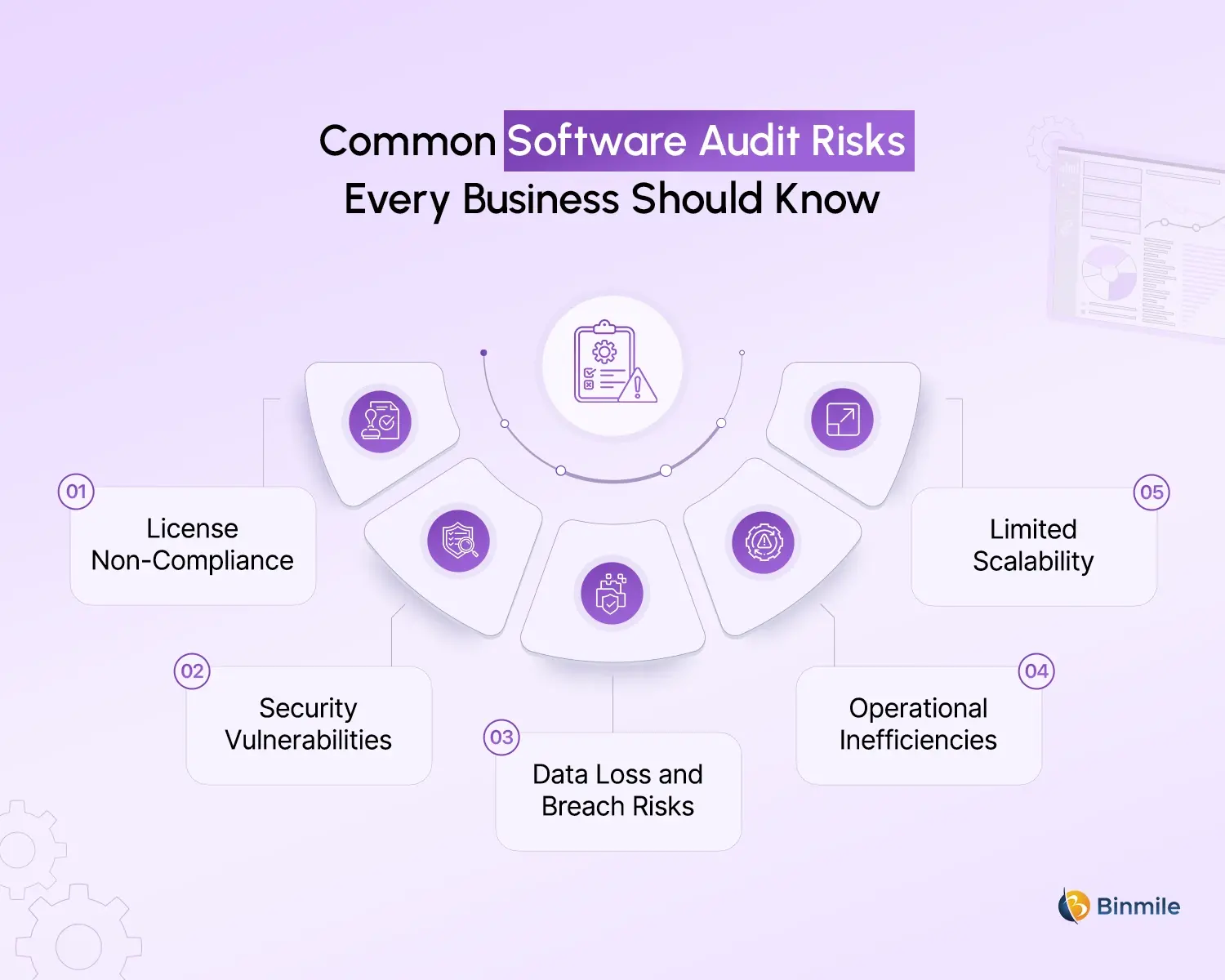
License Non-Compliance
Non-compliance with your licensing can lead to penalties as well as financial obligations you did not expect due to a lack of tracking and proper management.
-
Security Vulnerabilities
Vulnerability from outdated and/or unsupported software creates opportunities for cyber attack to put the business at risk, both for compromising your system and/or being a victim of a breach.
-
Data Loss and Breach Risks
Poorly managed systems have the potential to cause you to lose sensitive business data, be exposed to becoming a victim of a breach, and/or face regulatory action.
-
Operational Inefficiencies
Running multiple tools that do the same thing or using duplicate systems to get work done will slow down the work process and lead to decreased productivity for all groups.
-
Limited Scalability
If you do not assess your systems on an ongoing basis, you could run into problems where your systems can not support your ability to grow your business.
A structured software audit plan helps identify these issues early and ensures timely corrective action.
How the Software Audit Process Works
The software audit process is not random. It follows a structured approach to ensure accuracy and effectiveness.
Step 1: Planning the Audit
Define purpose, scope, and audit plan with specific detail.
Step 2: Data Collection
Collect data about all assets, licenses, and use of the software. This step is key to being able to do effective analysis.
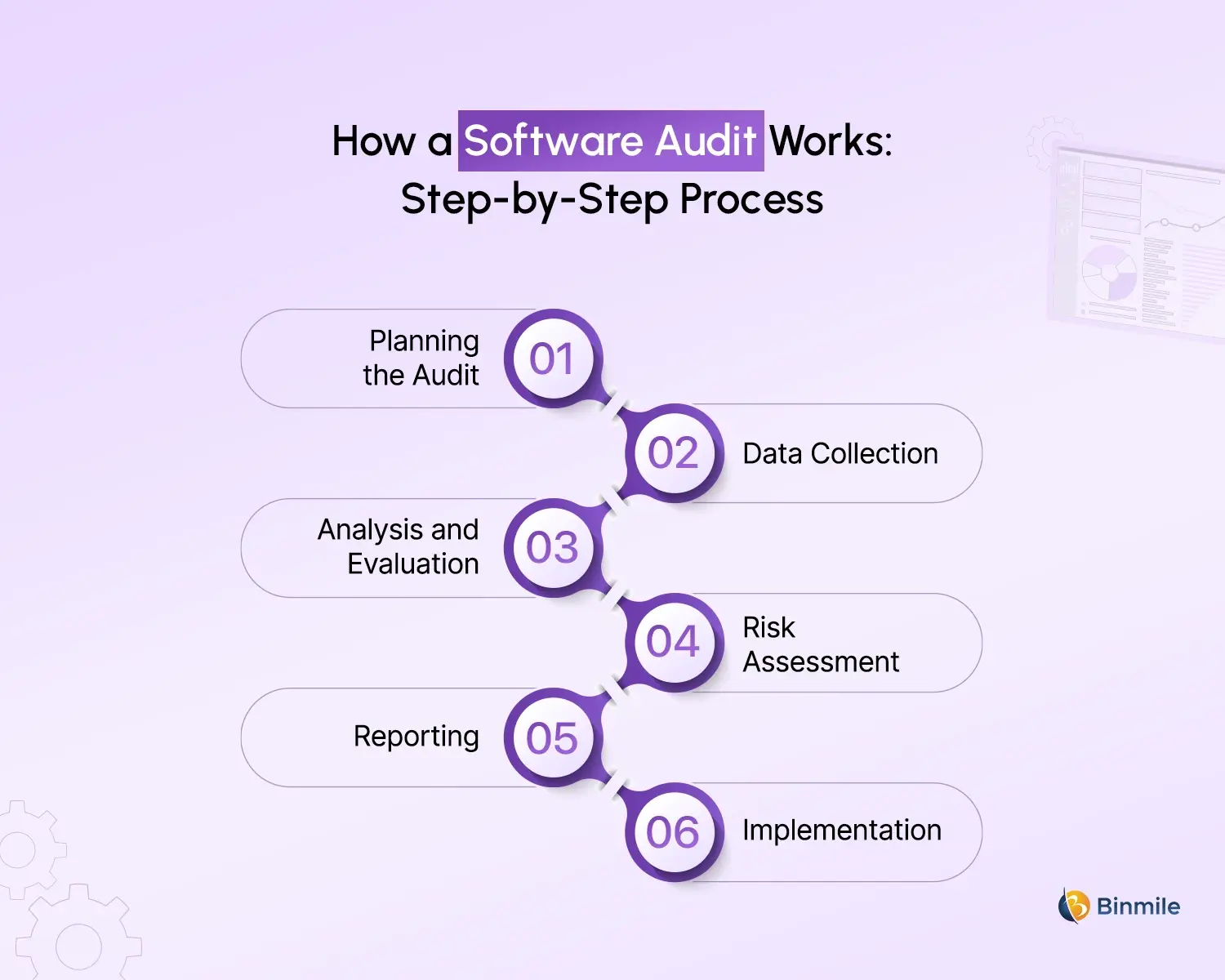
Step 3: Analysis and Evaluation
Analyze the data to find gaps, inefficiencies, and compliance issues.
Step 4: Risk Assessment
Identify areas for risk assessment in conjunction with the overall software risk management strategy for the organization’s software.
Step 5: Reporting
Once the audit has been completed, a final software audit report will be created with recommendations for future software use.
Step 6: Implementation
The organization then implements recommendations made in their audit report through a range of actions that may include: Application maintenance, upgrading, or replacing applications where necessary.
Many companies now rely on audit software for internal audit to automate these steps and improve accuracy.
Best Practices for Effective Software Auditing
When treated as a continual process, the benefits of performing a Software Audit are greater than if it were treated as a stand-alone project. Keeping a current inventory of all current Software Assets allows organizations to accurately monitor the Software Assets they have, as well as gain visibility into how much software is being used.
Automating those processes using technology such as Software Audit Management Systems or AI-enabled Software Audits can help reduce manual errors. Additionally, aligning the Software Audit with the organization’s business strategies (e.g., Digital Transformation) will help ensure that the Company makes Technology decisions that support long-term growth.
Performing audits continually will allow organizations to discover issues earlier, rather than reactively finding out about them later. Cross-functional collaboration with IT, Finance, and Operations will give all parties involved a complete picture of the Software Assets that were utilized and what Software Assets will be required in the future. In many cases, obtaining assistance from organizations that specialize in software audits can provide organizations with a more comprehensive understanding of their Software Assets, along with stronger implementation support to help organizations achieve improved performance and ultimately achieve their desired results.
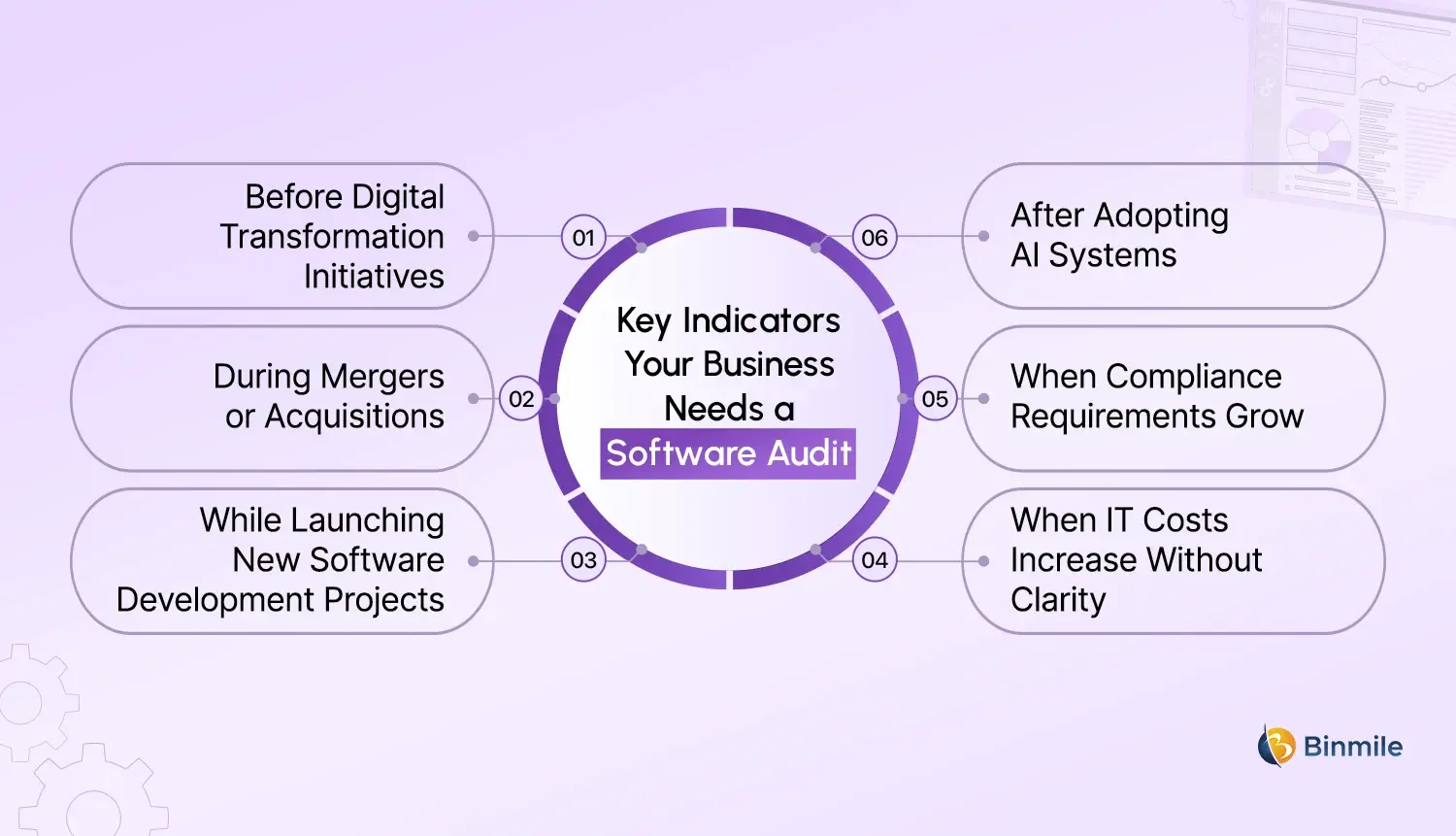
When Should Your Business Conduct a Software Audit
Timing plays a crucial role in maximizing the impact of a software audit, and conducting it at the right stage can significantly improve outcomes.
-
Before Digital Transformation Initiatives
An audit of the current systems is essential before beginning any Digital Transformation Initiatives, as it allows new technologies to be created on a strong and effective base and removes the risk that we will carry our inefficient systems forward.
-
During Mergers or Acquisitions
When companies merge or acquire another organization, knowing exactly what software assets are required will help them to combine their systems with both an understanding of existing software assets (to prevent duplication) and to avoid integration issues.
-
While Launching New Software Development Projects
Conducting an audit before starting a new software development project ensures that we identify existing gaps and that new developments meet our business needs as opposed to our assumptions.
-
When IT Costs Increase Without Clarity
Increasing IT costs with no visibility into why they are rising is typically a sign of problems with your existing systems and could be addressed through an audit of your existing software.
-
When Compliance Requirements Grow
Increasing compliance requirements will result in an increased need for conducting audits to ensure that your systems continue to meet all compliance regulations, therefore reducing the risk of penalties.
-
After Adopting AI Systems
Companies that are introducing AI into their business should ensure that they align with an AI Governance Framework, and conducting audits after adopting AI tools will assist in ensuring proper monitoring and control.
Regular audits, conducted annually or biannually, help maintain consistency, control, and long-term efficiency.
Confused about where your software budget is going? A strategic software audit can uncover hidden costs and inefficiencies.

How Binmile Can Help You Take Control of Your Software Ecosystem
A well-executed software audit requires both technical expertise and a deep understanding of business processes. This is where a strategic partner can make a real difference.
Binmile brings a structured approach to software audit services, combining expertise in software development, software maintenance, and IT Asset Management. Their team works closely with businesses to identify inefficiencies, reduce risks, and align software systems with long-term goals.
Whether it is managing complex enterprise environments, ensuring HIPAA compliance, or supporting a legacy software update, the focus remains on delivering clarity and actionable insights. Their experience with modern tools, including AI audit software, also helps businesses move toward smarter and more automated audit processes.
Instead of treating audits as a one-time activity, Binmile helps organizations build a sustainable software audit management strategy that supports growth, compliance, and innovation.
Frequently Asked Questions
A software audit is a structured review of all software used within an organization to assess licensing, usage, compliance, and performance. It helps identify inefficiencies, reduce risks, and ensure that systems are aligned with business goals.
Most companies should conduct a software audit annually or biannually. However, businesses experiencing rapid growth, regulatory changes, or digital transformation may require more frequent audits to maintain control and compliance.
Yes, a software audit helps identify unused licenses, redundant tools, and inefficient systems. By eliminating these, businesses can significantly reduce IT expenses and improve resource allocation.
An internal software audit is conducted by in-house teams for regular monitoring, while an external audit is handled by third-party experts who provide unbiased insights, deeper analysis, and stronger compliance validation.
Look for industry experience, use of advanced tools, clear reporting, and alignment with your business goals. A good partner should also provide actionable insights and ongoing support beyond just delivering a report.