Artificial intelligence has moved from boardroom curiosity to business infrastructure. CEOs and CTOs are no longer asking whether AI can improve productivity. They are asking which AI approach can create measurable business value without increasing operational risk. This is where the conversation around Generative AI vs Agentic AI becomes important. According to Gartner, by 2028, 33% of enterprise software applications are expected to include agentic AI, up from less than 1% in 2024, while 15% of day-to-day work decisions may be made autonomously through agentic AI.
This blog explains the difference between generative AI and agentic AI in simple business language. We will look at how each technology works, where it fits, the most practical enterprise use cases, how both can support digital product development, and how leaders can choose the right AI strategy based on business goals, workflow complexity, governance needs, and scalability.
What Is Generative AI?
Generative AI is a type of artificial intelligence that creates new content based on patterns learned from existing data. It includes all types of content, i.e., text, images, code, reports, product descriptions, summaries, designs, synthetic data, and responses to questions or comments.
To produce a desired result, generative AI models will interpret the user’s request by examining the information given to it, determining context, and then the Generative AI algorithm generating an appropriate result based on its training data, the prompts received from the user, and the probabilities of those prompts.
Generative AI will be valuable to businesses; it will assist with creating, summarizing, personalizing, analyzing, and expediting knowledge-intensive work processes. Companies are currently leveraging Generative AI in Digital Product Development, marketing, customer service, software engineering, documentation, sales enablement, and business reporting processes.
What Is Agentic AI?
Agentic AI goes beyond generating content. It refers to AI systems that can understand a goal, plan steps, use tools, make decisions within defined boundaries, and complete tasks with limited human intervention.
An agentic AI system will operate based on an objective rather than responding to specific requests (e.g., rather than just drafting a response to a customer support ticket, the software could read the ticket, gather the necessary account information, determine the source of the problem, update the company’s Customer Relationship Management system, initiate a Workflow, and send a follow-up message).
The rise of agentic AI is incredibly important for enterprises, as the movement gets AI out of simply assisting with functions and instead shifts AI’s role to one of orchestrating those functions. The foundation for orchestrating AI task performance, such as a ticket processing and fulfillment workflow, is the agentic AI framework, which provides for a structured environment in which the planning, memory, reasoning, tool access, sequencing/ordering, human approval, monitoring, and governing or supervision of employees’ actions to achieve an end state will all occur consistently.
How Generative AI Works in Business
Generative AI works by interpreting user input, applying context, and producing a useful output. In business, Generative AI in Product Development supports requirements, code, test cases, documentation, and release notes when paired with review and governance.
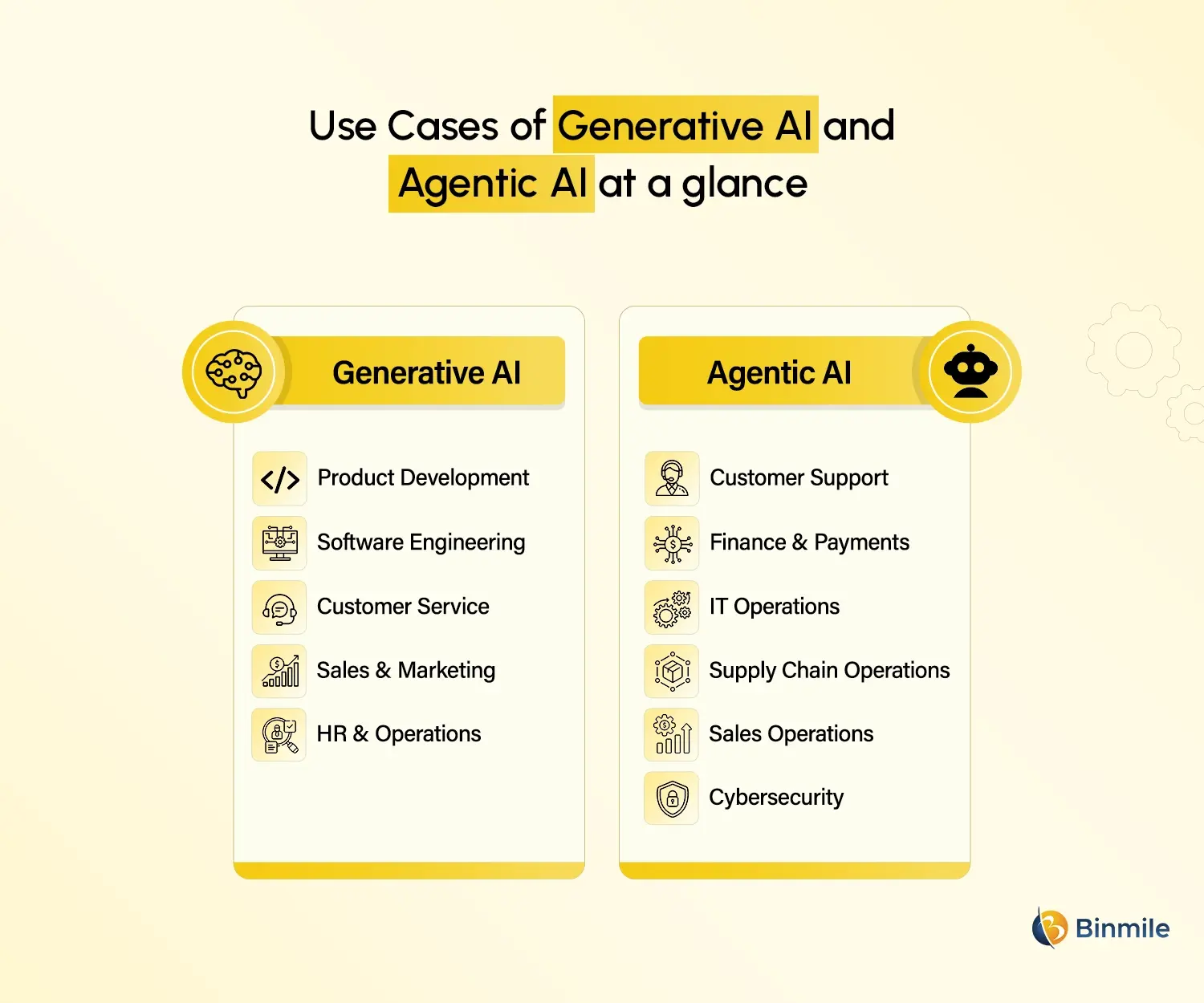
Use Cases of Generative AI for Enterprises
The Use Cases of Generative AI are growing across departments, but the strongest business value comes when it is applied to repeatable, high-volume, knowledge-driven tasks.
-
Product Development
Generative AI can help create product requirements, user flows, test cases, and release notes to support rapid prototyping.
-
Software Engineering
A Generative AI tool can support developers by providing suggestions for code, debugging, documentation, and automating testing processes, which will reduce the amount of work that is currently repetitive for developers.
-
Customer Service
Generative AI can help draft response drafts for customers, summarize conversations with customers, and suggest responses to customer inquiries, improving both speed and consistency of support.
-
Sales & Marketing
It can help create outreach emails, proposal documents, landing page copy, advertisements, social media posts, and multiple campaign variations at scale.
-
HR & Operations
Generative AI can assist in simplifying onboarding processes, providing a summary of policies, writing training materials, providing internal FAQ answers, and creating documentation for processes.
How Agentic AI Works in Business
Agentic AI works by understanding a goal, planning steps, using tools or APIs, and completing actions across systems. A strong agentic AI architecture includes memory, orchestration, governance, monitoring, permissions, and human approval for sensitive workflows.
Agentic AI Use Cases for Business
The most valuable Agentic AI Use Cases are found in workflows that are repetitive, multi-step, rule-driven, and spread across multiple systems.
-
Customer Support
The use of Agentic AI can help provide classification of tickets, verify customer history, update ticket/change order status, draft automated responses, and provide routing of issues to appropriate teams.
-
Finance & Payments
Agentic AI in payments has AI capabilities such as fraud verification, transaction verification, compliance reviews, dispute resolution, and payment workflow.
-
IT Operations
The Agentic AI has functionality for monitoring incidents, providing tickets, suggesting resolutions, updating stakeholders, and making agentic AI for orchestration useful for IT workflows.
-
Supply Chain Operations
Agentic AI has capabilities for inventory tracking, settlement of delays, visibility to forecast updates, and notifying teams of operational risk.
-
Sales Operations
The Agentic AI has capabilities for lead qualification, CRM data enhancement, follow-up scheduling, and recommendations on next best actions.
-
Cybersecurity
Agentic AI has capabilities to support the triaging of alerts, analysis of threats, documentation of incidents, and provide operational governance support for incident response workflows.
Generative AI vs Agentic AI: Key Differences
| Comparison Area | Generative AI | Agentic AI |
|---|---|---|
| Core Purpose | Creates content, code, insights, and responses | Takes actions to complete goals |
| Level of Autonomy | Low to moderate | Moderate to high, depending on controls |
| Best Suited For | Content creation, coding, summarization, ideation, analysis | Workflow automation, orchestration, decision support, multi-step operations |
| Human Role | User gives prompts and reviews output | Humans define goals, guardrails, approvals, and escalation rules |
| System Dependency | Can work as a standalone tool | Usually needs integration with enterprise systems |
| Risk Level | Output accuracy, bias, hallucination, and data privacy | Decision risk, workflow failure, security, compliance, accountability |
| Business Value | Productivity and speed | Operational efficiency and scalable automation |
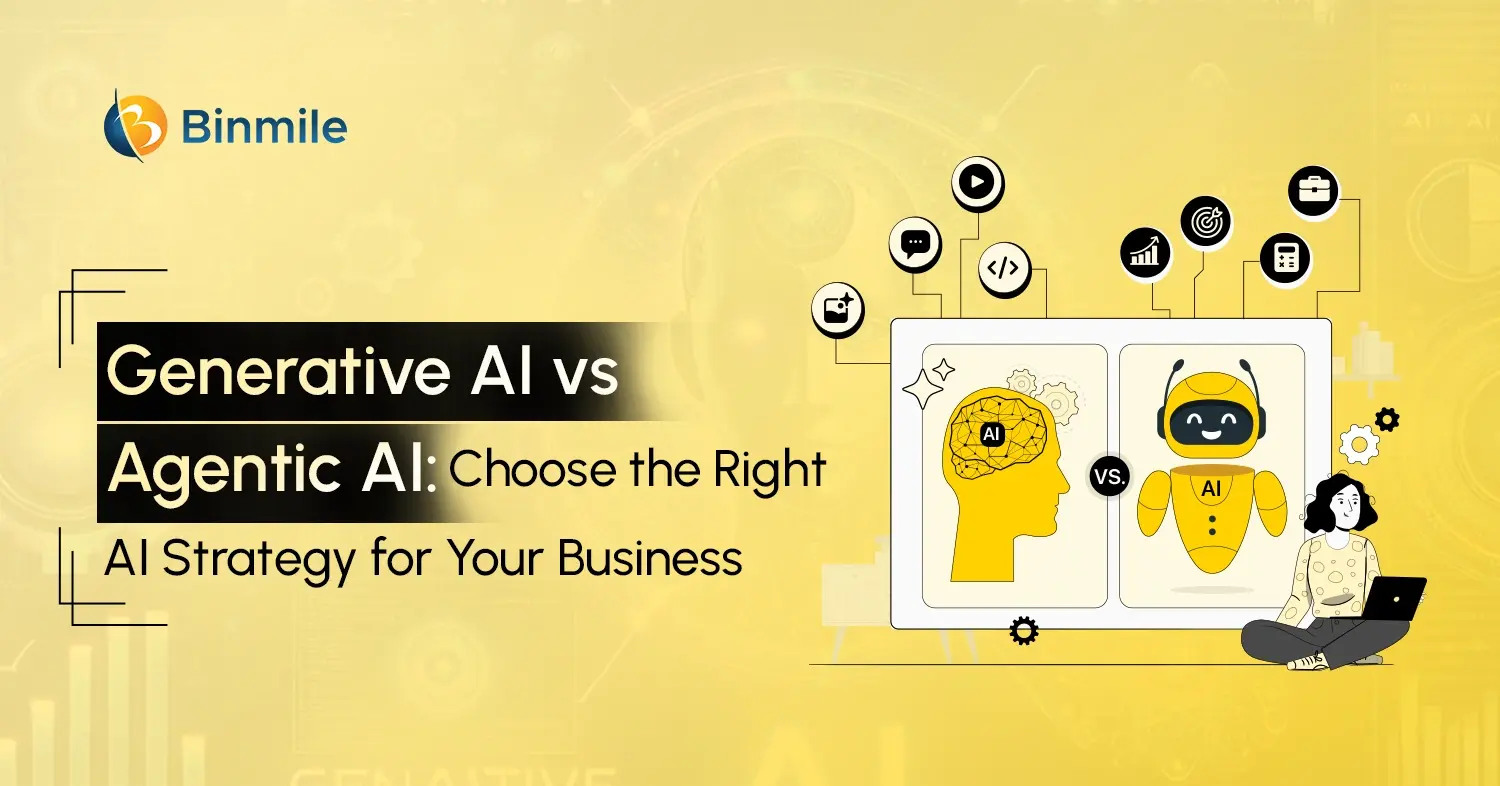
In simple terms, generative AI helps businesses create faster. Agentic AI helps businesses act faster.
Generative AI or Agentic AI: Which One Should Your Business Choose?
Use generative AI if you want to increase productivity or create content (e.g., code), generate documentation, or communicate with people. This type of AI is easier to pilot and manage because it does not give the AI as much authority as other forms of AI (i.e., agentic AI). It can be used by teams that are working toward achieving their AI maturity.
If your business requires multi-step operations, workflow automation, cross-system integration, or repeatable decision-making, agentic AI would be a better option for you. This type of AI can reduce the amount of time your teams spend moving data from one tool to another, obtaining approval for their work, and managing repeated operational tasks.
Ultimately, the decision you make will depend on the specific business challenge you are dealing with. Use generative AI if you want your team to be able to create more quickly and efficiently, while using agentic AI if you want to take coordinated action at the right time in the correct manner.
Ready to move from AI experimentation to real business impact with generative and agentic AI solutions?
Can Generative AI and Agentic AI Work Together?
Yes, and in many enterprise environments, they should work together.
The Future of agentic AI and generative AI will not be just about selecting and eliminating one from the other. Generative AI provides the ability to produce, summarize, describe, and suggest content, while agentic AI provides the capability to create plans, schedule tasks, complete processes, and oversee the implementation of those plans.
As an example of how these will work together in customer service, generative AI will be used to summarize customer issues and generate responses to those customers, while agentic AI will follow up by retrieving an order-related status for the customer, updating the associated CRM record, creating a replacement order with the supplier, and communicating that replacement order to the logistics team.
In enterprise automation, generative AI provides the communication and reasoning functions, while agentic AI provides execution and orchestration capabilities. The true value will be achieved by combining both of these capabilities and supporting them with clean data, secure integration, defined governance, and quantifiable business KPIs.
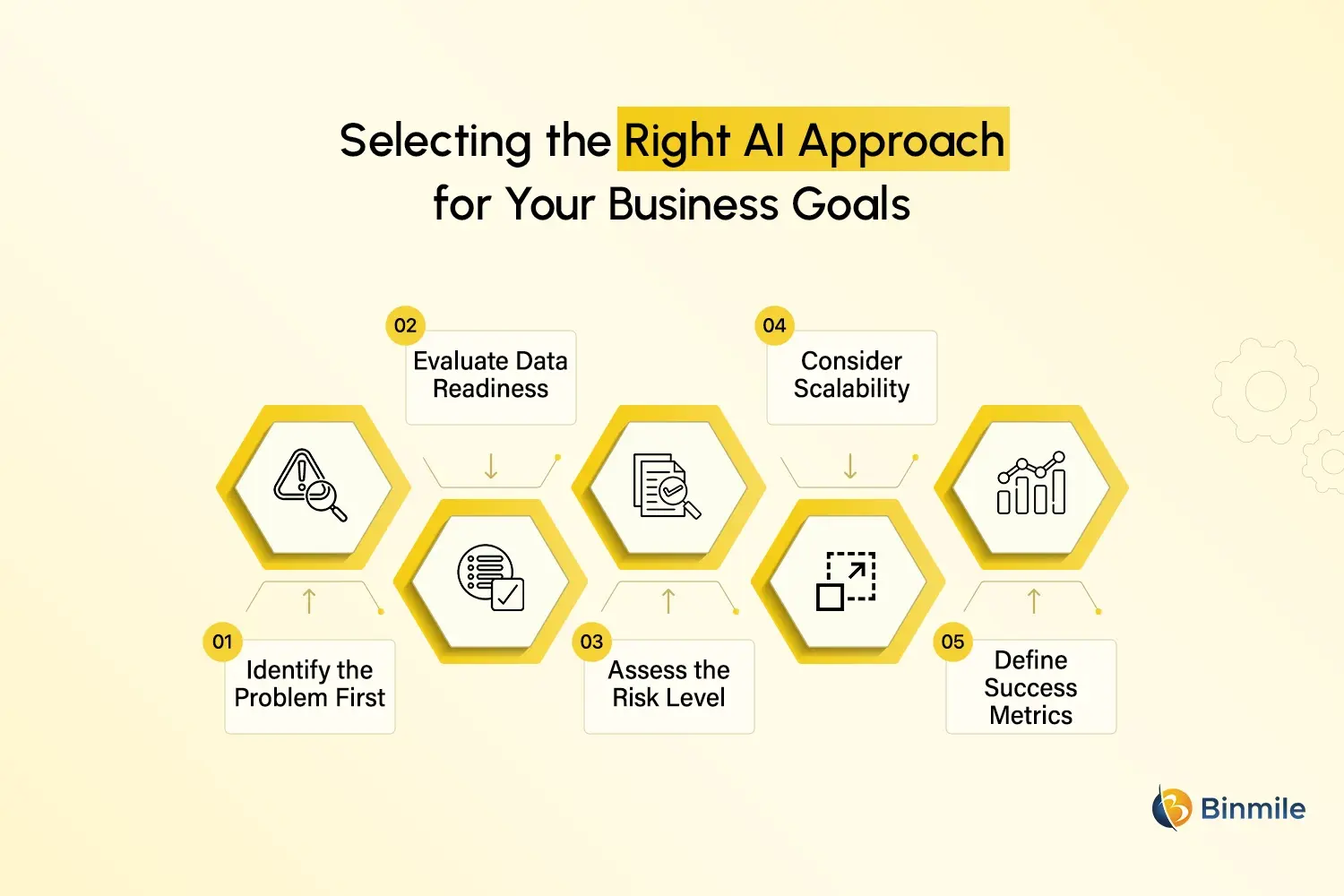
How to Choose the Right AI Strategy for Your Business
Choosing between generative AI and agentic AI should not begin with a tool comparison. It should begin with a business question.
-
Identify the Problem First
Generative AI can be used for content creation, documentation, coding, and knowledge-based tasks. Use Agentic AI to address issues related to fragmented workflows, handoffs, and multi-step automation.
-
Evaluate Data Readiness
All AI applications require clean data, unambiguous access rights, current documentation, and reliable connections.
-
Assess the Risk Level
Generative AI may be used for low-risk tasks, and Agentic AI for high-risk tasks that require additional control, process adherence, and monitoring.
-
Consider Scalability
While it is easier to implement a team-based AI solution than an enterprise solution, implementing an enterprise-based solution requires the implementation of architecture, security, integration, and governance.
-
Define Success Metrics
Track performance metrics by measuring productivity improvement, reduced time to complete tasks, decreased support requests, improved overall customer experience, and decreased operating expenses.
Common Mistakes to Avoid While Implementing an AI Strategy
Many businesses struggle with AI because they start with tools instead of business problems. This often leads to pilots and demos that look impressive but fail to deliver measurable outcomes. Another common mistake is trusting generative AI outputs without review. AI-generated content, code, or insights can still be incomplete, biased, or inaccurate, especially in legal, financial, healthcare, technical, and customer-facing use cases.
Agentic AI also needs stronger controls because it can access systems and take actions. Before wider agentic AI deployment, businesses need clear permissions, approval flows, monitoring, logs, rollback options, and escalation rules. A successful AI strategy should start with focused use cases, clean workflows, the right AI approach, measurable KPIs, and gradual scaling. The goal is not to adopt AI quickly, but to implement it securely, responsibly, and in ways that create real business value.
Need the right AI strategy to improve productivity, automate workflows, and scale smarter operations?
How Binmile Can Help You Build the Right AI Strategy
Choosing between generative AI and agentic AI depends on your workflows, data maturity, product roadmap, security needs, and business goals. Some organizations need a generative AI model to improve productivity. Others need an agentic AI system to automate complex operations. Many need a combination of both.
Binmile helps businesses identify the right AI opportunities and convert them into practical, scalable solutions through AI strategy, product discovery, custom AI development, workflow automation, agentic AI architecture, enterprise integrations, and secure deployment.
As an AI development company, Binmile builds AI solutions that are usable, secure, scalable, and aligned with business outcomes, helping enterprises move from experimentation to measurable impact.
Frequently Asked Questions
Generative AI creates content, code, summaries, or insights based on prompts. Agentic AI goes further by planning actions, using tools, and completing tasks across systems with defined autonomy, governance, and human oversight.
Generative AI improves productivity by reducing time spent on writing, coding, documentation, research, reporting, customer responses, and content creation. It helps teams move faster while allowing humans to review, refine, and approve final outputs.
Agentic AI can solve workflow-heavy problems such as support ticket handling, IT incident response, payment checks, CRM updates, compliance workflows, sales follow-ups, and operations coordination where tasks require multiple steps across different systems.
Organizations should choose Generative AI when they need assistance with content creation, coding, summarization, product documentation, knowledge management, or ideation. It is ideal when human review is required before final decisions or actions.
Agentic AI is better when workflows need planning, tool usage, decision support, and task execution across systems. It works best for repeatable, rule-based processes where automation can reduce delays, handoffs, and manual coordination.
Yes, businesses can combine both. Generative AI can create responses, summaries, and recommendations, while Agentic AI can execute workflow steps, update systems, trigger actions, and coordinate tasks under proper governance and human approval.
Businesses should start with clear use cases, assess data readiness, choose the right AI model, define governance rules, run controlled pilots, measure outcomes, and scale gradually with security, compliance, and human oversight built in.
An AI development company helps enterprises move beyond experiments by selecting the right architecture, integrating AI with existing systems, managing security risks, building custom workflows, and aligning AI implementation with measurable business goals.