Online shoppers expect every transaction to be quick, secure, and hassle-free. A slow checkout, limited payment options, or a failed transaction is often enough to send them to a competitor. According to the research, the average documented online shopping cart abandonment rate is 70.19%, with complicated checkout processes and payment-related issues among the leading reasons customers leave without completing their purchase.
Choosing the right eCommerce Payment Processing solution is no longer just about accepting online payments. It directly affects customer experience, conversion rates, operational efficiency, and business growth. Whether you are launching a new online store or scaling across multiple markets, selecting the right payment infrastructure can make a measurable difference.
This guide explains how eCommerce Payment Processing Solutions work, the features businesses should prioritize, different eCommerce payment methods available today, common implementation challenges, and the key factors to evaluate before making a decision. You will also learn how modern technologies like payment orchestration, embedded payment solutions, and AI are reshaping digital commerce.
What Is eCommerce Payment Processing?
eCommerce Payment Processing refers to the complete process of securely authorizing, verifying, and completing online payments between customers and merchants. It enables businesses to accept payments through websites, mobile applications, and digital commerce platforms while ensuring sensitive financial information remains protected.
A typical eCommerce payment processing system involves several participants working together behind the scenes to complete every transaction securely. The process begins when a customer initiates a payment while purchasing a product or service online. The merchant receives the order request and relies on a payment gateway to securely encrypt and transmit the customer’s payment information. The payment processor then routes this information between the acquiring bank, which receives payments on behalf of the merchant, and the issuing bank, which verifies the customer’s account, checks available funds, authenticates the transaction, and either approves or declines the payment.
Although customers experience payment completion in just a few seconds, multiple systems communicate simultaneously to authorize the transaction, transfer funds securely, and ensure both the customer and merchant can complete the purchase with confidence.
How Does an eCommerce Payment Processing System Work?
Understanding how an eCommerce payment system works helps businesses identify where delays, failures, or security risks may occur.
The payment journey typically follows these steps:
Step 1: Customer Places an Order
A shopper selects products, proceeds to checkout, and chooses from available eCommerce payment methods, such as credit cards, debit cards, digital wallets, UPI, Buy Now Pay Later (BNPL), or bank transfers.
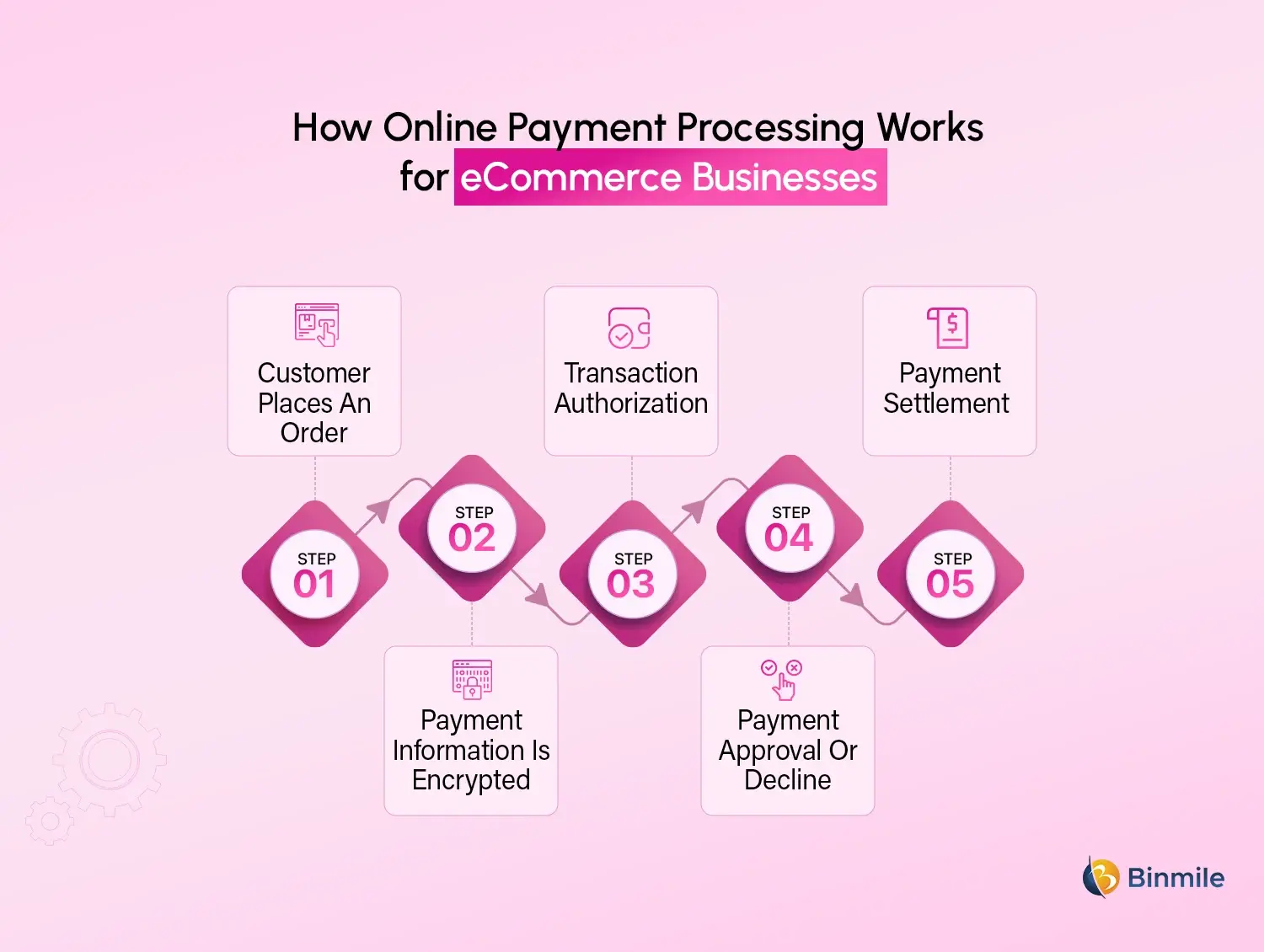
Step 2: Payment Information Is Encrypted
The payment gateway encrypts sensitive customer information before transmitting it. Encryption ensures payment details remain protected during transmission.
Step 3: Transaction Authorization
The payment processor sends the transaction request to the customer’s issuing bank for approval. The bank verifies account balance, card validity, fraud indicators, and authentication requirements.
Step 4: Approval or Decline
The issuing bank either approves or rejects the payment request. The decision is returned through the payment processor and gateway within seconds.
Step 5: Settlement
Once approved, funds are transferred to the merchant’s acquiring bank before reaching the merchant account according to settlement timelines.
Every successful online purchase depends on this coordinated process happening quickly and securely.
Why Choosing the Right eCommerce Payment Processing Solution Matters
Many businesses focus heavily on marketing and customer acquisition but overlook the payment experience. Unfortunately, even a well-designed website can lose customers if checkout creates unnecessary friction.
The right eCommerce Payment Processing Solutions can influence several critical business outcomes.
-
Higher Conversion Rates
A seamless checkout experience encourages customers to complete purchases rather than abandon them. Faster payment approvals, familiar payment options, and fewer technical interruptions contribute directly to higher conversions.
-
Reduced Cart Abandonment
Unexpected fees, limited payment options, payment failures, and lengthy checkout forms remain major contributors to cart abandonment. Optimized payment systems simplify checkout while improving customer confidence.
-
Improved Customer Trust
Consumers are becoming increasingly aware of online fraud. Secure payment processing, recognized payment providers, and strong authentication mechanisms reassure customers that their financial information is protected.
-
Better Operational Efficiency
Instead of managing multiple disconnected payment providers, businesses can centralize payment management, automate reconciliation, generate detailed reports, and monitor transactions from a single dashboard.
-
Global Business Expansion
Companies selling internationally require payment partners that support multiple currencies, regional payment preferences, local tax requirements, and cross-border compliance.
Without a scalable payment infrastructure, entering new markets becomes significantly more complex.
Factors to Consider When Choosing an eCommerce Payment Processing Solution
Not every payment provider offers the same capabilities. The ideal solution depends on your business model, customer base, sales channels, and future growth plans.
Here are the most important factors to evaluate before making a decision.
-
Security Should Always Be the First Priority
Choose a solution with PCI DSS compliance, encryption, tokenization, multi-factor authentication, AI-powered fraud detection, and real-time monitoring to keep transactions secure and protect customer data.
-
Support for Multiple Payment Methods
Support for credit and debit cards, UPI, digital wallets, BNPL, net banking, and international payment methods gives customers more flexibility and improves checkout completion rates.
-
Easy eCommerce Payment Gateway Integration
Look for a provider that offers APIs, SDKs, platform plugins, and reliable technical support to ensure smooth and faster eCommerce payment gateway integration.
-
Scalability for Future Growth
Select a solution that can handle increasing transaction volumes, new payment methods, subscription billing, and international expansion as your business grows.
-
Transparent Pricing
Review all costs, including setup fees, transaction charges, refunds, chargebacks, currency conversion, and monthly fees, to avoid unexpected expenses.
Essential Features Every Modern eCommerce Payment Solution Should Offer
Modern businesses require far more than simple transaction processing. Today’s eCommerce payment solutions combine automation, analytics, security, and intelligent routing to improve customer experience while optimizing revenue.
-
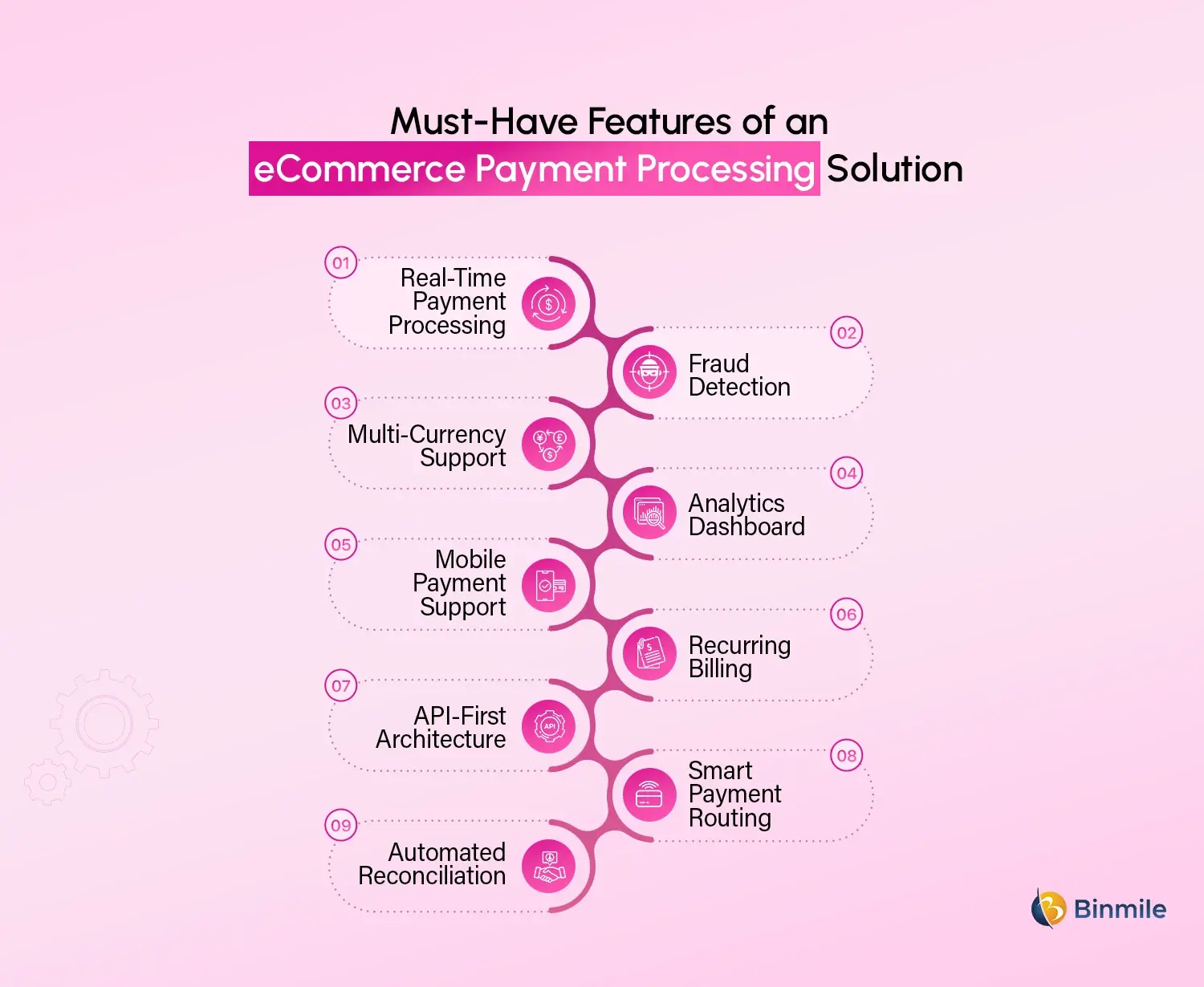
Real-Time Payment Processing
Customers expect payments to be completed instantly without unnecessary delays. Real-time payment processing reduces checkout friction, improves customer satisfaction, and increases the likelihood of successful order completion.
-
Fraud Detection
Modern embedded payment solutions should use AI-powered fraud detection, behavioral analytics, and real-time risk monitoring to identify suspicious transactions before they result in financial losses. Strong fraud prevention also helps reduce chargebacks while improving customer trust.
-
Multi-Currency Support
Businesses expanding into international markets need payment systems capable of accepting multiple currencies while complying with regional payment regulations. Multi-currency support enables customers to pay in their preferred currency, creating a more localized shopping experience.
-
Analytics Dashboard
Comprehensive reporting dashboards provide real-time visibility into transaction volumes, payment success rates, customer behavior, settlement status, and revenue trends. These insights help businesses identify opportunities to optimize payment performance and improve operational efficiency.
-
Mobile Payment Support
With mobile commerce continuing to grow, businesses should ensure their payment solution supports smartphones, tablets, digital wallets, QR code payments, and other mobile-first payment experiences. A mobile-friendly checkout improves conversions across devices.
-
Recurring Billing Support
Subscription-based businesses require automated recurring billing capabilities that simplify payment collection while reducing manual effort. Reliable recurring billing also helps improve customer retention and revenue predictability.
-
API-First Architecture
An API-first approach allows businesses to integrate payment capabilities with eCommerce platforms, ERP systems, CRM software, accounting tools, and custom applications more efficiently. This flexibility simplifies future upgrades and supports evolving business requirements.
-
Smart Payment Routing
Smart payment routing automatically directs transactions to the most suitable payment processor based on factors such as geography, transaction value, processor performance, or payment method. This improves transaction success rates while reducing payment failures.
-
Automated Reconciliation
Reconciling transactions manually consumes valuable time and increases the risk of errors. Automated reconciliation streamlines financial operations by matching payments with settlements automatically, helping finance teams close accounts more quickly and accurately.
Want to reduce payment failures, improve checkout conversions, and support global business growth?

What Are the Common Challenges in eCommerce Payment Processing
Even the most established online businesses encounter payment-related issues that affect customer experience and revenue. Understanding these challenges makes it easier to choose a solution that can prevent them before they become costly problems.
-
Payment Failures
Failed transactions remain one of the biggest concerns for online retailers. They can occur due to insufficient funds, expired cards, network issues, authentication failures, or gateway downtime. Every failed payment represents a potential lost sale and a frustrated customer.
-
Fraud and Chargebacks
As online transactions continue to grow, so do fraud attempts. Businesses must deal with stolen payment credentials, account takeovers, friendly fraud, and chargebacks. Besides financial losses, chargebacks increase operational costs and may even affect merchant credibility with payment providers.
-
Limited Payment Options
Customers expect flexibility at checkout. If their preferred payment method is unavailable, many simply leave without completing the purchase. Businesses operating in multiple regions face an even bigger challenge because payment preferences vary across countries.
-
Cross-Border Payment Complexity
Selling internationally introduces additional challenges, including multiple currencies, exchange rates, local regulations, taxes, and region-specific payment preferences. A payment solution designed only for domestic transactions often struggles to support international expansion.
-
Complex System Integration
Integrating payment systems with eCommerce platforms, ERP systems, CRM software, accounting tools, and inventory management solutions can become complicated without proper APIs and technical support.
How GenAI Is Transforming eCommerce Payment Experiences
Artificial intelligence is no longer limited to product recommendations or customer service. Today, GenAI in eCommerce is helping businesses make payment processes faster, safer, and more personalized.
Some of the most valuable applications include:
-
Intelligent Fraud Detection
Traditional fraud systems rely on predefined rules, while AI analyzes behavioral patterns, transaction history, device information, and purchasing habits to identify suspicious activity more accurately.
-
Personalized Checkout Experiences
AI can recommend preferred payment methods based on customer history, location, or previous purchases, reducing friction during checkout.
-
Faster Customer Support
Generative AI-powered virtual assistants can answer payment-related queries, explain failed transactions, initiate refunds, and guide customers through checkout without human intervention.
-
Smarter Payment Insights
AI analyzes transaction data to identify payment trends, approval rates, seasonal behavior, and customer preferences. These insights help businesses optimize payment strategies and improve overall conversion rates.
How to Choose the Best eCommerce Payment Processing Solution
Selecting the best eCommerce payment processing platform involves much more than comparing transaction fees. Businesses should evaluate providers based on current requirements as well as long-term scalability.
Use the following checklist before making your decision.
| Evaluation Criteria | Questions to Ask |
|---|---|
| Security | Does it comply with PCI DSS and offer fraud protection? |
| Payment Methods | Does it support the payment options preferred by your customers? |
| Global Support | Can it process international payments and multiple currencies? |
| Integration | Is eCommerce payment gateway integration simple and well documented? |
| Reliability | What are the transaction success rates and uptime guarantees? |
| Reporting | Does it provide real-time dashboards and reconciliation tools? |
| Scalability | Can it support increasing transaction volumes and business growth? |
| Customer Support | Is technical assistance available when needed? |
Rather than selecting a provider based solely on price, businesses should evaluate the overall value it delivers across customer experience, operational efficiency, security, and future growth.
What Is the Future of Payment Processing
The future of payment processing will be shaped by customer expectations, evolving technologies, and stronger security requirements. Several trends are already influencing the next generation of digital payments.
-
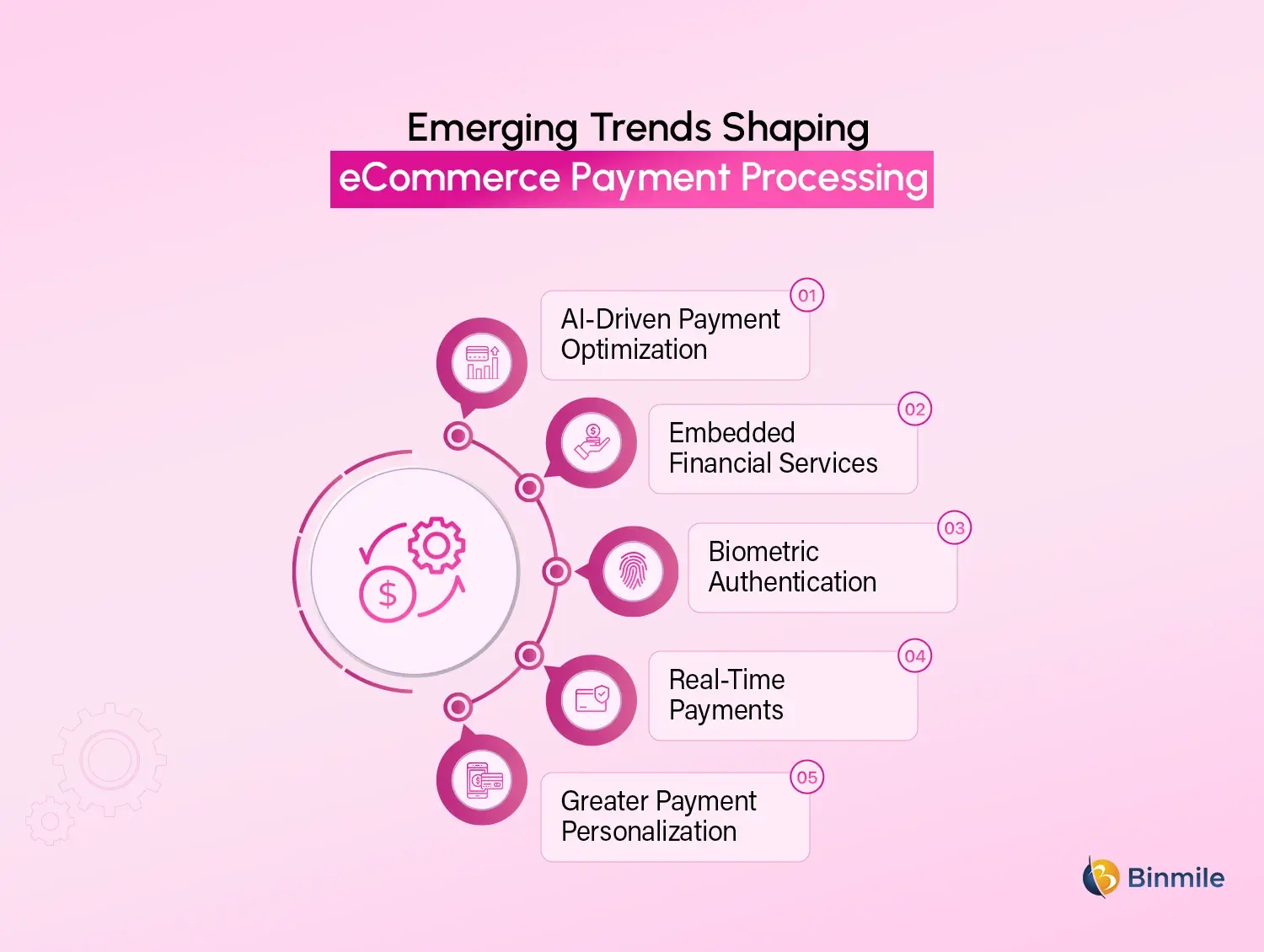
AI-Driven Payment Optimization
Artificial intelligence will continue improving payment routing, fraud prevention, customer authentication, and transaction approval rates through real-time decision-making.
-
Embedded Financial Services
Payments, lending, insurance, and financial products will increasingly become integrated directly into digital platforms, creating more seamless customer experiences.
-
Biometric Authentication
Fingerprint recognition, facial recognition, and passkeys are expected to reduce dependence on traditional passwords while strengthening payment security.
-
Real-Time Payments
Customers increasingly expect instant payment confirmations and faster settlement. Real-time payment networks will continue expanding across global markets.
-
Greater Payment Personalization
Businesses will use customer data and AI to offer personalized payment recommendations, preferred checkout experiences, and tailored financing options.
Looking to modernize your eCommerce payment infrastructure with secure, scalable, and customer-friendly experiences?
Building a Payment Strategy That Supports Long-Term Growth
Choosing the right eCommerce payment processing solution is not simply a technology decision. It is a strategic investment that affects customer satisfaction, operational efficiency, revenue growth, and global expansion.
Businesses need payment infrastructure that can support changing customer preferences, integrate seamlessly with existing systems, strengthen security, and scale alongside business growth. Whether the focus is reducing payment failures, expanding internationally, or improving checkout performance, selecting the right partner can significantly accelerate these goals.
For organizations modernizing their digital commerce ecosystem, working with an experienced technology partner can simplify this journey. Binmile helps enterprises design and implement scalable eCommerce payment processing solutions, integrate secure payment gateways, optimize payment workflows, and build future-ready commerce platforms that deliver seamless customer experiences while supporting sustainable business growth.
Frequently Asked Questions
eCommerce payment processing securely transfers payment information between customers, merchants, payment gateways, processors, and banks. It verifies transactions, authorizes payments, and settles funds, enabling businesses to accept online payments safely and efficiently.
A modern payment processing solution automates transaction management, improves payment success rates, simplifies reconciliation, strengthens fraud prevention, supports multiple payment methods, and delivers actionable insights that help businesses operate more efficiently.
Yes. Modern payment solutions support multiple currencies, regional payment methods, localized checkout experiences, and cross-border compliance, allowing businesses to serve customers across global markets with fewer operational complexities.
They simplify checkout by offering multiple payment options, faster transaction approvals, secure authentication, and reliable payment experiences. These improvements reduce customer frustration and encourage shoppers to complete their purchases.
Strong payment security protects sensitive customer information, minimizes fraud, reduces chargebacks, ensures regulatory compliance, and builds customer trust, all of which contribute to better business performance and long-term brand credibility.
Yes. An experienced technology partner can simplify integration, customize payment workflows, ensure security compliance, connect enterprise systems, and help businesses build scalable payment infrastructure aligned with future growth objectives.