Procurement has quietly become one of the most data-heavy functions in an enterprise. Yet, many teams still depend on spreadsheets, email approvals, disconnected supplier records, and manual invoice processing to keep things moving. By 2027, procurement departments are expected to reach a digitalization rate of around 70%, reflecting a strong shift toward technology-driven procurement processes and operations.
But implementing a platform is only one part of the transformation. The bigger question is whether technology actually makes procurement faster, more transparent, easier to manage, and better aligned with business goals. This guide explores what a digital transformation roadmap in procurement really involves, the benefits organizations can expect, technologies driving the change, practical strategies for implementation, common challenges, and ways to measure the return on investment.
What Is Digital Transformation in Procurement and Why Does It Matter?
Digital Transformation in Procurement is the use of technology to redesign purchasing, sourcing, supplier management, contracts, approvals, invoicing, and procurement data. Instead of relying on emails, spreadsheets, and disconnected systems, organizations can create a connected digital procurement process with centralized data, automated workflows, and better visibility.
The shift is important because procurement directly affects costs, cash flow, compliance, supplier relationships, and business continuity. With the right digital procurement technology, teams can identify spending patterns, monitor supplier performance, reduce manual work, improve compliance, and make faster, data-driven decisions. More importantly, procurement can move beyond its traditional transactional role and become a strategic function that actively supports business efficiency and growth.
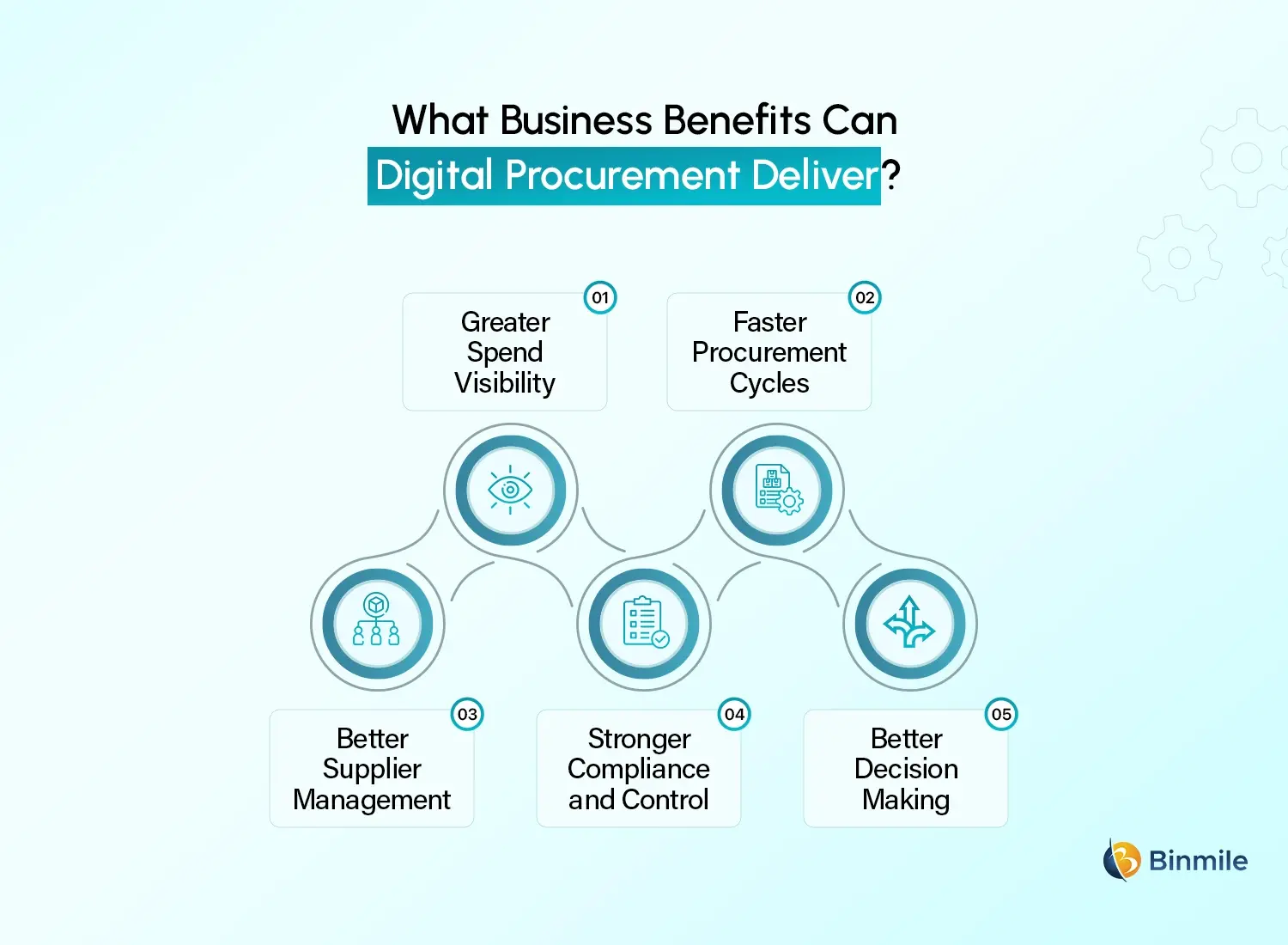
What Are the Key Benefits of Digital Procurement?
A well-planned transformation can deliver improvements across the entire procurement lifecycle.
-
Greater Spend Visibility
Digital procurement systems centralize spending data, making it easier to identify spending patterns, control unnecessary purchases, and find opportunities for cost savings.
-
Faster Procurement Cycles
Automated approvals, purchase orders, and invoice processing reduce manual work, minimize bottlenecks, and help teams complete procurement faster.
-
Better Supplier Management
Centralized supplier data helps organizations manage contracts, track performance, maintain documentation, and identify supplier risks more efficiently.
-
Stronger Compliance and Control
Digital procurement solutions can automate approval limits, preferred supplier rules, and purchasing policies, helping organizations maintain better control and compliance.
-
Better Decision-Making
Centralized data and analytics provide insights into spending, supplier performance, contracts, and purchasing trends, enabling faster and more informed procurement decisions.
Which Technologies Are Driving Digital Procurement?
Technology is not a checklist where every organization needs every available tool. The right technology stack depends on procurement complexity, existing systems, transaction volumes, business goals, and the maturity of the organization.
Some of the most important technologies include:
| Technology | Role in Procurement | Business Value |
|---|---|---|
| E-procurement Platforms | Digitize purchasing and requisition workflows | Faster and more controlled purchasing |
| Procurement Automation | Automates repetitive procurement activities | Reduced manual effort and errors |
| Spend Analytics | Analyzes organizational spending | Better cost control and sourcing decisions |
| AI and Machine Learning | Identifies patterns and supports predictions | Smarter decisions and risk detection |
| Supplier Management Systems | Centralizes supplier information and performance | Better supplier visibility |
| Contract Management | Tracks contracts, renewals, and obligations | Reduced compliance and renewal risks |
| ERP Integration | Connects procurement with finance and operations | Consistent enterprise-wide data |
| Cloud Platforms | Provides scalable access to procurement applications | Greater flexibility and accessibility |
Together, these technologies form the foundation of modern digital procurement systems. However, their value depends heavily on how well they connect with existing business processes.
How Can AI and Automation Transform Procurement?
Artificial intelligence is taking procurement beyond simple workflow automation.
Traditional automation follows predefined rules. For example, a system can automatically route a purchase request to a manager when the amount exceeds a particular threshold.
AI can go further by analyzing historical and real-time information to identify patterns and support decisions.
For example, artificial intelligence as a service in procurement can help organizations identify unusual purchasing patterns, predict supplier delays, classify spending, recommend suitable suppliers, analyze supplier performance, extract information from contracts and invoices, detect compliance risks, forecast purchasing needs, and support sourcing and negotiation decisions.
AI Transformation can also make procurement data easier to work with, while enabling users to interact with procurement insights more naturally. Instead of manually searching through reports, users could ask questions in natural language and receive insights based on available procurement data.
The important point is that AI should complement procurement expertise, not blindly replace it. Supplier negotiations, strategic sourcing decisions, risk assessment, and business-critical purchasing still require context and human judgment.
What Should a Digital Procurement Strategy Include?
A successful digital procurement strategy begins with business problems rather than technology.
Before selecting a platform, organizations should understand what is slowing procurement down and where the greatest opportunities exist.
1. Assess the Current Procurement Process
Map the process from requisition to payment and identify manual approvals, duplicate data entry, spreadsheet dependency, supplier data gaps, invoice issues, and off-contract spending. This creates a baseline for measuring improvement.
2. Define Measurable Objectives
Set specific goals such as reducing approval time, increasing contract-based spending, lowering invoice exceptions, or speeding up supplier onboarding. Clear objectives help determine the right technologies and workflows, while AI Consulting can help organizations identify suitable AI use cases and align them with procurement goals.
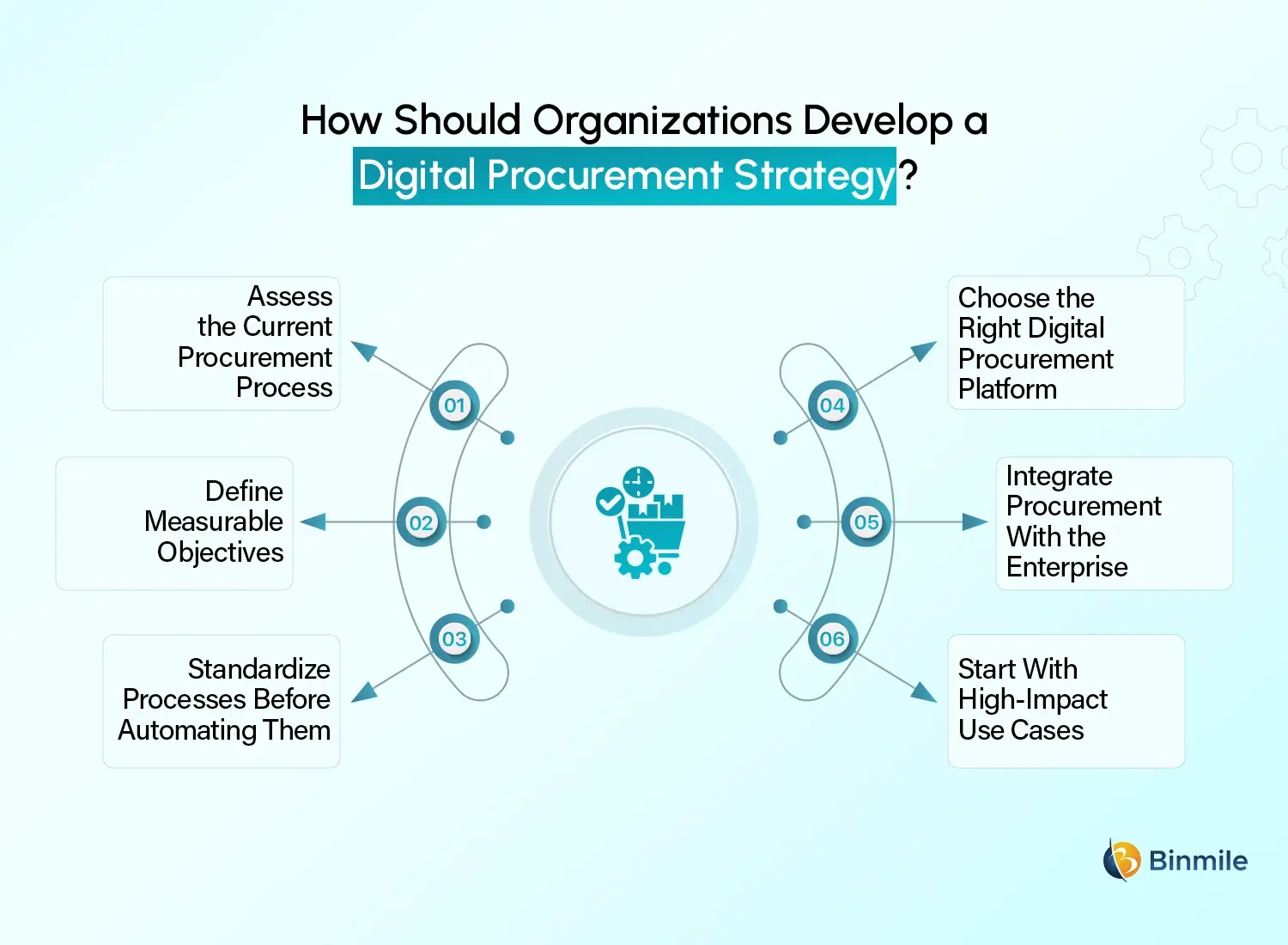
3. Standardize Processes Before Automating Them
Automation cannot fix inefficient processes. Standardize workflows, approval rules, data definitions, and procurement policies first, then automate repetitive activities to improve speed and consistency.
4. Choose the Right Digital Procurement Platform
Select a platform based on business requirements, scalability, security, integrations, reporting, automation, customization, user experience, and total cost of ownership. The right solution should fit the organization’s existing environment, including ERP, Logistics Management Systems, finance, and supply chain applications.
5. Integrate Procurement With the Enterprise
Connect procurement with ERP, finance, inventory, supply chain, and other relevant systems, with Logistics Software Companies Development Services supporting more complex procurement and supply chain integration requirements. Integration reduces duplicate data entry, improves information flow, and provides a more unified view of business operations.
6. Start With High-Impact Use Cases
Begin with focused areas such as purchase approvals, supplier onboarding, invoice processing, or spend visibility. A pilot can demonstrate value, uncover adoption challenges, and provide insights for broader implementation.
This approach also makes the procurement transformation roadmap easier to manage because each phase builds on the previous one.
Build a connected, data-driven procurement ecosystem with the right technology, automation, and integration strategy.

What Are the Biggest Challenges in Digital Procurement Transformation?
Technology may be the visible part of transformation, but people, processes, and data often determine whether the project succeeds.
-
Resistance to Change
Employees may resist new procurement systems after years of using familiar tools. Clear communication and training can help them understand the benefits and adopt new workflows more easily.
-
Poor Data Quality
Duplicate supplier records, inconsistent categories, and inaccurate spending data can weaken procurement analytics. Data cleansing and governance should therefore be addressed early in the transformation.
-
Legacy System Integration
Disconnected ERP, finance, inventory, and supplier systems can limit the value of a new procurement platform. Integration should be planned early to ensure smooth data flow across systems.
-
Technology-First Implementation
Choosing a platform before identifying business needs can lead to poor outcomes. Organizations should first define their objectives, process gaps, users, and integration requirements, then select technology accordingly.
How Can Organizations Measure the ROI of Digital Procurement?
Measure procurement transformation through business outcomes, not simply whether a platform has gone live.
Organizations can track procurement cycle time, purchase order processing time, invoice exception rates, contract-based spending, maverick spend, supplier onboarding time, supplier performance, procurement cost per transaction, negotiated and realized savings, user adoption, and compliance rates to evaluate the effectiveness and ROI of digital procurement initiatives.
For example, if procurement automation and ERP Software Development reduce approval time while increasing spend under approved contracts, the organization can connect the technology investment with measurable operational improvements.
ROI should also include less visible benefits such as improved data quality, reduced compliance exposure, fewer manual errors, and better supplier decision-making.
How Long Does a Digital Procurement Transformation Take?
There is no universal timeline because procurement environments vary significantly.
A focused implementation covering a limited number of workflows may take a few months, while a large enterprise transformation involving multiple business units, countries, legacy systems, and complex integrations can take considerably longer.
A phased approach is generally more practical than trying to transform every procurement activity simultaneously. Organizations can establish priorities, implement high-value capabilities first, measure results, and expand the transformation based on what they learn.
The timeline should therefore be driven by scope, integration complexity, data readiness, customization requirements, and user adoption rather than an arbitrary deadline.
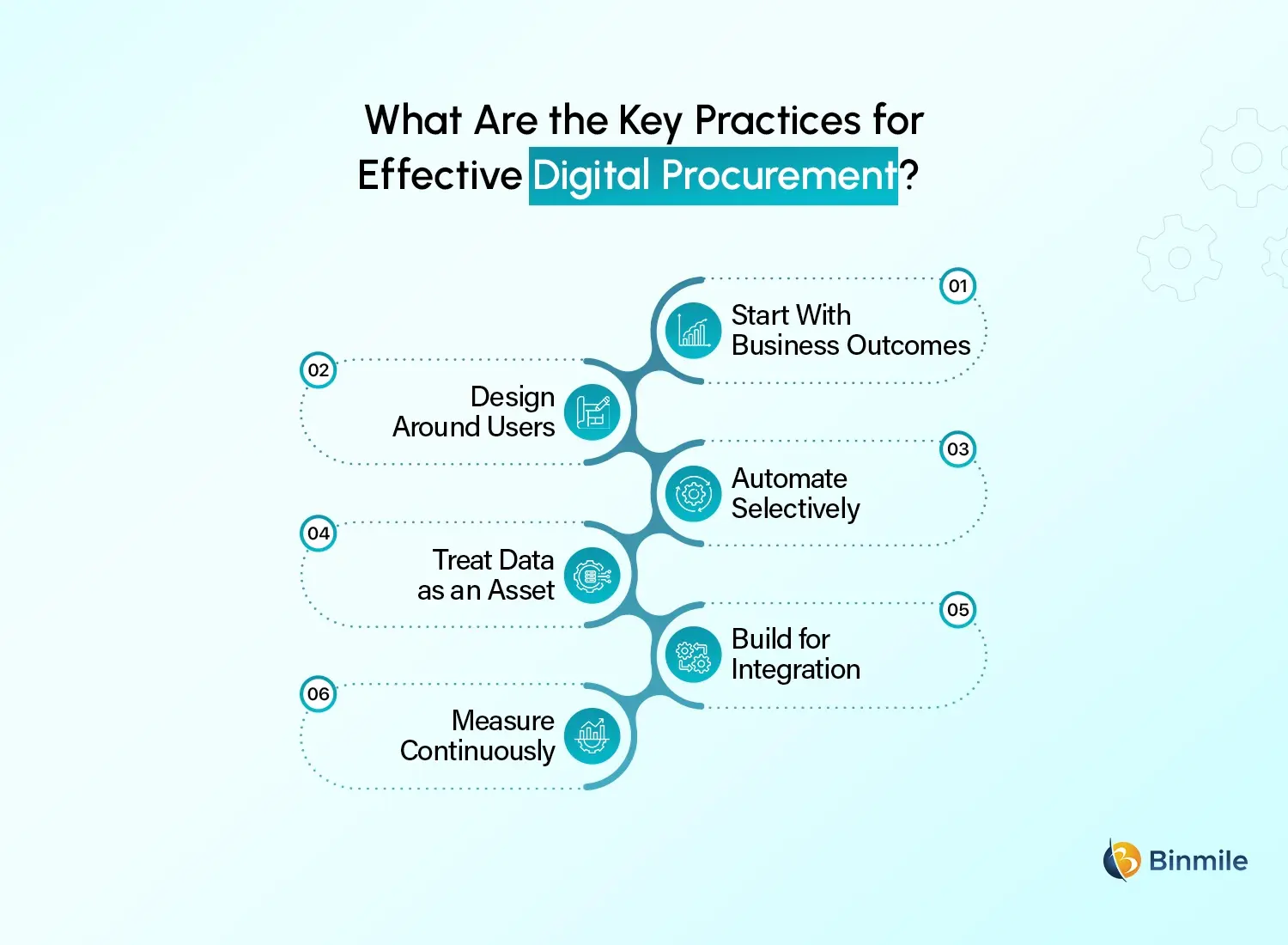
What Are the Best Practices for Successful Digital Procurement
The difference between implementing procurement software and achieving procurement transformation comes down to execution.
A few principles can keep the initiative focused:
-
Start With Business Outcomes
Define clear goals such as cost optimization, faster processing, stronger compliance, or improved supplier performance before selecting technology.
-
Design Around Users
Keep procurement tools simple and intuitive for employees, approvers, procurement teams, and suppliers to encourage adoption and reduce friction.
-
Automate Selectively
Automate repetitive, rules-based activities while keeping strategic decisions under human oversight where experience and judgment matter.
-
Treat Data as an Asset
Maintain clean and consistent supplier, contract, category, and spending data to support reliable analytics and AI-driven insights.
-
Build for Integration
Connect procurement systems with ERP, finance, inventory, supply chain, and other enterprise applications instead of creating another isolated system.
-
Measure Continuously
Track performance and refine procurement processes as business needs, supplier markets, technologies, and organizational priorities evolve.
From procurement automation and AI to ERP integration and supplier management, create a transformation roadmap built around your business needs.

How Binmile Can Help With Digital Transformation in Procurement
Successful procurement transformation requires more than deploying a new application. It calls for a combination of process understanding, technology expertise, integration capabilities, data management, and a clear implementation roadmap. This is where a technology partner can help organizations turn procurement objectives into practical digital capabilities.
Binmile can support enterprises in assessing existing procurement workflows, identifying automation opportunities, defining the right technology architecture, and developing or integrating solutions around their operational requirements. Its expertise across AI, ERP, enterprise software, and digital transformation in business can also help connect procurement initiatives with broader business systems instead of treating procurement as an isolated function.
The focus remains on building a procurement environment that is easier to manage, more data-driven, and capable of scaling with the organization through AI Transformation and intelligent automation. Whether the priority is procurement automation, intelligent analytics, supplier management, system integration, or a broader transformation roadmap, the right approach is to start with the business problem and build the technology around it.
Frequently Asked Questions
Digital transformation in procurement means using digital technologies to redesign and improve procurement activities such as sourcing, purchasing, supplier management, approvals, contracts, and invoicing. It replaces fragmented manual processes with connected, automated, and data-driven workflows.
It centralizes procurement data and provides real-time visibility into spending, supplier performance, contracts, and purchasing trends. Analytics and AI can then identify patterns, risks, and opportunities, helping procurement teams make faster, evidence-based decisions.
Common challenges include employee resistance, poor-quality procurement data, legacy system integration, inconsistent processes, unclear objectives, and selecting technology before understanding business requirements. Strong change management and phased implementation can significantly reduce these risks.
Automation can handle repetitive activities such as approvals, purchase orders, invoice matching, and supplier onboarding. AI can analyze spending, classify data, identify anomalies, assess supplier risks, forecast demand, and provide recommendations that support procurement professionals.
Implementation timelines vary based on scope, integrations, data quality, customization, and organizational size. A focused implementation may take a few months, while enterprise-wide transformation can take longer. Phased implementation is often more practical than a single large rollout.
Organizations can measure ROI through procurement cycle time, cost savings, contract compliance, maverick spend, invoice processing, supplier performance, user adoption, and transaction costs. Comparing these metrics before and after implementation provides a clearer picture of business value.