For companies in logistics, delivery, or construction, the performance and reliability of their vehicles are crucial to profits, customer satisfaction, and legal compliance. Fleet vehicle maintenance is not just a task but a strategic responsibility that ensures driver safety, operational efficiency, cost control, and regulatory compliance. Since 2022, the number of violations issued to fleets has grown by 20%, underscoring the critical role of fleet managers in implementing a robust maintenance strategy.
While on-time inspections and repairs are crucial to the Fleet Vehicle Maintenance program, what are the key components of fleet management? How to manage Fleet vehicle maintenance services? If you are also wondering about these questions, this blog is for you. In this blog, we will share a fleet vehicle maintenance guide covering its core parts and offer fleet managers clear steps to improve their efforts. In addition, we will discuss how much it costs and show how modern tools, like fleet maintenance software, can make operations smoother and more efficient.
What is Fleet Vehicle Maintenance?
The Fleet Vehicle Maintenance program is the systematic process of ensuring fleet vehicles remain in optimal operating condition, prioritising safety and longevity, and supporting business activities. It consists of several steps, from carrying out maintenance schedules and replacing damaged parts to tracking the history of each asset through fleet management or transportation management software.
Key Elements of Fleet Vehicle Maintenance Services
- Preventive Measures: Routine tasks such as oil changes, tyre rotations, and brake inspections to avert breakdowns.
- Corrective Actions: Repairs for identified issues, such as engine malfunctions or part replacements, to restore functionality.
- Regulatory Compliance: Ensuring adherence to standards like emissions testing and safety certifications.
Unlike reactive repairs, fleet maintenance is a proactive and strategic process that focuses on the collective needs of multiple vehicles. This approach, which includes preventive measures, corrective actions, and regulatory compliance, empowers fleet managers to support cost-efficiency and reliability, aligning with the organization’s broader mission by reducing downtime and maintaining operational continuity.
Types of Fleet Vehicle Maintenance Services: Key Insights
Three types of maintenance happen within fleets: corrective, predictive, and preventive maintenance.
-
Corrective Maintenance
It is often unscheduled and done as a reaction to a failed item on a vehicle. Corrective Maintenance focuses on restoring the vehicle as quickly as possible. It is sometimes also referred to as ‘breakdown’ or ‘reactive maintenance.’

-
Preventive Maintenance (PM)
PM is a proactive approach to fleet maintenance, where regular maintenance is scheduled and performed. It ensures the fleets are running smoothly, avoiding the high costs and disruptions of unplanned breakdowns.
-
Predictive Maintenance (PdM)
PdM is even more proactive than preventive maintenance. In PdM, fleets use historical data and analytics to predict potential equipment failures, allowing for timely maintenance and preventing costly breakdowns.
What Are Some Common Types of Fleets
Fleets differ based on the needs of the organization for which they are deployed, and each type of fleet has its own maintenance requirements. Some of the common types include:
-
Delivery Fleets
These are used by companies like e-commerce, courier, and food delivery services, usually in vans or small trucks. The focus is on the mileage and the frequent delivery schedules.
-
Transportation Fleets
This includes buses, taxis, or ride-sharing vehicles for public or private use. The focus is on the safety of the passengers and adherence to the set regulations.
-
Corporate Fleets
These include cars or utility vehicles that the company uses for its employees to move around or to carry out meetings with clients. The approach to maintenance is one of finding a balance between cost and the availability of the vehicles.
- Other Examples are construction fleets with heavy machinery or emergency service fleets like ambulances, each with unique maintenance needs based on their functions.
Top Benefits of Fleet Vehicle Maintenance
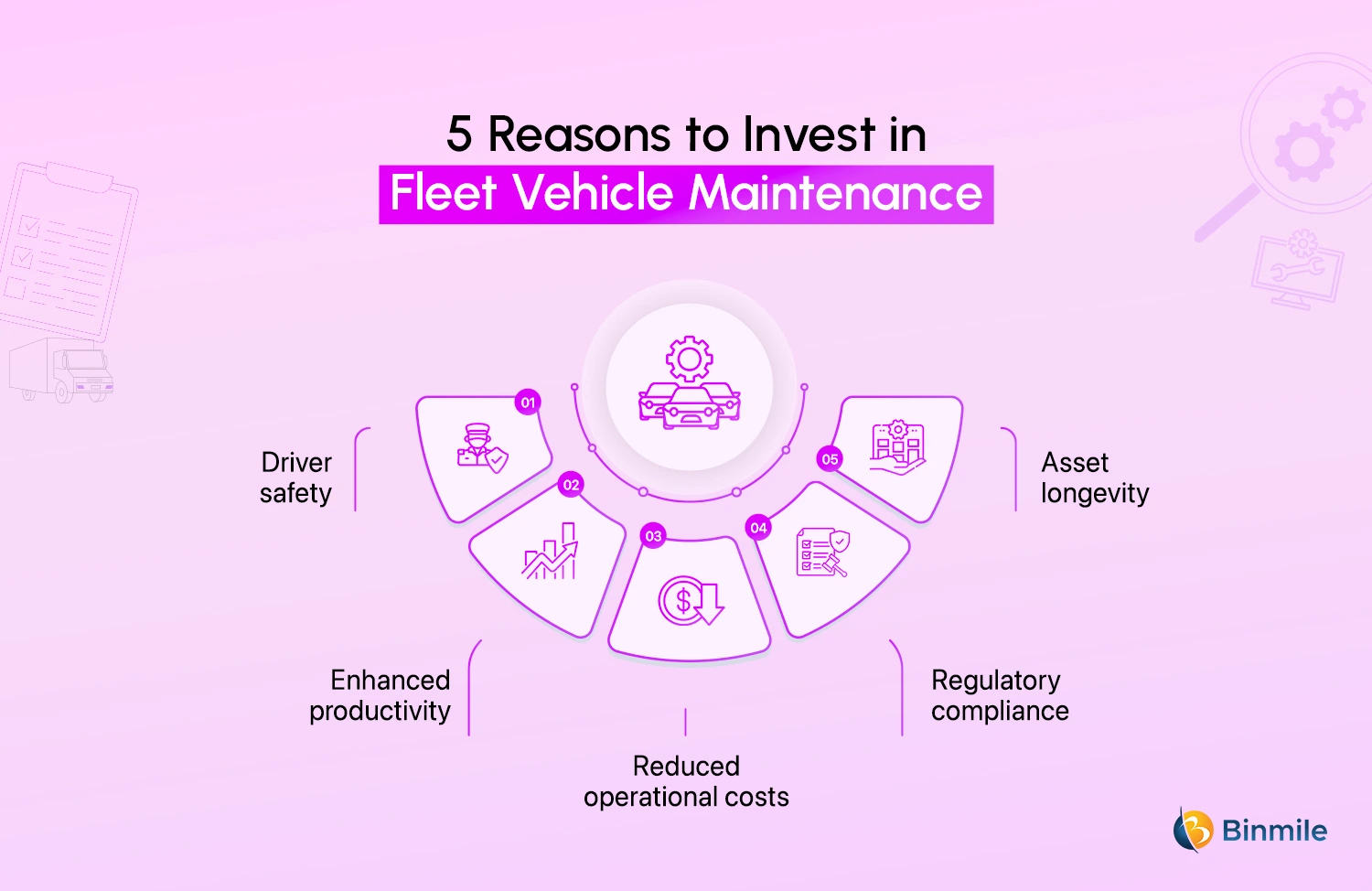
A regular Fleet Vehicle Maintenance program offers substantial advantages that extend beyond mere vehicle functionality. These benefits, including operational efficiency, cost savings, and enhanced organizational reputation, should inspire fleet managers with the potential positive impact of their efforts.
-
Driver Safety
When your fleet vehicles are thoroughly checked, potential issues, such as worn-out tyres or faulty brakes, are corrected, and with regular upkeep, the risk of on-road incidents is reduced.
-
Enhanced Productivity
A well-maintained and in optimal condition creates fewer issues and shows more efficient performance, thus boosting fleet productivity and minimizing operational disruptions.
-
Reduced Operational Costs
Efficiently running vehicles consumes less fuel and retains their resale value, resulting in long-term financial benefits for fleets by lowering the total cost of ownership.
-
Regulatory Compliance
Fleet maintenance ensures compliance with regulatory standards, helping to avoid fines and penalties.
-
Asset Longevity
Regular maintenance significantly prolongs fleet vehicles’ useful life, maximising return on investment and delaying the need for costly replacements.
Vehicle Maintenance Management: A Step-by-Step Guide for Fleet Managers
Managing Fleet vehicle maintenance services requires a structured approach to balance efficiency, cost, and performance. Effective vehicle maintenance management ensures that fleet operations remain smooth, downtime is minimized, and long-term costs are kept under control. The following fleet maintenance best practices seven-step guide provides fleet managers with a clear, actionable roadmap to oversee this critical function effectively.
1. Assess Fleet Maintenance Needs
It is essential to evaluate the requirements and assess the particular needs of the fleet. Consider the type of vehicles in the fleet, their usage patterns, and the environment under which they operate. For instance, delivery vans in urban areas may require brake checks now and then, while long-haul trucks may require more engine maintenance. Make a list of all the vehicles, including their age, mileage, and service history. This helps in forming a reference point for developing specific maintenance plans that are appropriate for the fleet, thus avoiding wastage of resources.
2. Develop Maintenance Schedule
Establish a detailed plan for maintenance that conforms with the manufacturer’s guidelines and operational data on vehicle operation. Preventive measures such as oil changes at 5,000 miles or tyre rotations at six months should be included in the schedule, and the seasonal changes and the need to winterize the vehicles should also be taken into consideration. You can leverage historical breakdown data to identify patterns and modify the intervals accordingly. A good calendar is the key to proper maintenance, and it will help avoid discrepancies and forecast the future needs of the vehicles.
3. Assign Maintenance Responsibilities
Set up clear roles for who will actually implement the schedule. Is the maintenance going to be done internally, will the fleet service providers be contracted, or will it be a combination of both? For in-house teams, make sure each technician is assigned tasks and that they are well-equipped for the job. If outsourcing, choose the best in the business who has an understanding of fleet management. It is essential to assign responsibilities clearly to avoid confusion and to make sure that everyone is answerable for the work done at each stage of the process.

4. Implement Tracking System
It is essential to have a proper monitoring system to keep track of the maintenance status and the condition of the vehicles. Small fleets can use manual logs, but for more extensive operations, it is better to use digital tools like fleet maintenance software. The systems allow one to record service dates, repair status, and part inventory in real time. It helps check whether the schedule is being followed to the letter, if there is any delay, and to keep records for audit purposes or warranty claims.
5. Conduct Regular Inspections
To support maintenance efforts, it is crucial to develop a plan for regular checks. using a fleet vehicle inspection checklist. Such assessments, performed by the personnel, will reveal potential problems, such as belts that need replacement or fluids that leak, that have not yet affected the performance but will do so in the future. Ensure that inspections are in line with the maintenance schedule and the feedback from the drivers, since they are the ones who can feel the changes in the vehicle’s behaviour. Doing so not only helps reinforce preventive measures but also minimizes the need for costly or extensive repairs.
6. Analyze Maintenance Data
From time to time, organizations should thoroughly review data collected from tracking systems and inspections. This helps them better understand key performance indicators and maintenance trends. Useful metrics include the number of repairs performed, vehicle downtime, and maintenance costs per vehicle.
For example, frequent tyre replacements may indicate alignment issues that require attention. By analyzing such patterns, managers can make more informed decisions. They can optimize maintenance schedules, allocate resources effectively, and invest in training where necessary. This ultimately helps improve the long-term effectiveness of the maintenance program.
7. Update Maintenance Strategy
Organizations should continuously update, refine, and maintain their strategy based on data analysis and operational changes. They should also integrate fleet management technologies such as predictive maintenance tools and telematics. As fleet size grows or routes change, maintenance schedules should be adjusted accordingly.
In addition, managers should gather feedback from drivers and technicians about the process’s effectiveness. This helps ensure that the fleet maintenance strategy remains practical and efficient. Continuous refinement enables the maintenance program to evolve with organizational needs and remain effective in the long term
Streamline your entire supply chain with custom logistics software that optimizes routes, automates dispatch, and enhances real-time tracking

How Much Does Fleet Vehicle Maintenance Cost?
Fleet costs are a combination of the total cost of ownership (TCO) plus the cost of operations for the fleet. Fleet management cost analysis is essential because these expenses directly impact a company’s bottom line. One critical metric used to calculate fleet vehicle maintenance cost is cost-per-mile, which offers a clear view of how TCO translates into everyday fleet operations and provides a tangible measure to increase fleet efficiency.
Cost-per-Mile = Fixed Costs + Variable Costs / Miles Travelled
Based on this, TCO gives us a Fleet vehicle maintenance cost that ranges from $0.09 to $0.15 per mile, depending on factors such as vehicle type, usage patterns, age, and maintenance practices.
| Category | Estimated Cost |
|---|---|
| Light-Duty Vehicle Maintenance | $1,000 – $2,500 per vehicle annually |
| Heavy-Duty Vehicle Maintenance | $15,000 – $20,000 per vehicle annually |
| Labor Expenses (In-House) | $20 – $40 per hour |
| Labor Expenses (Outsourced) | $50 – $100 per hour |
| Parts Variability | Generic parts are cheaper; OEM parts are more durable but costly |
| Fuel Savings from Maintenance | Reduces fuel costs by 5-15% annually |
| Fleet Size Influence (10 Vehicles, Outsourced) | $25,000 – $50,000 per year |
| Preventive vs. Reactive Maintenance | Prevention reduces long-term costs by 20-30% but requires an initial investment |
| Compliance Costs | $50 – $200 per vehicle; fines for non-compliance increase financial risk |
| Fleet Size Influence (50 Trucks, In-house) | Exceeds $750,000 annually (includes overhead) |
How to Reduce Repair and Maintenance Costs
It is more than a herculean task for fleet managers to keep repair and maintenance costs under control. High costs can eat into profits, disrupt schedules, and strain resources, making it essential to implement effective fleet cost reduction strategies. So, we are discussing common fleet maintenance challenges in a few steps for you to lower repair and maintenance costs for your fleet:
- Plan inspections and upkeep to catch issues early, avoiding costly repairs and disruptions.
- Teach drivers to spot problems and drive gently, reducing damage and costs.
- Pick durable parts and track inventory to save money without breakdowns.
- Monitor spending to find patterns and cut waste, keeping costs down.
- Repair minor issues fast to prevent more significant, pricier fixes later.
The Market Size of Fleet Vehicle Maintenance Software
The global Fleet vehicle maintenance software market was valued at approximately $23.8 billion in 2022 and will reach $80.26 billion by 2030, showing a CAGR of 17.31% between 2023 and 2030. This growth reflects key fleet management trends. The rising need for enhanced operational efficiency, real-time tracking capabilities, and regulatory compliance across fleet operations worldwide drives this growth. A recent G2 review of the top fleet management providers offers a closer look at how leading platforms are meeting these demands, combining telematics, maintenance scheduling, and compliance features backed by user-driven insights. The growth will be lucrative and profitable for any kind of business that develops a competitive and user-friendly Fleet vehicle maintenance software.
5 Ways in Which Fleet Vehicle Maintenance Software Can Be Useful
Fleet vehicle maintenance software helps companies manage their vehicles more effectively. It records repairs, schedules servicing, and tracks vehicle performance. These software solutions simplify fleet management and improve operational visibility. They also help reduce downtime and maintenance-related disruptions. As a result, managers can make informed decisions that enhance productivity and lower operational expenses. It does more; let us explore these features:
-
Keeps Vehicles Running Longer
The software sets a schedule for oil changes and tyre checks so that the wear and tear does not build up. This results in fewer breakdowns and thus longer life spans for each vehicle, which means that you do not have to spend a lot of money on replacement.
-
Cuts Down on Delays
It helps identify the problems and plan the repairs before they occur; thus, the software reduces the number of stops. Vehicles are not off the road, deliveries are made on time, and the customers are happy.

-
Saves Money on Fuel and Repairs
Fleet vehicle maintenance software provides a checklist of key vehicle performance metrics. It alerts users to issues such as low fuel efficiency and worn-out parts. By addressing these problems early, organizations can reduce fuel-related expenses. Early intervention also minimizes the risk of costly repairs and unexpected vehicle downtime.
-
Makes Safety a Priority
The software also makes sure that the vehicles are safe by monitoring the inspection and repair schedules. This not only protects the driver but also complies with the legal requirements and reduces the likelihood of an accident or penalty.
-
Simplified Record-Keeping
Fleet maintenance software keeps a record of all the maintenance activities, including dates, costs, and parts used, and this can be easily retrieved or used to show compliance in case of an audit. It saves a lot of time and keeps everything in order.
Enhance fleet performance and reduce downtime with custom-built software designed for seamless maintenance and management.

How Binmile’s Logistics Software Development Services Can Help in Fleet Vehicle Maintenance
Binmile’s logistics software development services provide bespoke software solutions for fleet management Software. From live tracking and GPS monitoring to detailed reporting and route optimization, our transportation management software offers advanced fleet telematics capabilities. These features help organizations manage their fleets with greater confidence and efficiency.
With our custom fleet management software development services, companies can build tracking solutions faster. They can gain valuable insights from location data and improve overall fleet performance. These solutions also enhance the experience for both fleet managers and customers.
Through our logistics software development expertise, we ensure the software remains scalable and integrates seamlessly with existing infrastructure. This provides organizations with a comprehensive set of tools and features designed to improve efficiency, safety, and compliance.
Frequently Asked Questions
Common challenges include unexpected breakdowns, inefficient tracking of maintenance schedules, and high repair costs due to delayed servicing. Poor data visibility and lack of preventive strategies can also lead to reduced vehicle lifespan and compliance risks.
Implementing schedules of preventive maintenance, utilizing fleet management software, and tracking telematics information are critical to saving money. These practices help identify issues prior to their happening, optimize fuel consumption, and increase vehicle lifespan while reducing repair costs over time.
Fleet maintenance outsourcing reduces labour and equipment expenses by leveraging the services of third-party organizations. It also reduces downtime through quicker diagnoses and repairs, which enhances on-road vehicles and increases operating efficiency.
Yes. Regular inspections and timely repairs ensure that critical components like brakes, tires, and engines function properly. This helps reduce accidents, improve compliance, and create a safer driving environment for employees.
Technologies like IoT sensors, telematics, AI-powered diagnostics, and predictive analytics are transforming fleet maintenance. They help businesses monitor vehicles in real time and predict maintenance needs before failures occur.