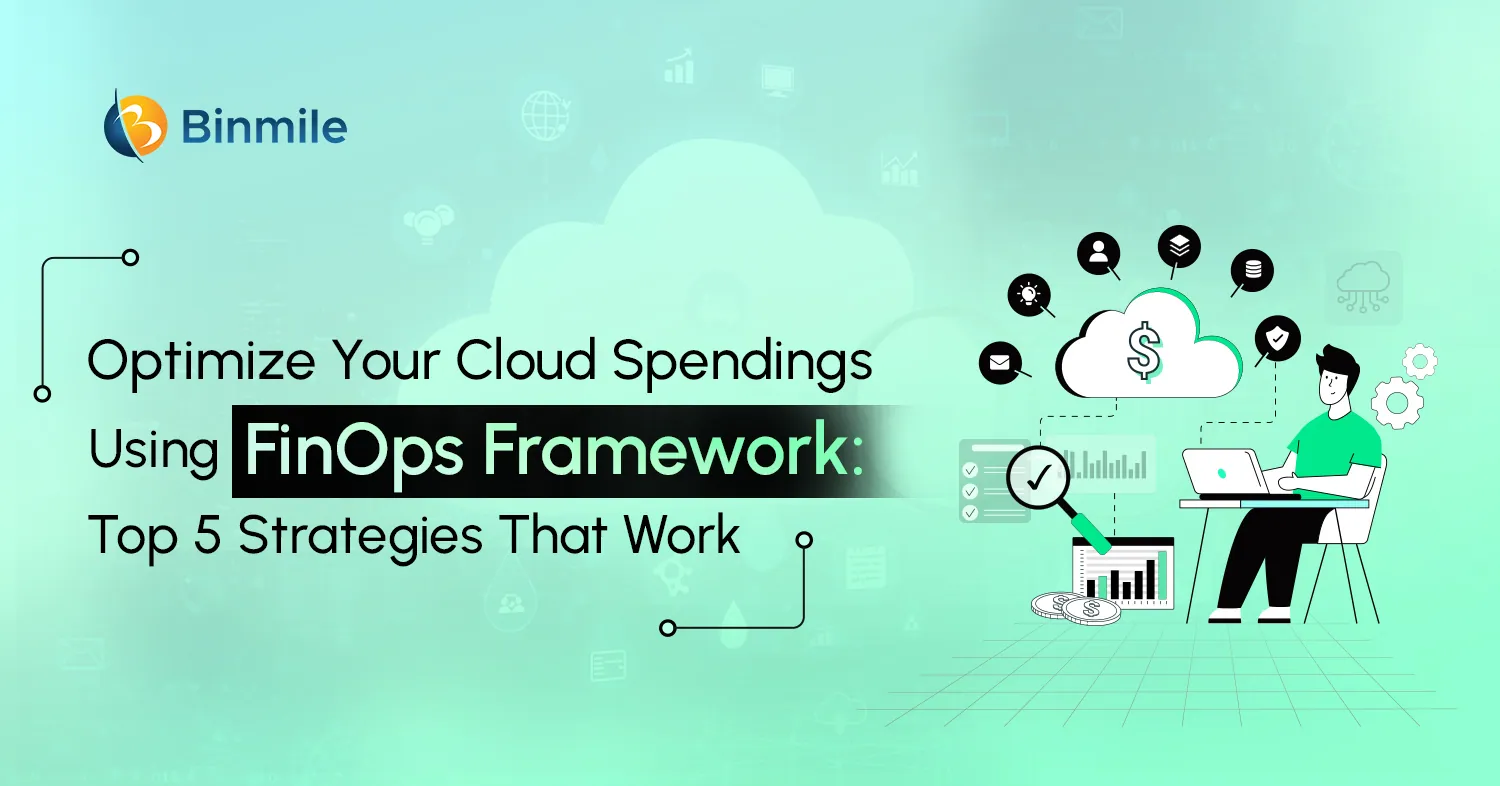
Cloud computing solutions are providing businesses with cost-effective cloud services that help in storing, processing, and accessing data over the internet. This eliminates the need for having an internal infrastructure and handling it, which is a complex and time-consuming process. But if not managed, it can result in major financial loss and impact the brand’s image. This is where Cloud Financial Operations, short for Cloud FinOps, helps in optimizing cloud usage and spending.
By leveraging the Cloud FinOps framework, businesses can have access to different strategies to implement for optimizing their cloud costs or spending. It empowers businesses to have much clearer visibility about what and which services they are spending on. So, what are the strategies that help in reducing cloud expenses? This blog will explore the basics of the FinOps model, its lifecycle, and the top 7 strategies to implement for reducing cloud costs.
What is Cloud FinOps
Cloud FinOps, which stands for Cloud Financial Operations, is an operational framework that promotes financial accountability while managing unnecessary cloud spending. By bringing technology, finance, and business, it promotes a cost-conscious mindset, accelerates business value, and finds agility for the business’s success. It enables development teams to find a balance between cost and quality of cloud-native solutions. With this practice, organizations can hasten their product delivery cycles, make data-driven decisions, and predict cloud costs.
Developed by the FinOps Foundation in the year 2019, it is a set of best practices that involves using cloud cost optimization tools to track cloud spending. The aim of FinOps isn’t just about saving money but also about helping organizations maximize their business revenue through cloud-native solutions or cloud servers. This is done by improving cloud efficiency and collaboration between various departments, which enhances the core operational activities and provides greater ROIs.
Lifecycle of Cloud FinOps: Explore the Three Primary Stages
The FinOps lifecycle is all about how the foundation is laid for effective cloud cost optimization. It consists of 3 phases mainly: Inform, Optimize, and Operate. Now let’s talk about these in brief detail:
1. Inform Phase
Without accurate and real-time access to cloud information, businesses can’t manage their cost and do cost allocation. This is why the Inform phase is all about giving transparency and visibility to their cloud consumer. This helps them to easily monitor and identify any unnecessary cloud infrastructure spending. With the help of Key Performance Indicators (KPIs), users check and track their cloud costs and budget them out more efficiently in the future.
2. Optimize Phase
The Optimize phase, as the name suggests, involves the implementation of FinOps best practices or techniques. This reduces cloud spending, which includes both the cost and resources used. In the first phase, teams gather cloud spending data and use it to identify areas where they can reduce costs. They do this without sacrificing the performance or quality of cloud services.. Additionally, businesses can reach out to cloud providers to leverage discounts, remove unneeded resources, or focus on workload performance optimization.
3. Operate Phase
After one cycle of the optimization phase, businesses often assume that they have fully optimized their processes and do not need to refine them in the future. This assumption is flawed, as they must know that optimization is not a one-time fix solution. It is iterative in nature and constantly changes and evolves with the customers’ needs.
This is why the Operate phase comes in and improves cloud cost optimization over a long period of time. The Operate phase is about how teams can integrate FinOps practices and make cost-efficiency practices continuous throughout the daily activities. To do so, it offers sustained efforts and conducts activities such as continuous monitoring & improvement, performance benchmarking, etc.
Why Cloud FinOps Matters for Enterprises?
Cloud FinOps offers not just cost-saving methods but also helps businesses unlock their full cloud potential with some cloud cost optimization tools and techniques to implement. By implementing FinOps practices, businesses can drive business value and their development outcomes. Here are some reasons why organizations should consider optimizing their cloud costs using the FinOps model:
- With effective FinOps strategies, dedicated teams gain insights into financial performance and cloud consumption trends.
- By having access to industry insights, teams can use them to forecast accurately and positively impact architectural decisions of cloud-based solutions or services.
- It helps organizations maximize their ROIs while preserving operational efficiency and continuing cloud investments, but in a cost-efficient way.
- FinOps best practices help businesses in smarter budgeting for developing and resource planning of cloud-based solutions.
- By eliminating underutilized resources, FinOps increases visibility and helps teams identify potential security vulnerabilities or breaches.
Wanting to control your cloud spending and align costs with business goals and requirements? Connect with our experts for optimizing inefficient resources.
Best FinOps Strategies to Drive Effective Cloud Cost Management
Many cloud platforms offer unique cloud cost optimization tools and strategies. Businesses should leverage one of the key FinOps strategies depending on their business’s specifications and needs. Let’s explore the 7 common FinOps best practices that help in maximizing business outcomes and driving efficiency.
1: Establishing Cross-Functional Collaboration
The main concept of FinOps is not limited to one department of an organization. It’s about bringing together various business units and reviewing their finances. So, it’s very important to have everyone understand the cloud cost implications and make informed decisions accordingly.
Cross-functional collaboration is one of the FinOps best practices, wherein fostering an agile culture helps bridge the gap between engineering and finance teams. This is executed by conducting regular meetings and equipping teams to access real-time cloud usage data flows. These cross-functional teams can make decisions based on the usage patterns, costs, and future resource needs. This ultimately encourages transparency in cloud spending and ownership.
2: Implementing Cost Anomaly Detection
Anomalies refer to misconfigurations or unexpected increases in cloud service expenses. Teams need to address these inefficiencies and significant warning signs to enhance cloud cost optimization. They can do this by leveraging anomaly detection tools that monitor spending patterns and directly flag abnormal spikes from normal usage trends.
With the help of cost anomaly detection tools, teams can investigate misconfigured values or any unauthorized access, resulting in anomalies being caught and resolved early. With the prevention of these anomalies quickly, organizations can maintain their overall cloud cost budget and optimize it effectively. Continuous monitoring of cloud costs ensures minimum financial losses or any operational disruptions.
3: Automating Idle Resource Management
Idle or unused resources can only increase the cloud costs of an organization’s cloud environment. Unused databases or virtual machines need to be managed perfectly to optimize the cloud costs. To do so, previous methods such as manual tracking of these resources take a long time and are not so efficient and accurate.
This is why automating the tracking process can be a cost-effective solution that can help businesses find their non-essential development resources. After finding them, it will instantly prevent assets from becoming idle and scale or turn them down. This helps in reducing the extra cloud computing expenses and also optimizes the infrastructure.
4: Conducting Regular Cost Reviews
One of the core FinOps practices is creating Interactive dashboards that help businesses understand their cloud computing spending. It has a breakdown by cloud services used, instance types, and different departments. By conducting these regular cost or usage reviews, teams can compare them against the usage pattern. This can help them spot any underutilized resources and take action on them immediately.
Another example is leveraging advanced cloud platforms with built-in cost insights. These platforms help catch unexpected anomalies or expenses early. Businesses can also automate these review processes using cloud cost optimization tools. This helps them align budgetary requirements with actual cloud spending.
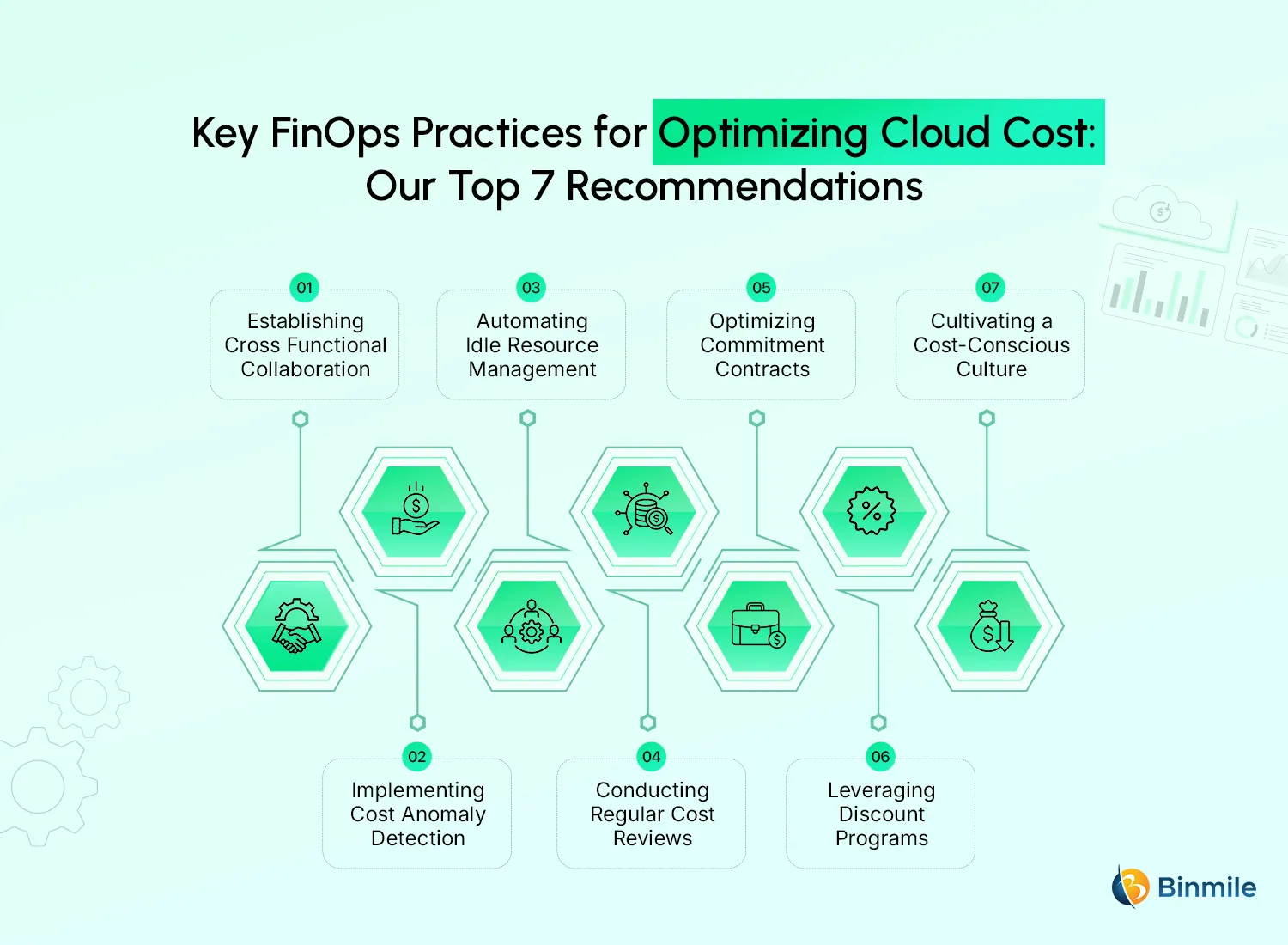
5: Optimizing Commitment Contracts
Commitment contracts are like reserved savings plans that are non-refundable, which help organizations commit to a specific usage limit, such as hourly spend. These contracts help teams to set a period for resource utilization and pay a lower rate, enabling them to make predictable cost-pricing decisions throughout the use of cloud services.
By optimizing these commitment contracts, organizations can select the appropriate commitment level with the help of metrics such as cost per CPU and Cost per GB of RAM. This approach eliminates the risk of overcommitment and ensures that the contract aligns with evolving demand and maximizes cost efficiency. With an effective commitment contract, businesses can assess their workload and choose the right instance to optimize cloud costs.
6: Leveraging Discount Programs
Cloud-based service providers should provide a variety of discount plans or programs that enable businesses availing these cloud services to reduce their costs and avoid non-critical workloads. Plans can include a set volume discount plan, which enables organizations to avail themselves of lower cloud costs when the volume of the cloud data increases.
These discount programs provide a more tailored and cost-effective solution that can help in scheduling workloads and analyzing them for any disruptions that may occur. Workload interruptions like batch processing or testing of any non-sensitive data analysis can be dealt with without requiring too much cloud resource spending or cost.
7: Cultivating a Cost-Conscious Culture
Optimization of cloud costs is not just by performing automation or availing discounts. It also requires a strong culture within the organization; that is, leading in a positive way to lead cost management initiatives. For this to happen, businesses need to ensure that the cost-conscious cultural guidelines or policies are regularly followed.
Many organizations assign responsibilities to each but don’t collaborate for efficient efforts that can positively impact the organization’s financial structure. This is why having a cost-oriented approach is a must for businesses to optimize their cloud costs. By having regular training and reviewing the cost-saving guidelines, it builds clear communication between various stakeholders and departments.
Leverage proven FinOps best practices for cloud cost optimization while boosting operational efficiency and improving ROIs.
Conclusion
Leveraging the FinOps best practices while optimizing the cloud costs, businesses can save their resources and costs. It empowers organizations to make data-driven decisions by providing real-time insights into their cloud spending information. Implementing these strategies requires a well-structured FinOps framework and cloud cost optimization tools to leverage the best use of these techniques. However, organizations should align their business requirements and goals with one of the most suitable optimization strategies.
Having optimized cloud infrastructure with lower spending costs helps businesses achieve sustainable cloud savings. It also contributes to the long-term operational success of the business. In this blog, we discussed the top seven strategies for implementing cloud cost optimization effectively and why they matter. Additionally, partnering with a cloud consulting company can help you adopt a results-driven approach. This enables you to optimize your cloud infrastructure and solutions more effectively.
Frequently Asked Questions
Cloud Cost Optimization is the process of managing and reducing cloud expenses while maximizing business value through efficient resource utilization and financial accountability.
FinOps brings finance, engineering, and operations teams together to improve cloud spending visibility, accountability, forecasting, and cost management.
Organizations using public, private, hybrid, or multi-cloud environments can benefit from Cloud Cost Optimization to improve operational efficiency and financial control.
By identifying underutilized resources, eliminating waste, automating resource management, and improving workload efficiency, organizations can significantly lower cloud expenses.
Success is typically measured through reduced cloud waste, improved resource utilization, budget adherence, forecasting accuracy, and increased return on cloud investments.