When businesses start planning a cloud strategy, one of the most critical decisions they face is whether to adopt a hybrid cloud approach or move forward with a multicloud strategy. Recent industry data shows that nearly 89% of organizations already use hybrid cloud, multicloud, or a mix of both, which clearly reflects how central these models have become to modern IT decision-making.
This blog breaks down what hybrid cloud and multicloud really mean in practical terms, hybrid cloud vs multicloud, where each approach fits best, and what challenges come with them. We will also cover hybrid cloud architecture, multicloud management platforms, real-world use cases, and guidance to help you choose the right cloud strategy based on your business goals.
What is a Cloud Strategy?
A cloud strategy defines how an organization uses cloud computing to support business objectives. It covers decisions around application migration, data management, cost optimization, security, compliance, and long-term scalability. A well-defined cloud strategy ensures that cloud investments directly contribute to business growth, operational efficiency, and resilience.
Cloud strategies are not static. They evolve as business needs change, regulations shift, and technologies mature. Many organizations begin with a cloud-first strategy, gradually refining it as they progress through different stages of cloud adoption. Among the most widely adopted approaches today are hybrid cloud computing and multicloud environments, each designed to solve different business challenges.
Understanding Hybrid Cloud
A hybrid cloud combines private cloud infrastructure with one or more public cloud services, allowing workloads and data to move between them as needed. This setup gives organizations greater flexibility without fully abandoning existing infrastructure.
Why Hybrid Cloud Matters
A hybrid cloud architecture lets companies use the public cloud for customer-facing workloads or other workloads that require scalability, but lets companies control sensitive data, older applications, and regulated workloads by keeping them on a private system
Key Components of Hybrid Cloud Infrastructure
The most important quality of a hybrid cloud infrastructure is that public and private systems work closely together. The private system deals with sensitive data, mission-critical apps, and other data and apps that are subject to strict compliance. The public system is used for apps that are scalable, apps that are used for development, and apps with workloads that are variable workloads. Communication between systems is easy with the use of secure systems such as VPNs or other private system links. Management tools and orchestration are also important to ensure that workloads are evenly distributed and that systems are monitored and optimized on a consistent basis.
What are the Benefits of Hybrid Cloud
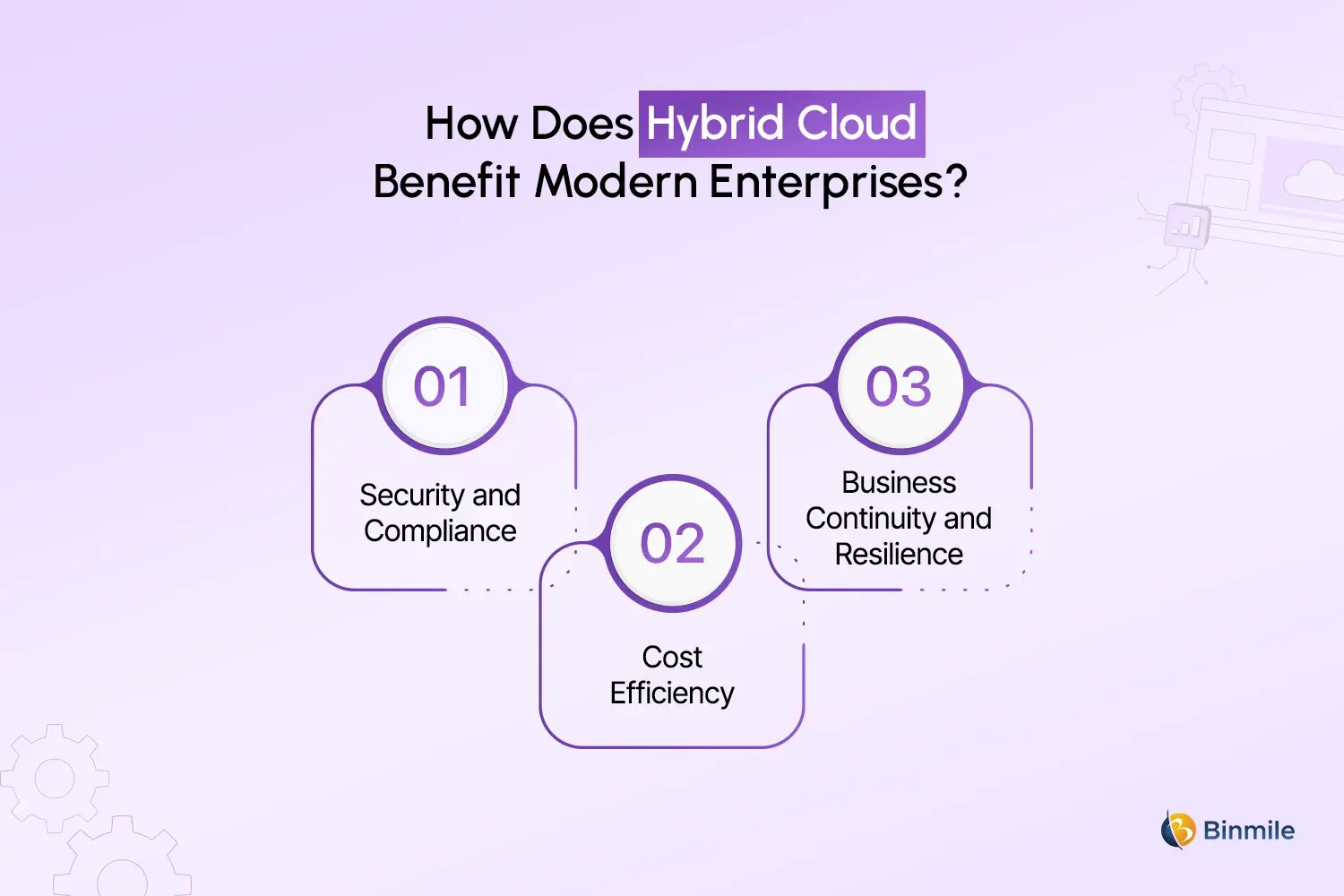
Hybrid cloud offers several practical benefits of Hybrid cloud for organizations that need both control and flexibility.
-
Security and Compliance
A hybrid cloud solution will enable organizations to meet compliance and regulatory data storage needs by optimally allocating sensitive workloads to private storage and less-sensitive workloads to a public cloud.
-
Cost Efficiency
With a hybrid cloud, organizations can optimize private infrastructure costs and public cloud costs, as the hybrid model eliminates the risk of overprovisioning and cloud cost optimization for workloads with variable consumption.
-
Business Continuity and Resilience
Improved fault tolerance is achieved by distributing workloads across multiple private-public environments, as it enables workloads to be more easily moved and recovered in the event of a disruption.
What are the Challenges of Hybrid Cloud
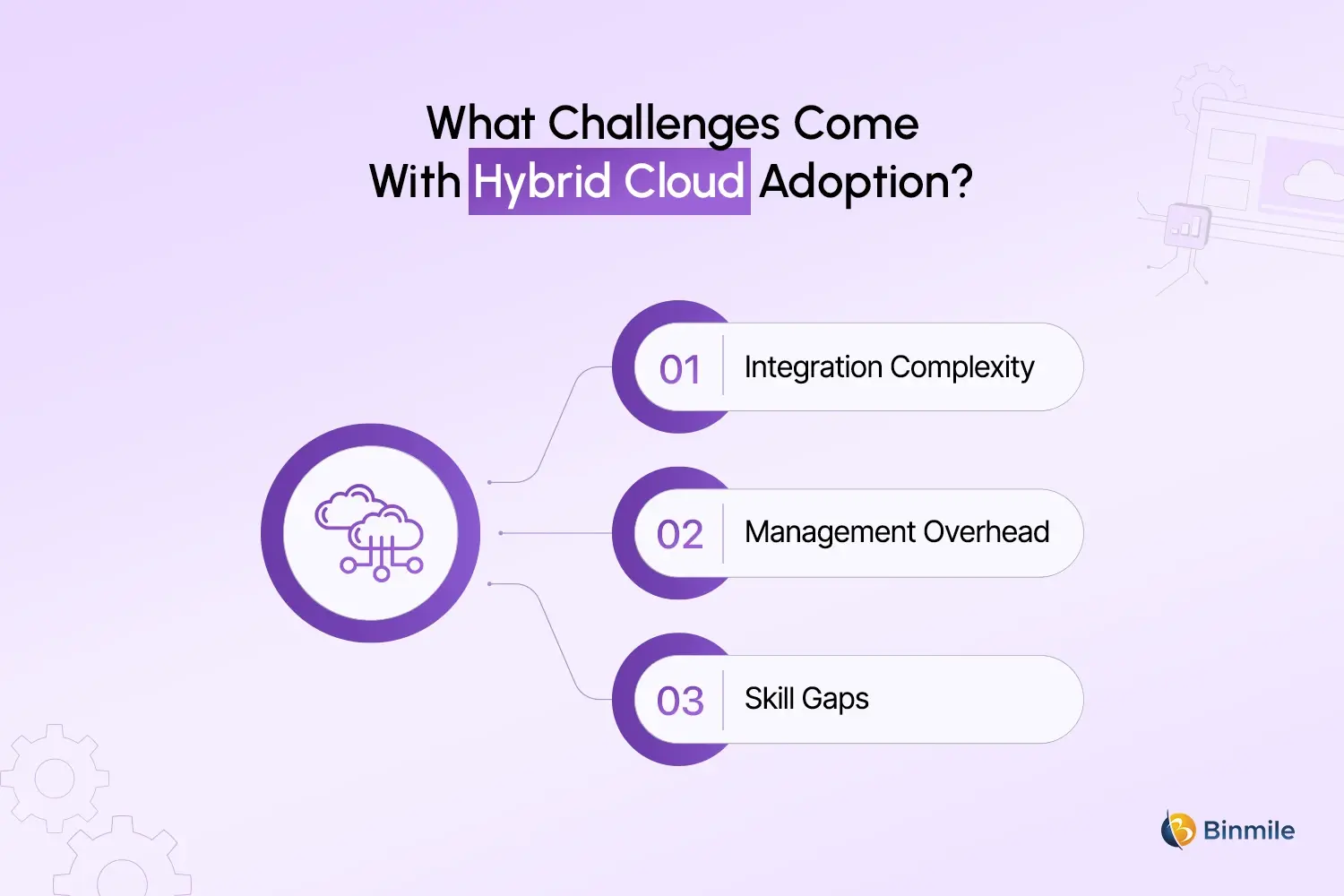
While hybrid cloud offers flexibility, it also introduces operational complexity.
-
Integration Complexity
Achieving successful integration of both public and private environments requires detailed planning, secure connections, and deliberate design across all environments. Inadequate integrations can result in costly performance degradation and may expose security vulnerabilities.
-
Management Overhead
The management effort needed to control workloads across different environments increases significantly. In the absence of appropriate tools for managing hybrid cloud environments, control and visibility may be lost.
-
Skill Gaps
A firm’s teams must be conversant with the private infrastructure as well as the public cloud provider’s offering. This requires hybrid cloud environments to be managed well. Closing these gaps often requires training, external cloud consulting services, or ongoing operational support. In most cases, this may be achieved by offering more training to the staff, but it often requires additional assistance to be provided.
Ready to transform your IT infrastructure with hybrid or multicloud solutions designed for growth?

What is Multicloud?
A multicloud strategy involves using cloud services from multiple public cloud providers at the same time. Unlike a hybrid cloud, a multicloud does not rely on private infrastructure. Instead, it focuses on distributing workloads across different public cloud platforms.
What Drives Multicloud Adoption
Organizations utilize multicloud to minimize reliance on a single cloud provider, improve performance by selecting best-fit services, and enhance resilience. Distributing workloads among multiple providers can help businesses avoid vendor lock-in, utilize the best services, and mitigate service disruptions or outages.
Key Elements of a Multicloud Strategy
Most multicloud environments include the likes of AWS, Microsoft Azure, and Google Cloud, as each provider has distinctive offerings that organizations can utilize for specific workloads. In a multicloud environment, different providers’ offerings spanning compute, storage, databases, analytics, and AI services can be used, allowing teams to choose the most appropriate service for different applications or use cases. To manage multiple cloud services, organizations utilize centralized tools for monitoring, cost management, security, and compliance, and multicloud management tools promote uniformity and manageability across different cloud environments.
What are the Benefits of Multicloud
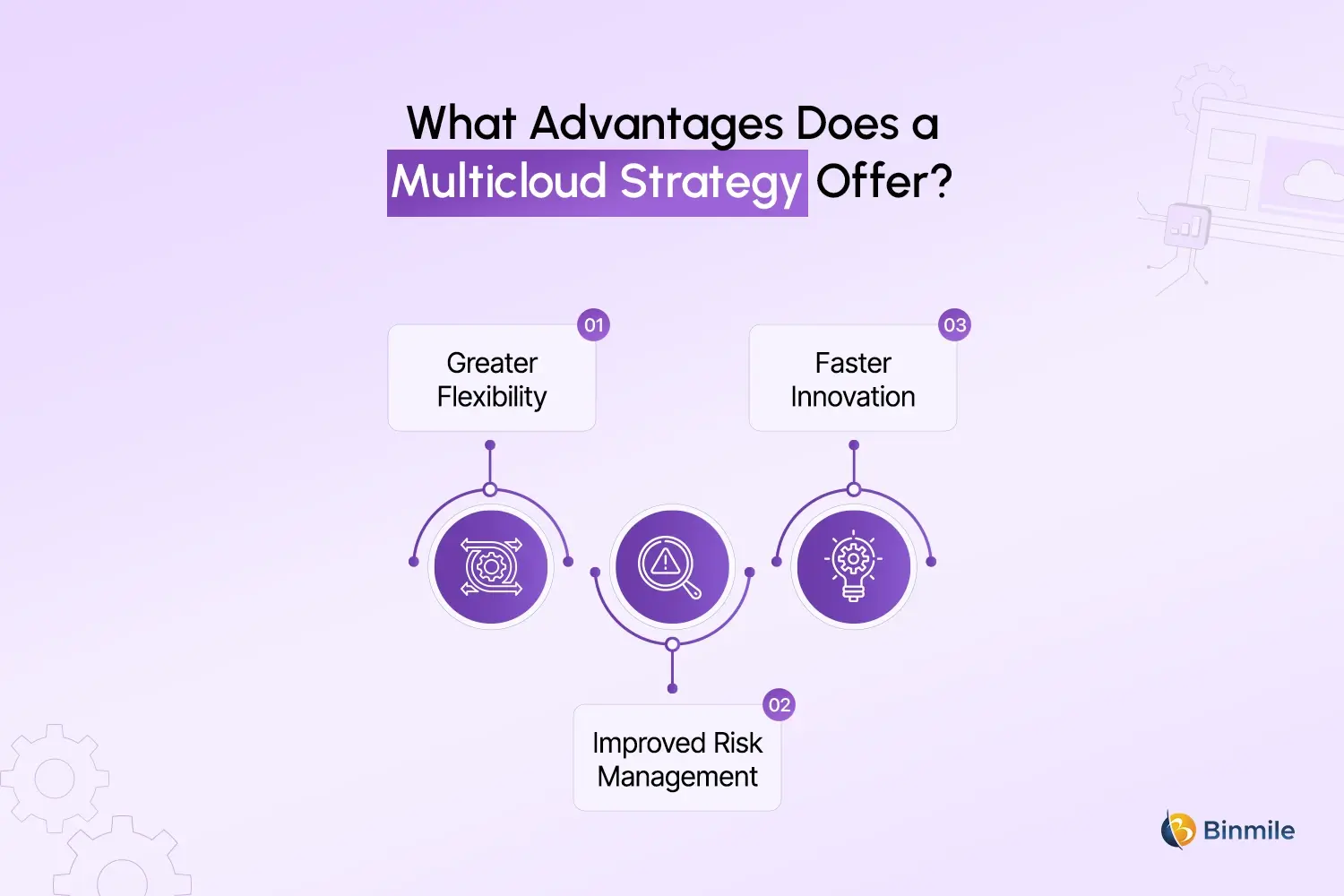
Multicloud environments deliver flexibility and strategic advantages when implemented correctly.
-
Greater Flexibility
Because organizations do not have to be restricted to one vendor’s ecosystem, they can select best-in-class offerings across multiple vendors and providing lift and shift cloud migration, improving performance and architectural decisions.
-
Improved Risk Management
Spreading workloads across different vendors avoids dependency on one vendor’s platform. In the case of vendor downtime, workloads can be transferred to or accommodated by another vendor.
-
Faster Innovation
The variety of cloud-native services available promotes innovation and speed of development, enabling teams to deliver new products and features to market quickly.
What are the Challenges of Multicloud
Despite its advantages, multicloud introduces notable challenges.
-
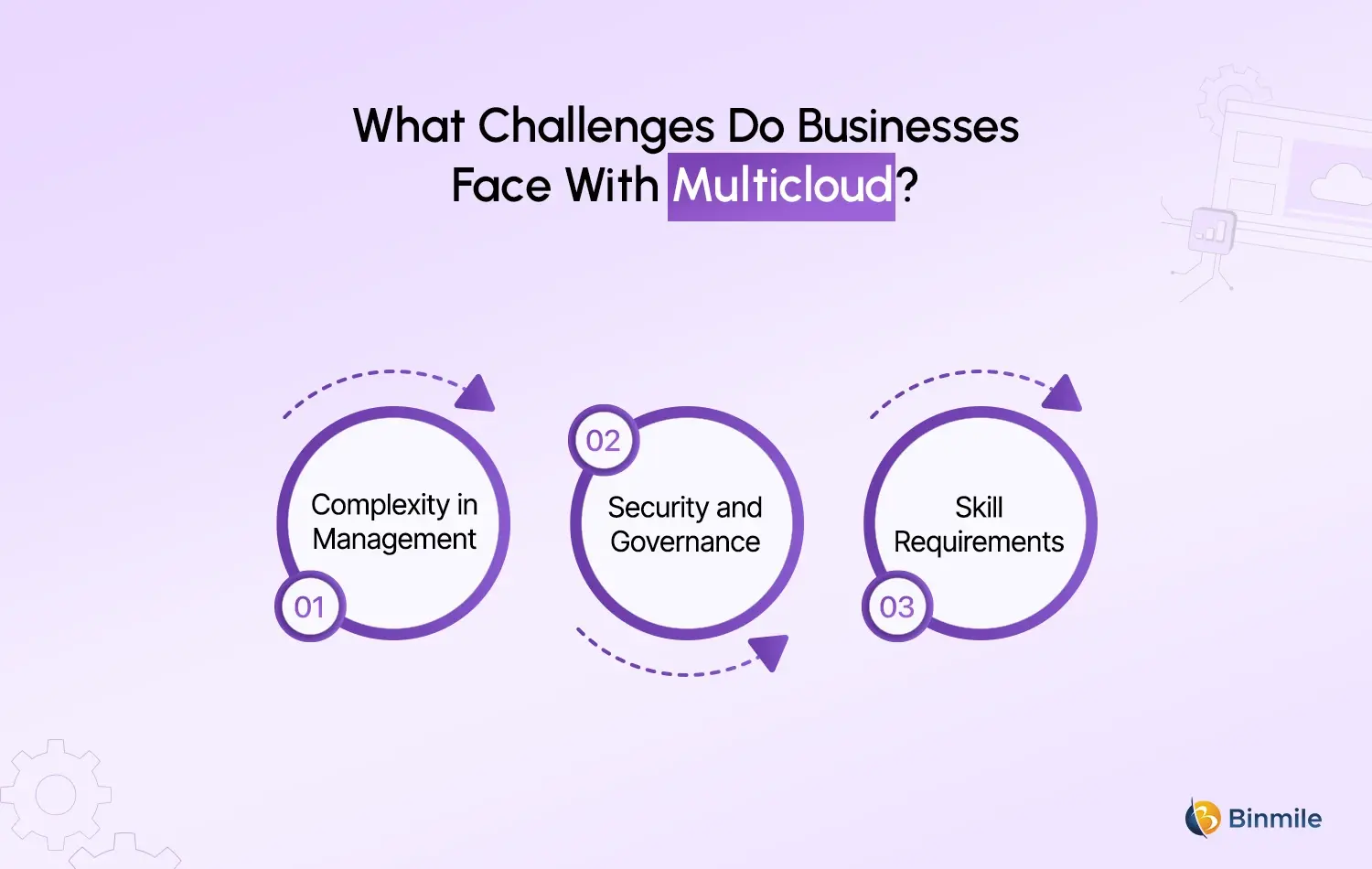
Complexity in Management
Every cloud provider has unique tools, APIs, pricing, and operational processes. Each provider requires unique governance and automation to manage multiple cloud services to the provider’s specifications.
-
Security and Governance
Without centralized controls, governing security and compliance with the cloud service provider’s specifications remains a challenge.
-
Skill Requirements
The operational and training cost complexity increases as teams must have a high level of proficiency and competency with multiple cloud service providers.
Hybrid Cloud vs Multicloud: Head-to-Head Comparison
Here is the table showing hybrid cloud vs multicloud to choose better:
| Aspect | Hybrid Cloud | Multicloud |
|---|---|---|
| Definition | Combines private and public cloud environments | Uses multiple public cloud providers |
| Core Objective | Balance control, security, and scalability | Maximize flexibility and avoid vendor lock-in |
| Ideal Use Cases | Regulated industries, legacy systems | Digital products, global scalability |
| Data Sensitivity | Well-suited for sensitive and regulated data | Typically used for less regulated workloads |
| Management Complexity | Moderate to high | High |
| Cost Control | More predictable with proper optimization | Varies based on usage and tooling |
How to Choose Between Hybrid Cloud and Multicloud
Choosing the right approach depends on business priorities, infrastructure, and long-term plans.
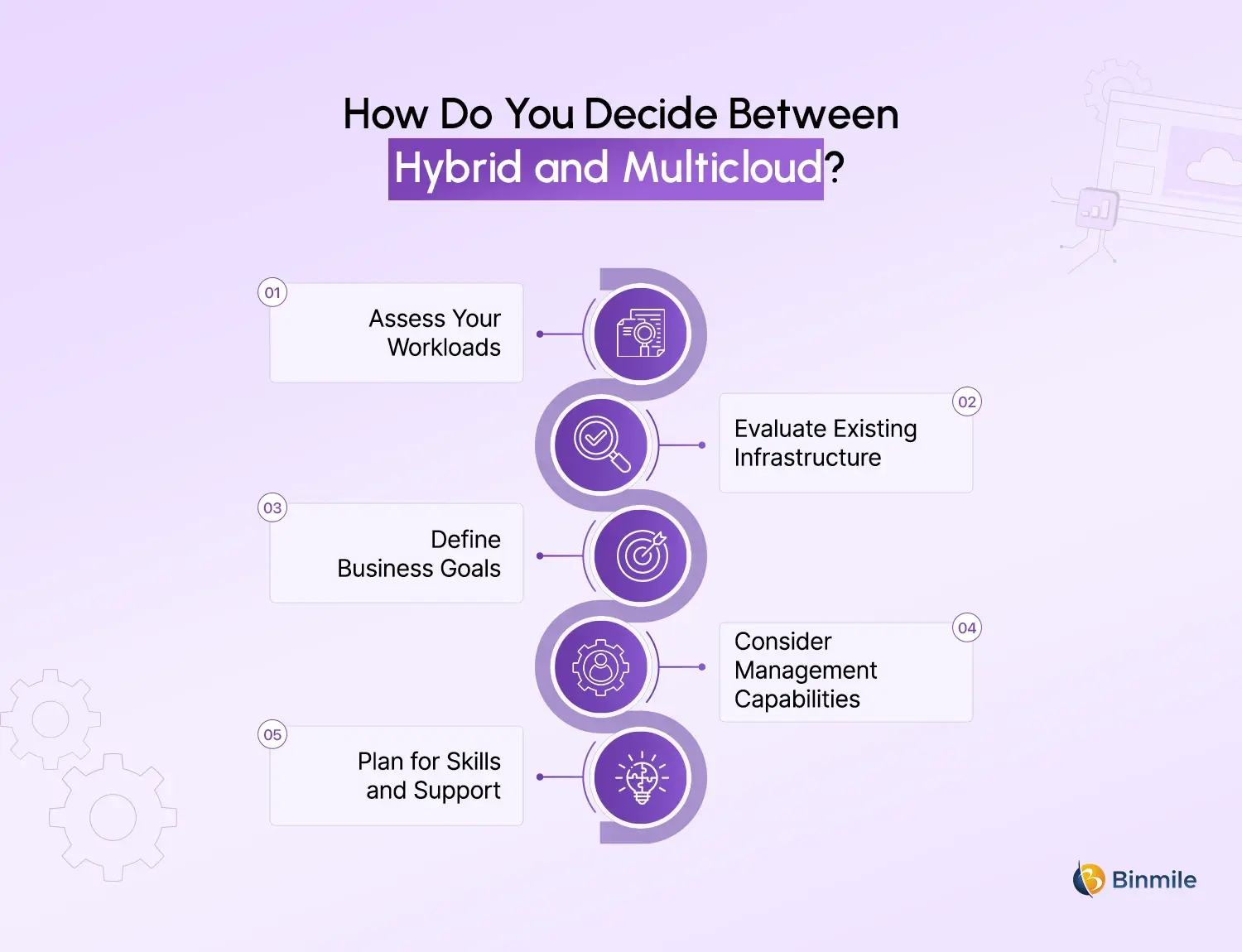
1. Assess Your Workloads
A hybrid cloud is often a better match for workloads that are compliance and latency-sensitive to on-prem systems. Workloads that are cloud-native and service diverse are more suited for multicloud.
2. Evaluate Existing Infrastructure
For organizations evaluating hybrid cloud vs multicloud and managing significant on-premises investments, a multicloud approach can be preferable for combining best-of-breed native cloud services.
3. Define Business Goals
Define business objectives. Goals such as a desire for speed, cost, cloud scalability, or innovative objectives support the cloud transformation strategy.
4. Consider Management Capabilities
Governance, automation, and monitoring are critical to both strategies. Multicloud management tools are vital for operational control and service visibility.
5. Plan for Skills and Support
Ensure your internal teams are prepared or consider partnering with cloud experts to support design, migration, and optimization.
How to Implement Your Cloud Strategy
-
Cloud Migration Strategy
No matter if you opt for hybrid cloud computing or multicloud, you will need a cloud migration strategy. Start with discovery and assessment to understand application dependencies and readiness. Build a phased cloud migration checklist to reduce risk and disruption. Testing and validation are critical to ensuring performance, security, and functionality following migration.
-
Multicloud Management Tools
A multicloud management platform offers centralized visibility on usage, costs, security, and compliance across providers. These tools streamline operations and help preserve consistency at scale.
-
Hybrid Cloud Management
Hybrid cloud management solutions offer improved orchestration across private and public environments for improved workload mobility, visibility of resources, and enforcement of policy, allowing organizations to retain control without hindering innovation.
By investing in these areas, businesses gain agility, cost control, and the ability to innovate with confidence.
Looking to optimise your cloud environments with a strategy that drives performance and cost efficiency?
How Businesses Can Benefit from Expert Support
Choosing between hybrid cloud and multicloud strategies is rarely straightforward. Many organizations struggle with integration complexity, governance, and long-term optimization. This is where experienced partners like Binmile quietly add value by helping businesses evaluate their current infrastructure, design scalable cloud architectures, and execute well-planned migration strategies. With hands-on expertise and cloud and DevOps practices across hybrid cloud architecture and multicloud environments, teams can reduce risk, improve performance, and move faster toward measurable business outcomes without unnecessary disruption.
Frequently Asked Questions
A hybrid cloud combines private infrastructure with public cloud services to enable flexibility, security, and scalability.
Multicloud allows companies to use services from different providers to avoid vendor dependency and optimise performance.
Neither is universally better. Hybrid cloud is ideal for security and compliance needs, while multicloud is better for flexibility and best-of-breed services.
Multicloud management platforms and hybrid cloud management solutions help with governance, cost tracking, and workload orchestration.
A well-planned cloud migration strategy reduces risk, ensures performance stability, and aligns migration with business outcomes.