Digital transformation has become a strategic priority for organizations that want to stay competitive, efficient, and customer-focused. Businesses across industries are investing heavily in modern technologies to improve operations, customer engagement, and decision-making. According to IDC, global spending on digital transformation is expected to reach nearly $4 trillion by 2028, showing how rapidly organizations are embracing digital technologies to drive growth and innovation.
This blog explains everything organizations need to know about building an effective digital transformation roadmap. It will cover what a roadmap is, why it matters, its key components, the step-by-step process to create one, common challenges, and the technologies driving transformation. The blog will also explain how businesses can choose the right partner to execute their digital transformation strategic plan successfully.
What is a Digital Transformation Roadmap
A digital transformation roadmap is a strategic plan that outlines how an organization will adopt digital technologies to improve business processes, customer experiences, and operational efficiency. It offers a systematic way to transition from processes and systems to an operational model driven by digital technology.
A roadmap assists organizations in developing a long-term Digital Business Strategy that integrates with business goals, rather than deploying technologies indiscriminately.
In other words, a roadmap addresses where an organization stands in terms of digital maturity, what digital capabilities it seeks to obtain, and how it will transition from the present to the future.
A comprehensive enterprise transformation roadmap differentiates strategic transformations from reactive ones.
What is the Importance of a Digital Transformation Roadmap
Without a structured roadmap, organizations often struggle with fragmented systems, inefficient processes, and unclear priorities. A roadmap brings clarity and alignment across departments.
Below are the major reasons businesses need a digital transformation roadmap.
1. Aligns Technology With Business Goals
Digital transformation is more than technology. The roadmap acts as a guiding star to keep all digital efforts aligned with the wider business goals, like revenue, efficiency, and customer satisfaction.
2. Improves Decision-Making
When organizations have a clear roadmap, they can accurately identify and prioritize efforts that will have the greatest impact, as well as the efforts that will be most feasible to tackle. This focus makes sure organizations do not develop or acquire AI-powered test automation tools(or even spend money) that will not provide value.
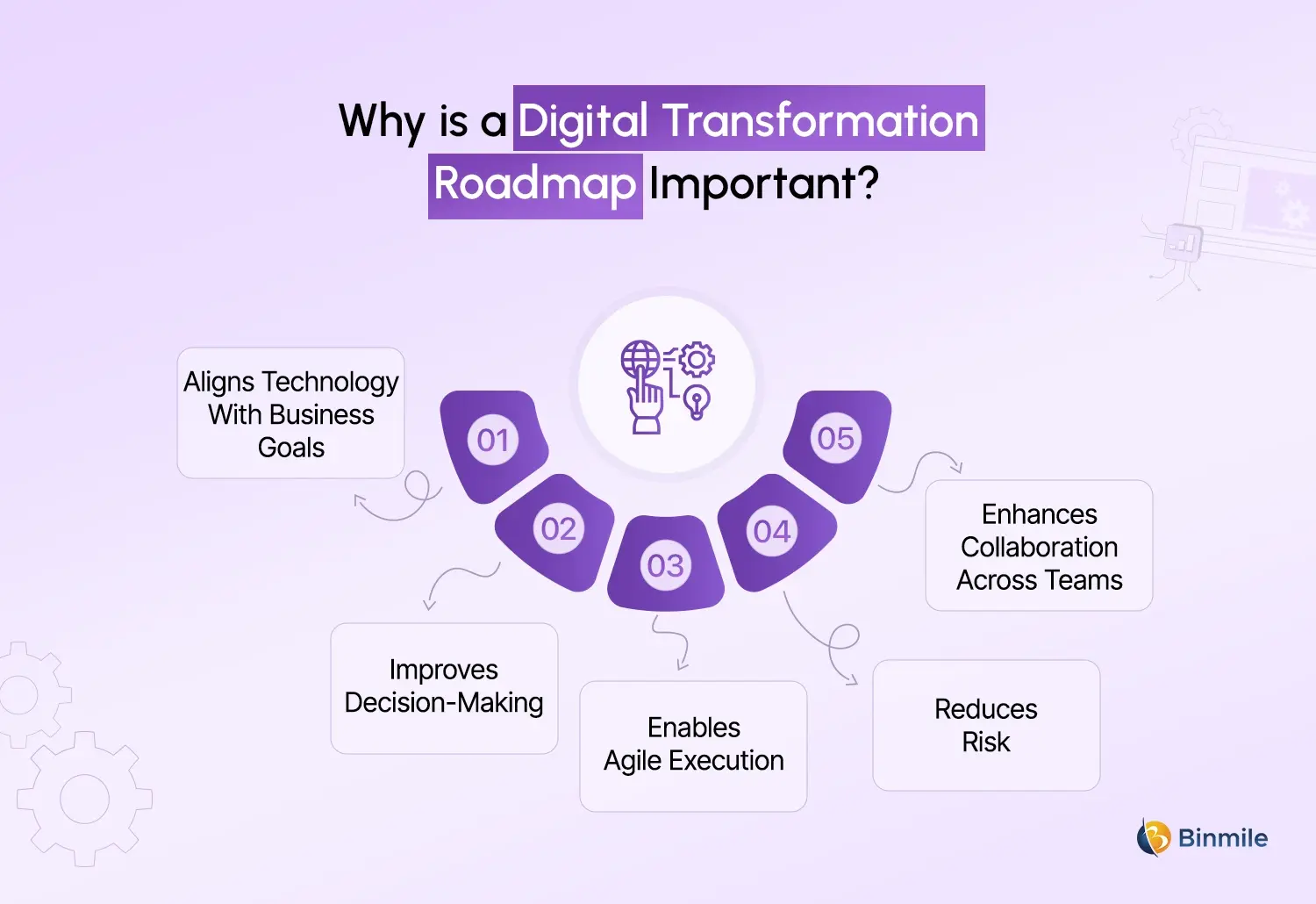
3. Enables Agile Execution
Organizations often establish an agile digital transformation roadmap to allow gradual shifts, rather than the launching of comprehensive, large-scale initiatives. This style of implementation promotes continuous progression and the rapid realization of goals.
4. Reduces Risk
Investments in transformation projects can be considerable, and in the absence of a well-defined roadmap, detrimental losses can be incurred as a result of uncontrolled execution. Having a structured roadmap will improve risk management and identify and assess the execution of the project for the establishment of clear milestones and accountability.
5. Enhances Collaboration Across Teams
Given the breadth of impact across multiple functions of an organization (like IT, ops, marketing, and customer service), a roadmap will help clarify everyone’s goals and efforts, and align the functions of the various teams to ensure they are all working toward the same outcome.
Key Components of a Digital Transformation Roadmap
A successful enterprise digital transformation initiative depends on several critical components working together. These components ensure that transformation is strategic, scalable, and sustainable.
1. Business Vision and Goals
All strategies and business digital transformations begin with goals and a vision. Goals of an organization can be improving customer experience, enhancing operational processes, launching digital services, and enhancing data-driven decision-making. Organizations must prioritize goals as they create a digital transformation strategic plan.
2. Current State Assessment
Every organization has systems and processes that exist before making a roadmap. Organizations must assess their IT capabilities, data management, digital proficiency, customer experience, and any other existing processes. This assessment shows where it needs the change.
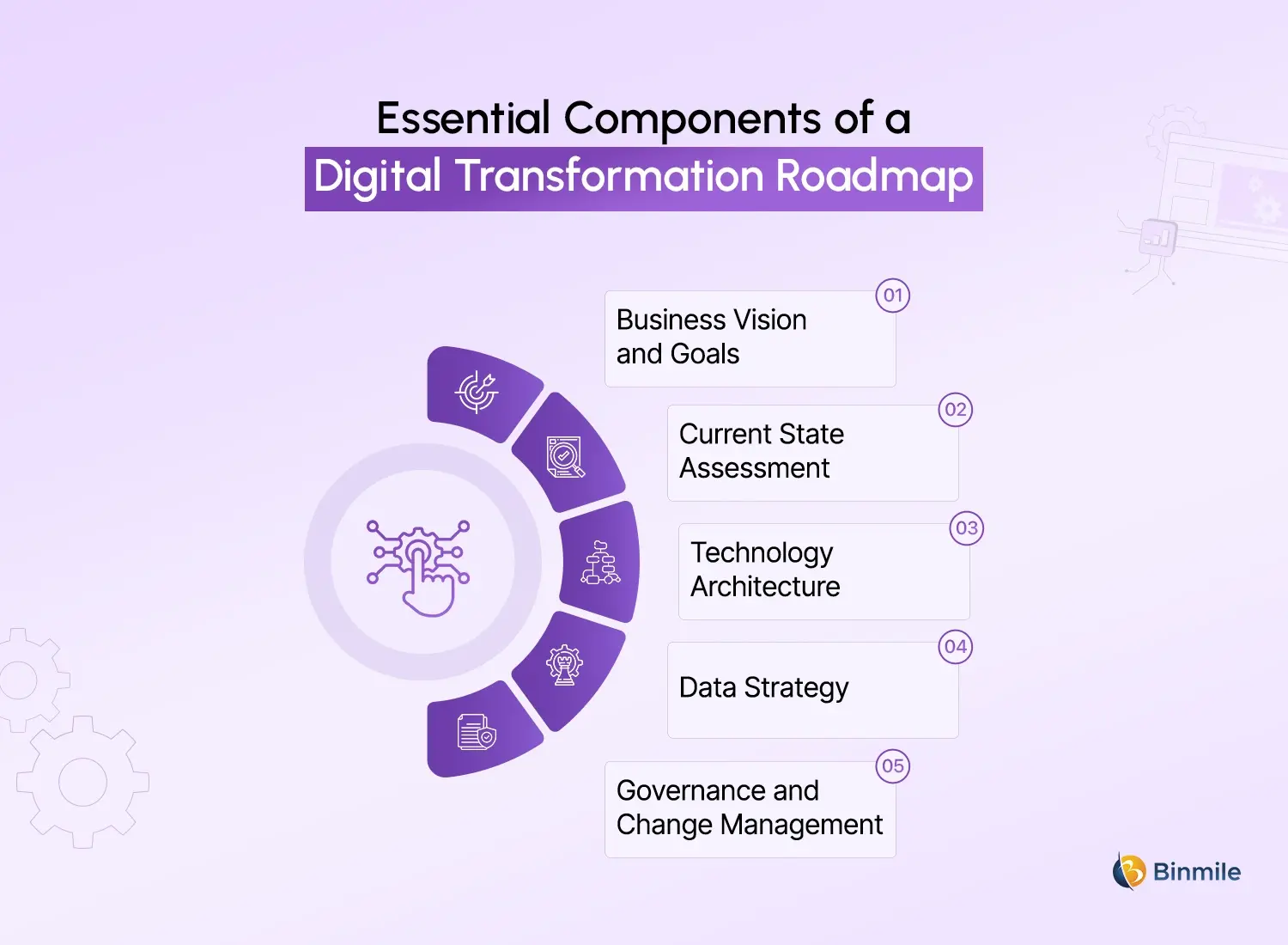
3. Technology Architecture
Organizations need to know what technology is needed to enable their digital transformation. Organizations must assess the tools that will drive their initiatives, such as data analytics tools, IoT, Artificial Intelligence technology, and any other important digital tools.
All of the above will provide the foundation for building roadmaps for enterprise transformation.
4. Data Strategy
Data drives digital transformation. Modernization of data systems to enable integration, real-time analysis, and AI-driven analysis is a vital initiative for any organization.
Data is vital for innovation and generating insights.
5. Governance and Change Management
Transformation initiatives require strong governance to ensure alignment and accountability. Key elements include leadership involvement, clear roles and responsibilities, change management programs, and employee training and adoption strategies
Without proper governance, even well-designed transformation programs may fail.
Step-by-Step Process to Build a Digital Transformation Roadmap
Creating a roadmap requires careful planning and collaboration across teams. The following step-by-step process helps organizations design an effective roadmap.
Step 1: Define Business Objectives
The initial step involves examining opportunities and challenges that digital transformation aims to address. Target areas are typically better operational efficiency, customer service, introduction of digital services, and lowering operational costs. Defined goals inform the Digital Business Strategy in its entirety and outline the focus of the transformation in relation to the operational goals of the organization.
Step 2: Assess Digital Maturity
Organizations are to benchmark their improvement areas geo-digital to identify their present digital capabilities. This involves examining the extent of the available technological infrastructure, the digital skills of the team members, data management, and digital platforms. The identified areas of improvement offer a starting point for accomplishing your transformation goals.
Step 3: Identify Transformation Opportunities
After the assessment of the preceding step, the organization should evaluate the areas where the application of digital technology would yield improvements. This may include the development of customer experience-enhancing automation, advanced data analytics, or cloud systems. Such opportunities offer the backbone of the roadmap.
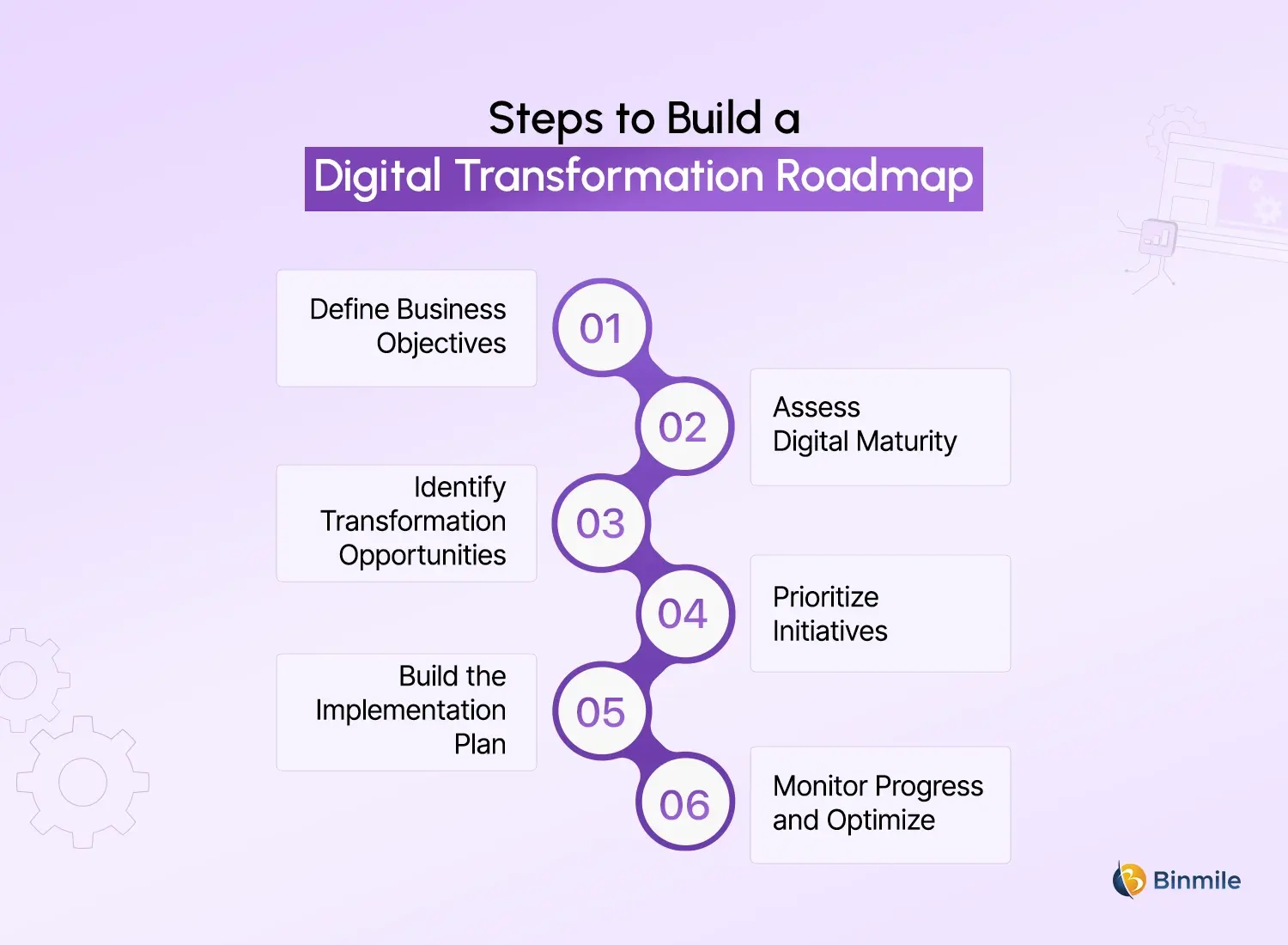
Step 4: Prioritize Initiatives
Businesses must tackle digital transformation one workplace initiative at a time, prioritizing them based on possible impact and ease of implementation. Value to the business, ease of implementation, cost, and time to realize impact are the big considerations. Prioritizing initiatives first provides organizations with the space to address initiatives that are the most instrumental to building the momentum of larger transformation programs.
Step 5: Build the Implementation Plan
Business organizations can create an implementation plan that is structured and clear, with execution time, accountability, and target goals to be clearly outlined at this point. The plan also needs to clearly address the “how” component of each initiative to be implemented, and the “how” of each initiative in relation to the goals to be achieved. Appropriately designed digital transformation roadmap software aids in the delegation and execution of functional tasks, issues, and activities across organizational silos.
Step 6: Monitor Progress and Optimize
Digital transformation is an iterative process, and organizations need to incorporate this into their planning from the start. An ongoing emphasis must be placed on performance measurement against established goals and market demand to identify performance gaps. Adaptive planning must be emphasized to ensure the roadmap is current with the organization’s changing goals and in step with the latest technologies.
Ready to modernize your enterprise systems and accelerate innovation? Create a digital transformation roadmap that drives efficiency and growth.
What are the Types of Digital Transformation
Digital transformation serves an organization’s unique goals, industry requirements, and operational challenges. Differentiating the kinds of digital transformations allows an organization to target the most valuable opportunities to leverage digital technology. For instance, Process Transformation centers on internal efficiencies and implementing technology to automate manual, repetitive, and digital workflows. Robotic process automation (RPA) and Artificial Intelligence (AI) are two examples of technology and they can enhance efficiency and eliminate mistakes in a process.
When an organization seeks to redefine how value is delivered and revenue is generated, this is termed Business Model Transformation. A digital platform, a subscription business model, or an online marketplace are examples of how organizations can transform their business model to create new revenue streams and new markets.
Digital technologies are instrumental in transforming customer experience and in positively impacting how a customer interacts with a business and brand. For example, digital apps, increased personalization, and AI chatbots are designed to drive customer engagement and enhance the experience. Finally, encompassing the other four types of digital transformations, Cultural Transformation creates an environment in which long-term continuous digital innovations can be implemented, data-driven decisions can be made, and digital skills can be developed in every line of business.
Technologies Driving Digital Transformation
Numerous cutting-edge technologies, such as advanced analytics, intelligent automation, and AI-driven decision-making, stimulate digital transformation by allowing businesses to innovate and streamline their operational processes. AI and Machine Learning, for instance, help to analyze and automate tasks within large data sets and provide predictive analytics. These technologies are widely used to provide intelligent automation and AI-driven customer support. Cloud computing offers rapid application deployment, reduced costs associated with IT, and increased flexibility of the systems. As a result, many organizations are moving their legacy systems to the cloud to enable faster innovation and collaboration.
Digital Transformation with IoT enables companies to gather data in real-time through interconnected systems and devices. IoT technologies help industries like the manufacturing industry and the retail industry to enhance their operational monitoring, process optimization, and supply chain management. Furthermore, the latest systems utilize event-driven architecture to facilitate real-time communication across various applications and services, allowing organizations to automate workflows and respond to real-time events.
Finally, data modernization helps integrate data from multiple sources and generate real-time insights, enabling faster decisions and improved operational efficiency.
Challenges in Creating a Digital Transformation Roadmap
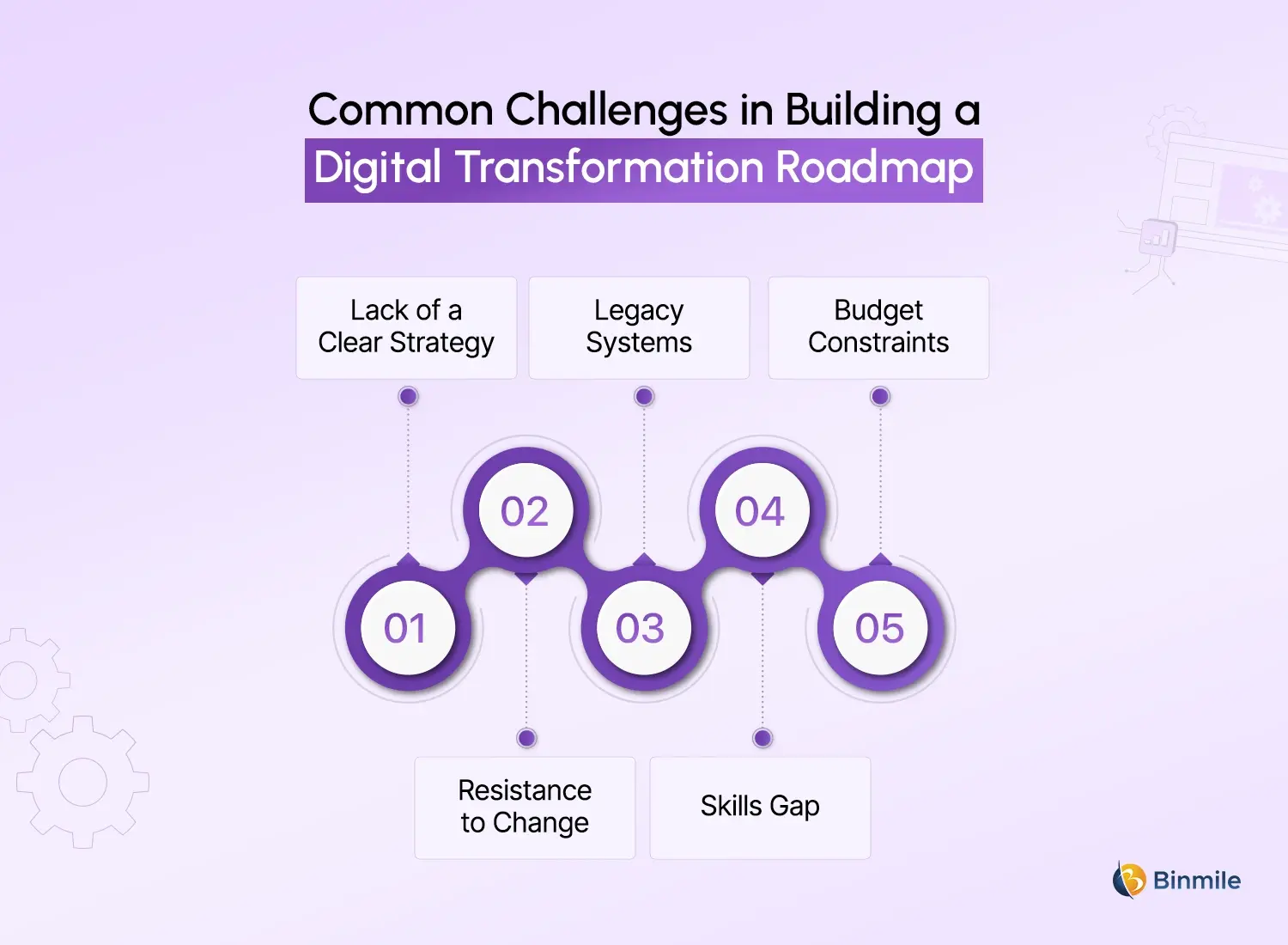
Despite its benefits, building a transformation roadmap can be complex. Organizations often face several challenges while implementing enterprise digital transformation.
-
Lack of a Clear Strategy
Organizations frequently implement technologies haphazardly, without a strategy. In the absence of a digital transformation strategy, initiatives are unlikely to fulfil their potential.
-
Resistance to Change
Clients can be apprehensive about novel technologies and procedures. In order for there to be successful adoption, change management is necessary.
-
Legacy Systems
Obsolescent systems can impede transformation. These systems require update or can be replaced.
-
Skills Gap
Expertise in AI, cloud computing, and data analytics is necessary for digital transformation. These are the kinds of skills that most organizations find difficult to source.
-
Budget Constraints
Significant spending is required for large-scale transformation initiatives. Organizations need to budget and schedule initiatives.
Planning to build a digital transformation roadmap but unsure where to start? Build a structured roadmap that aligns with real business outcomes.
Supporting Long-Term Transformation Success
Digital transformation requires continuous innovation, strategic planning, and strong technical execution. Many organizations begin their transformation journey with ambitious goals but struggle to turn strategy into measurable outcomes.
This is where the right technology partner plays an important role. Companies like Binmile support organizations by helping them design and execute a structured digital transformation roadmap that aligns technology initiatives with real business objectives. With expertise in areas such as enterprise digital transformation, AI consulting, data modernization, and custom software development services, businesses can implement scalable solutions that improve operational efficiency and enable innovation.
By combining strong technical expertise with strategic planning, organizations can accelerate their transformation journey while reducing implementation risks. A well-planned roadmap supported by the right partner ensures that digital initiatives deliver lasting value and help businesses stay competitive in an increasingly technology-driven market.
Frequently Asked Questions
A digital transformation roadmap is a strategic plan that outlines how a business will adopt digital technologies to improve processes, customer experiences, and operations. It helps organizations align technology investments with business goals and execute transformation in a structured way.
Data is central to digital transformation. It helps businesses gain insights, improve decision-making, personalize customer experiences, and optimize operations. A strong data strategy ensures that digital initiatives are driven by accurate, real-time information.
The timeline depends on the organization’s size, goals, and existing infrastructure. Some initiatives may take a few months, while full enterprise transformation programs may take several years with continuous improvements.
Common challenges include a lack of a clear strategy, resistance to organizational change, outdated legacy systems, a shortage of skilled professionals, and limited budgets. Proper planning and experienced partners can help overcome these obstacles.
Industries such as manufacturing, retail, finance, healthcare, and insurance benefit significantly from digital transformation. These sectors rely heavily on automation, data analytics, and digital customer experiences to stay competitive.
A roadmap helps businesses implement technologies that personalize interactions, enable faster service delivery, and provide seamless digital experiences across channels. This leads to higher customer satisfaction and stronger long-term relationships.