Healthcare is steadily shifting toward more connected and data-driven care models. Wearable devices are changing the paradigm of healthcare as they allow the provider to monitor the consumer’s physiological state at any time. The consumer’s data can be evaluated continuously, and any trends can be monitored to enact early interventions. According to Grand View Research, the global wearable medical devices market is expected to reach over $168.29 billion by 2030, driven by rising demand for remote patient monitoring and preventive healthcare.
This upsurge speaks to the fundamental change in the engagements of the healthcare ecosystem with digital tools to enhance patient care continuum and operational workflows. This blog will delve into the description of wearable technology in healthcare and describe the reasons it is gaining traction as a strategic imperative for healthcare providers, the benefits it offers, the existing challenges in organizational adoption, the real-world use cases, and the organizational challenges in the adoption of the technology. Additionally, we will describe the adoption process, the emerging patterns, and the paradigms through which the healthcare industry will be able to develop iterative wearable healthcare technologies.
What is Wearable Technology in Healthcare
Wearable technology in healthcare refers to smart electronic devices that individuals wear to collect health-related data in real time. With built-in sensors, connectivity, and software, they monitor and report data through apps. Many wearable health monitoring devices monitor important health metrics, including heart rate, oxygen levels, activity, sleep patterns, and glucose levels. This data is used to help providers diagnose problems, treat chronic illnesses, and tailor treatment to individual patients. Managing chronic illnesses and tailoring treatment.
Remote patient monitoring devices, biosensors, smart patches, and blood pressure monitor smart devices, along with glucose monitoring devices and smart watches that monitor ECGs, are part of patient monitoring wearable devices. Compared to traditional patient monitoring methods, which use periodic visits, health care wearables offer continuous monitoring and provide patient health data in more depth than intermittent data collection. This facilitates proactive medical treatment.
In addition, wearable apps and integrated mobile platforms enable patients to access their health data instantly. These applications also allow doctors to track patient progress remotely, making healthcare delivery more efficient and patient-centered.
Key Benefits of Wearable Technology in Healthcare
The benefits of wearable technology in healthcare extend beyond patient monitoring. They support better clinical decisions, improved patient engagement, and more efficient healthcare operations.
-
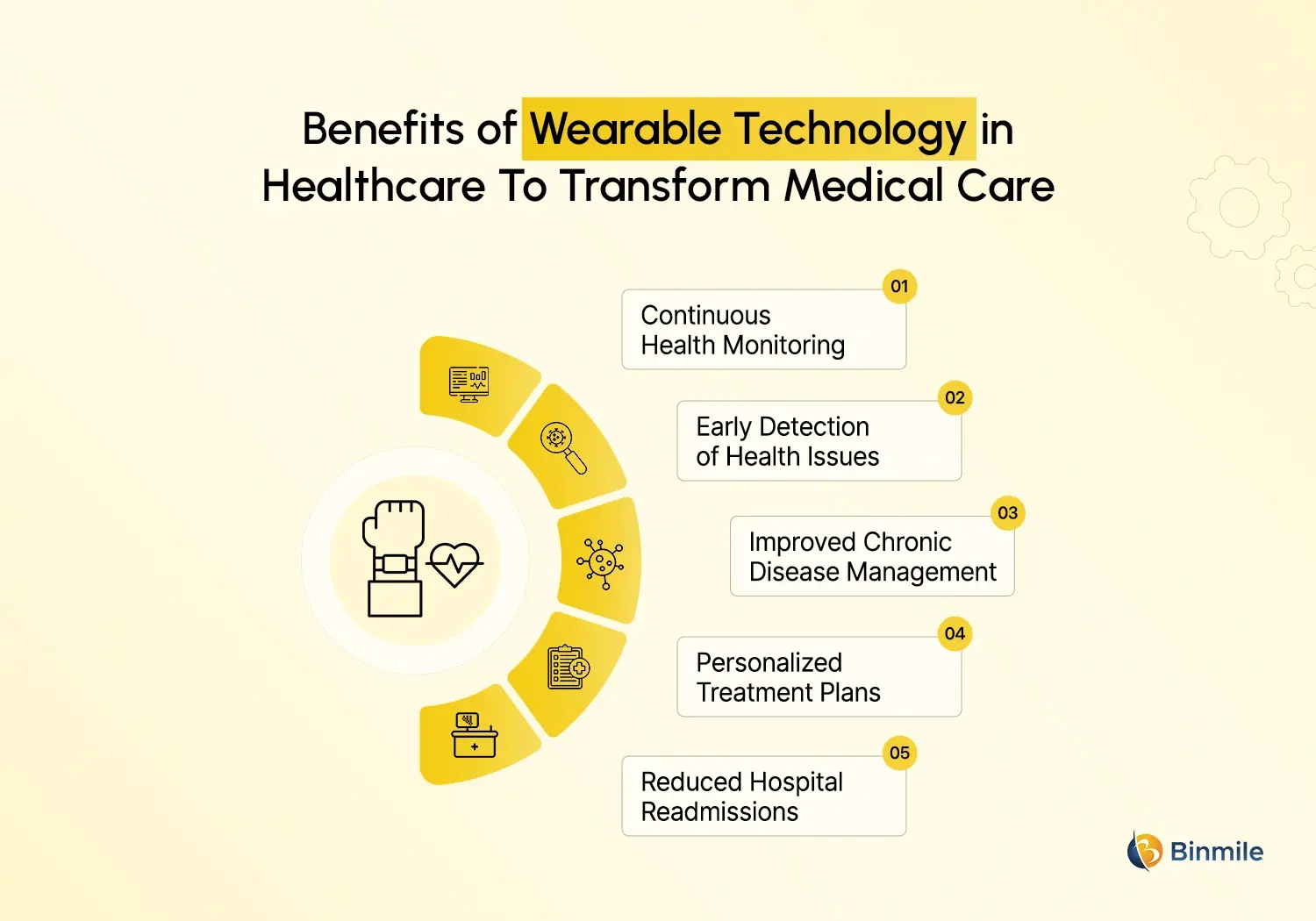
Continuous Health Monitoring
Wearable technology enables 24/7 data collection to evaluate patient health. This technology allows doctors to assess patients after they have left the hospital. This data collection is very important when monitoring patients with chronic illnesses like diabetes, hypertension, or heart disease.
When patients are continuously monitored, doctors can be alerted to the potential for complications by identifying patterns even before problems arise.
-
Early Detection of Health Issues
With the aid of technology, doctors can identify issues and irregularities as they arise rather than wait for the patient to come with complaints like low oxygen levels, low energy, or irregular heartbeats. These problems and issues can be monitored in real time, and the appropriate response from doctors can be initiated as needed rather than waiting to respond to issues when they become more serious.
-
Improved Chronic Disease Management
The management of chronic illnesses requires ongoing monitoring. The compliance from patients and doctors is facilitated by the use of medical wearables. The patients can be monitored daily and can be measured against their treatment plan to ensure compliance with the requirements of the treatment plan.
The result is an improved outcome for the patients.
-
Personalized Treatment Plans
The information collected by wearables in healthcare can be used to better understand the health patterns of a particular patient. By having a better understanding of a patient and their health, the doctor can customize treatment plans and adjust medications as needed. These adjustments lead to better outcomes.
-
Reduced Hospital Readmissions
The monitoring that is being done allows doctors to become aware of a patient’s worsening health before it requires a trip to the hospital. For that reason, doctor visits and hospital visits are prevented and can be avoided.
Why Wearable Technology is Becoming a Strategic Priority
Wearable technology is being rapidly integrated into the healthcare world for uses such as preventative technology and data-driven use cases. Due to increasing patient loads and a growing cost burden for the healthcare world, the ability to monitor patients without having to visit the hospital frequently is greatly needed.
Novel ways to monitor and manage patients remotely are a growing use case for remote patient monitoring technology. Chronic condition management and postoperative monitoring become substantially more feasible with the use of digital health wearables that monitor things like heart rate, activity, and sleep patterns.
Wearable technologies enable the use of health-focused AI and analytics to assist clinical decisions with more real-time data, driving a more data-focused healthcare world. Finger tip health metrics monitoring and tracking, via wearable integrated apps, assist patients in being more engaged as managers of their own health.
Wearable health monitoring devices, as they become integrated into the larger smart healthcare technologies in use today, are becoming more and more a key focus of forward-looking healthcare systems.
Real World Use Cases of Wearable Technology in Healthcare
Healthcare organizations are already implementing wearable healthcare solutions across various clinical scenarios.
Below are some of the most impactful real-world applications.
-
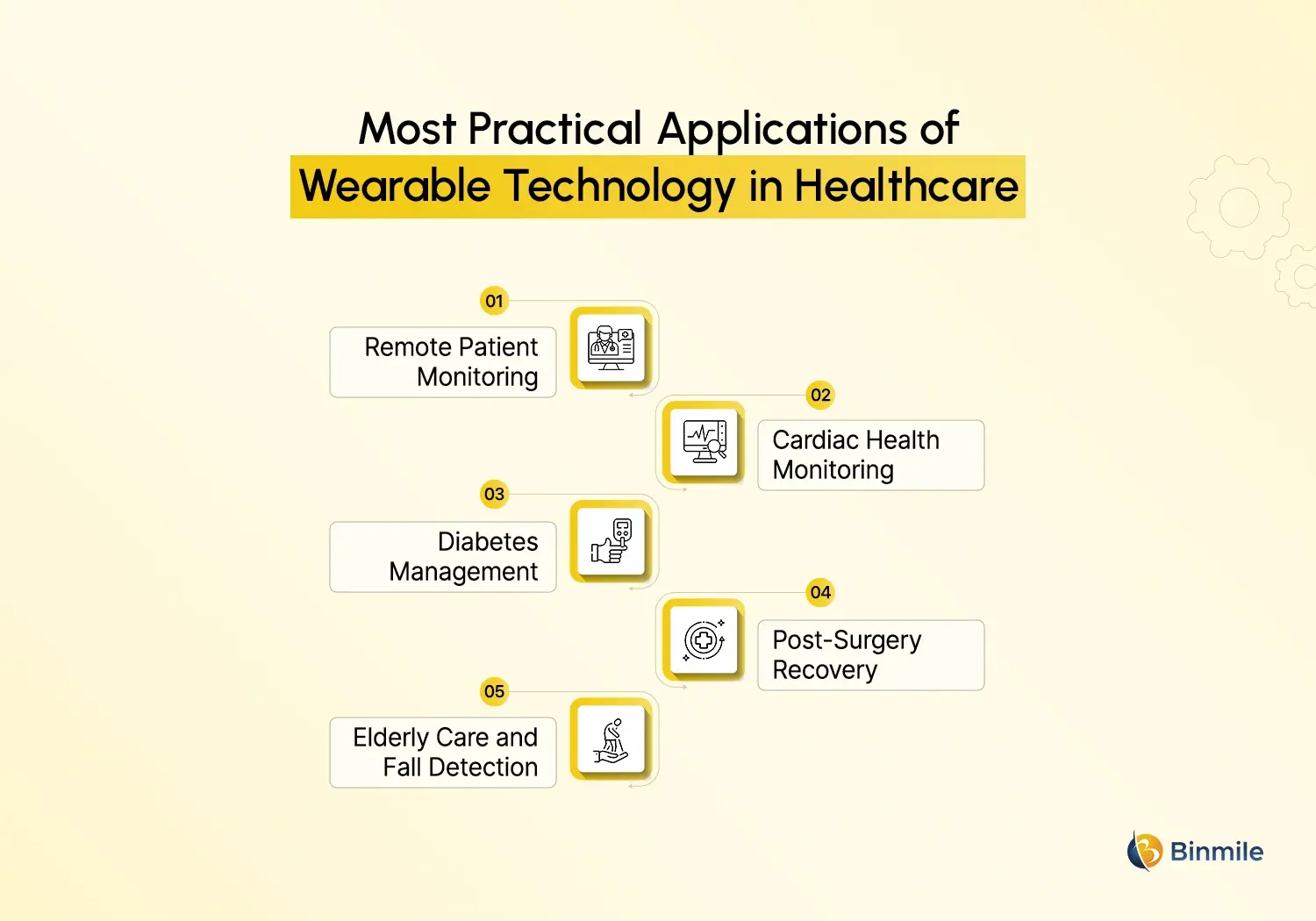
Remote Patient Monitoring
Remote patient monitoring is one of the most common applications of wearable technology in the medical field.
Emergency departments use wearable technology to monitor patients post-surgery and patients with chronic co-morbidities. Physicians monitor and can respond to emergencies as required.
-
Cardiac Health Monitoring
Wearables with an ECG feature can monitor and alert the user to falls and other cardiac events. Such wearables are essential for patients with cardiac or stroke risk.
-
Diabetes Management
Diabetes patients use continuous glucose monitoring systems. Such medical wearables in healthcare can monitor and alert patients of hyperglycaemia and hypoglycaemia.
-
Post-Surgery Recovery
After surgery, patients are monitored closely. Wearables can monitor patients and help to ensure that patients are recovering adequately.
-
Elderly Care and Fall Detection
Wearables for seniors can monitor and alert user falls and other emergencies. Such medical wearables are an enhancement to the home care of seniors.
Planning to integrate wearable medical devices with your healthcare platform?
What are the Challenges of Wearable Technology in Healthcare
Despite its advantages, several challenges of wearable technology in healthcare must be addressed before large-scale adoption.
Wearable technology in healthcare will only be successful if the concerns around data privacy, protection, and security are addressed first. Sensitive data is collected and analyzed by the wearable devices when they are being used. Healthcare providers must implement secure architectures and often undertake healthcare software modernization initiatives to ensure legacy systems can safely handle real-time wearable data while meeting regulatory compliance requirements.
Device precision and accuracy are also issues. Certain consumer health monitoring wearable devices will not be accurate enough and will not provide the medical-grade level of precision required to be able to inform clinical decisions. Beyond that, the integration of digital health devices with the healthcare organization’s already existing health information system is a challenge, especially if the organization is still running on legacy systems.
There are also challenges with batteries, patients’ acceptance of the technology, and needing regulatory approval of wearable devices in healthcare. Thus, for the successful implementation of wearable technology in healthcare, they must be secure, reliable, and easy to use.
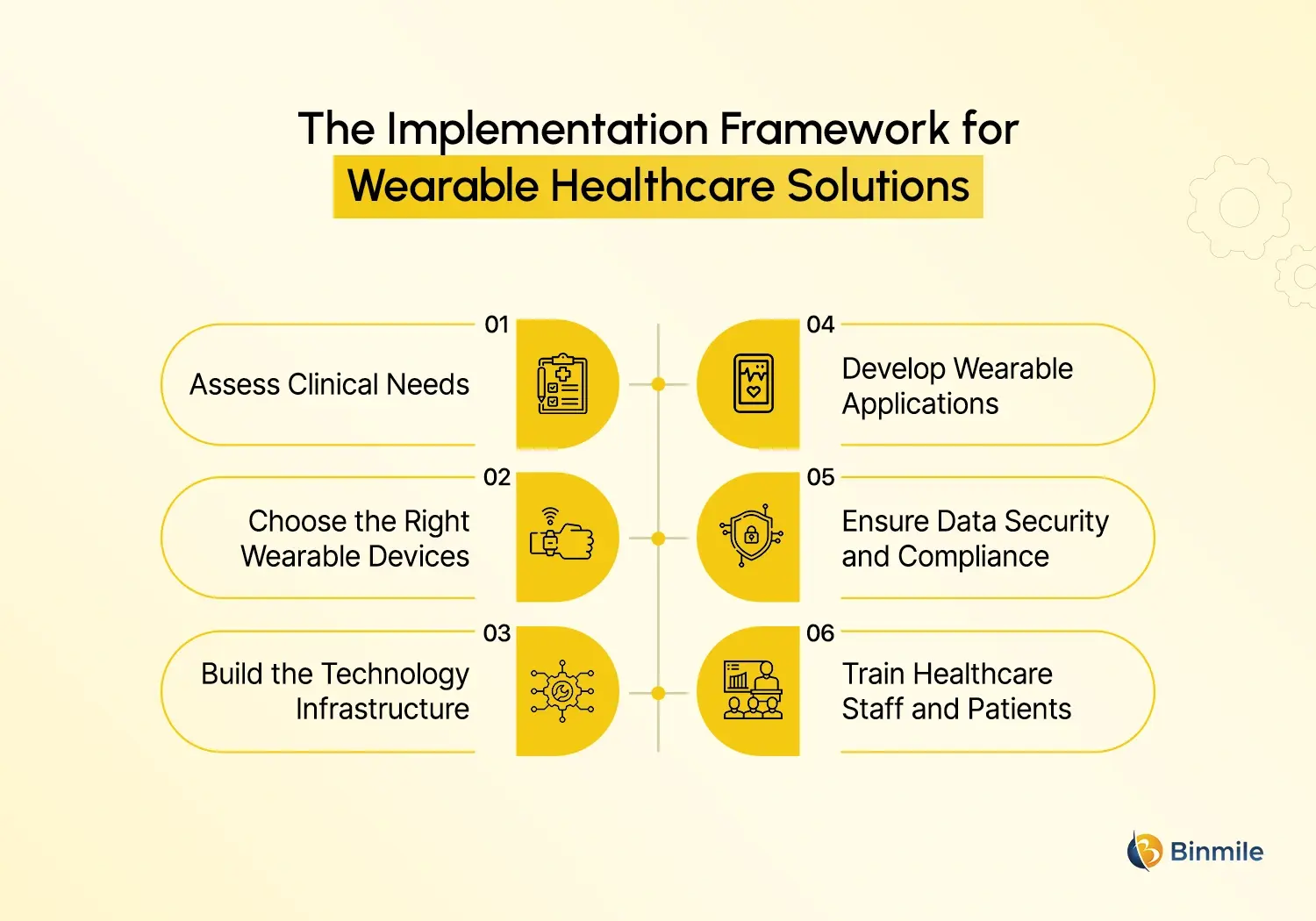
Implementation Process for Wearable Healthcare Solutions
Healthcare organizations planning to adopt wearable technology should follow a structured implementation approach.
-
Assess Clinical Needs
The first thing to do is evaluate the clinical issues that can be addressed using wearable technology. These may be things like remote monitoring of chronic illness, tracking recovery from surgery, or monitoring care of the elderly. Additionally, organizations also assess factors like the Healthcare App Development Cost associated with building connected mobile and wearable applications.
These issues will guide you in selecting the most appropriate healthcare wearable devices.
-
Choose the Right Wearable Devices
Different healthcare scenarios will need different types of medical wearable devices. Organizations should consider the trade-off between device precision, sensor quality, battery longevity, and legal/ethical concerns.
-
Build the Technology Infrastructure
The wearable devices should be able to interface with the healthcare IT ecosystem, including electronic health records and patient management systems. These systems require a robust data ecosystem, enabled by cloud technology and secured by standard API protocols. Additionally, it is essential to evaluate the Healthcare Web Development cost involved in building secure platforms.
-
Develop Wearable Applications
The custom wearable app development is crucial for linking the devices to the necessary healthcare applications, allowing doctors and patients to access health information in real-time.
A wearables app technology stack will normally have a mobile app, a cloud-based service, an AI analytics service, and secure data storage.
-
Ensure Data Security and Compliance
The healthcare organization should have strong data security policies, including encryption, secure user authentication, and adherence to regulatory standards.
-
Train Healthcare Staff and Patients
Successful implementation requires training doctors, nurses, and patients on how to use health monitoring wearable devices and interpret the collected data.
Future Trends for Wearable Technology in Healthcare
Developments in AI, sensors, and networked healthcare systems will transform wearable technology in healthcare.
Analytics powered by AI will allow healthcare professionals to spot trends in wearable devices and discover possible health risks sooner. GenAI solution platform integrations will improve clinical insights and decision support systems.
New biosensors will allow healthcare wearables to track more complex health metrics. Healthcare wearables will also become more integrated within health technology systems, especially hospitals, telemedicine, and the cloud.
Growth in the use of wearables will drive the need for intelligent wearable applications and specialist wearable application developers. This will facilitate the delivery of proactive and personalized patient care by healthcare professionals.
Looking to build secure and scalable wearable healthcare applications that support real-time patient monitoring and intelligent analytics?
Building Scalable Wearable Healthcare Solutions
Organizations adopting wearable healthcare technology must ensure their digital infrastructure can support large-scale data processing, real-time monitoring, and advanced analytics.
Wearable makers in healthcare, such as Binmile, combine expertise in custom healthcare app development, healthcare software modernization, and advanced GenAI solutions to develop scalable solutions. Secure wearable devices and IT system-integrated devices will maximize the value of digital health.
Wearable devices creators will reverse modern initiatives like the healthcare RCM software, development of intelligent data ecosystems, and modern software development, leading to advanced healthcare organizations.
The creators of wearables that will have the most impact on the evolution of devices will be those that invest in scalable systems, advanced analytics, and simple system integration.
Frequently Asked Questions
Wearable technology in healthcare is used to monitor patient health metrics such as heart rate, activity levels, sleep patterns, glucose levels, and blood pressure. These devices enable continuous monitoring and help doctors detect potential health issues earlier.
Wearable devices collect real-time health data that allows doctors to track patient conditions remotely. This continuous monitoring helps detect abnormalities early, manage chronic diseases more effectively, and provide personalized treatment plans based on real patient data.
Key challenges include data privacy concerns, integration with existing healthcare systems, device accuracy issues, regulatory compliance requirements, and ensuring long battery life. Healthcare organizations must address these factors to successfully implement wearable solutions.
The future includes AI-driven analytics, advanced biosensors, predictive healthcare models, and deeper integration with telemedicine and hospital systems. Wearable devices will play a major role in preventive healthcare and personalized medicine.
Common healthcare wearable devices include smartwatches with ECG monitoring, continuous glucose monitors, wearable activity trackers, smart patches, biosensors, and remote patient monitoring devices used for tracking vital health metrics.
Integration usually involves developing secure APIs, cloud-based platforms, and custom wearable applications that connect wearable devices with electronic health records and hospital management systems.
Wearable technology can be secure when proper encryption, authentication mechanisms, and regulatory compliance standards are implemented. Healthcare organizations must adopt strong cybersecurity practices to protect patient data.
AI and analytics analyze large volumes of wearable health data to identify patterns, detect anomalies, and predict potential health risks. This enables healthcare providers to make more informed clinical decisions and deliver proactive care.