Before discussing how to choose the best software for sustainability management, let’s understand the concept of sustainability. We will also explore how it aligns with the concept of management.
Understanding the Concept of Sustainability
If we relate sustainability to business, it refers to a practice focused on long-term responsibility. Its primary goal is to ensure the well-being of the environment, society, and the community as a whole.
Therefore, a sustainable business addresses two main categories: first, how it affects the environment; second, how it impacts society. A sustainable business takes into account a wide array of environmental, economic, and social factors to make an informed business decision.
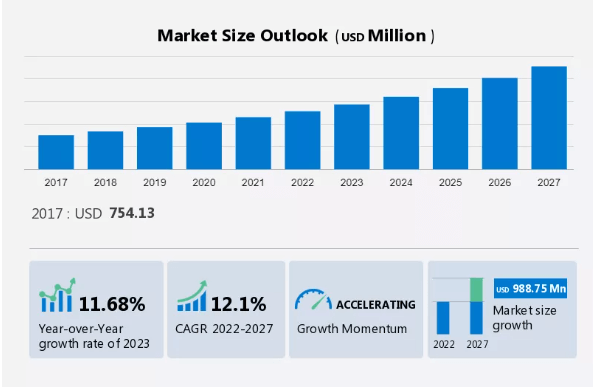
Source – technavio.com
What is Sustainability Management?
Sustainability management is actually a synthesized concept of sustainability and management. Its goal is to reduce emissions and energy consumption while promoting sustainable growth. It also aims to preserve resources for future generations.
Sustainable practices apply to businesses, agriculture, facilities, and communities. They combine economic, environmental, and social perspectives. This approach supports ethical management decisions for business growth and long-term development.
It is not limited to achieving short-term profitable growth. Instead, it focuses on long-term value creation. It ensures management decisions align with the environmental and social costs of doing business.
Why do Businesses Turn to Software for Sustainability Management?
Businesses are increasingly aware of the value of sustainability and its inevitable role in building a salient brand image. Therefore, businesses increasingly rely on sustainability management software. It reflects their commitment to green initiatives and sustainable business practices. This approach also helps them run their operations more effectively and efficiently.
Businesses adopt sustainability software frameworks and online tools to prioritize environmental performance and sustainability. They also leverage these solutions to maximize the benefits of their green initiatives and sustainable business practices.
In fact, by incorporating green business practices and formalizing program management in software systems, businesses can bring forth automated efficiency in their program, thereby gaining improved operational efficiency at reduced costs.
Also Read: How to Reduce Software Development Cost
Factors Driving Businesses to Adopt Sustainability Software
1. Understanding That Sustainability Is Indispensable, Not a Requirement
In today’s connected world, businesses must prioritize environmental responsibility. They understand that failing to adopt sustainability software can negatively impact their intended brand image and long-term business goals.
They understand that improving sustainability performance supports long-term business goals. It helps attract customers and meet their expectations. It also reduces operational costs, minimizes administrative tasks, and improves employee engagement.
2. Increasing Regulatory Compliance Around Sustainability
Regulatory compliance requirements around sustainability continue to increase. These requirements ensure organizations maintain transparency, governance, and accountability in their business practices.
The point is, maintaining a sustainable business is no longer a choice but a law or regulatory requirement that must be followed. Sustainability regulations apply across multiple industries. These include hospitality, automotive, food and beverage, retail, and financial services.
3. Pressure on Companies to Report on their Sustainability Performance
Companies these days are no longer in a position to withhold information clarifying their stand on sustainable business practices. From investors to consumers, pressures are being piled up on companies to disclose or report on how they are managing their impacts on the environment and society as a whole.
Another reason why companies are turning to sustainability software is the rising demand for sustainability metrics and KPIs. To meet such demand, companies are providing their employees with real-time sustainability performance insights to ensure that they are informed to make better sustainable business decisions.
Read More: Software Development Methodologies
4 Ways Sustainability Software will Benefit your Business
Sustainability management and reporting software is the result of sophisticated technology evolutions that drive many advantages for businesses.
1. Streamline the Data Collection Process
A sustainable business approach drives impactful results in various business areas of a company. Therefore, organizations must collect relevant sustainability data, although the process is often time-consuming and complex because teams manually update the data using spreadsheets.
It should be noted that the accuracy and authenticity of collected sustainability data are one of the biggest challenges associated with ESG (Environmental, social, and corporate governance).
In a report by KPMG, 49% of institutional investors have found that a lack of quality or trusted sustainability data is one of the main challenges in making ESG-based investments.

The use of sustainability software is crucial, as it is designed to capture sustainability data that can be configured to track data from various departments simultaneously. Besides, it can interpret ESG-related data, simplify, and automate the workflow.
2. Provides Crucial Insights And Improves Transparency
The role of technology in creating clarity and insight on a complex matter such as sustainability management is substantial. Therefore, sustainability management software comes in handy in terms of facilitating an efficient process with more proactivity in the overall value chain.
It improves your insights into the organization on a broader and deeper level to understand the sustainability status of your organization.
Data-based insights help you figure out improvement areas, thereby allowing you to steer your organization in the right direction or understand how it measures against ESG and sustainability factors.
As a result of data-based insights provided through sustainability software, you can make strategic decisions leading to the accomplishment of your organization’s goals for a sustainable business commitment and increased performance.
In addition, the efficacy of sustainability software is not limited to just providing you with insights to make more strategic decisions, but it also improves transparency.
By tracking and broadening your understanding of climate frameworks and other metrics relevant to your organization, you can set targets, measure the progress of how far you have achieved your sustainability goals, and create value-adding reports to improve transparency.
3. Ensures Quality Of Reporting And Compliance Adherence
Sustainability software helps organizations save time and effort from compiling reports or mandatory disclosures. Moreover, it comes equipped with reporting tools that companies can use to ensure compliance with the requirements of challenging regulations and frameworks.
4. Reduces Costs and Increases Revenue
Sustainability software streamlines the process, allowing you to get rid of margins of error and save time from ad hoc tasks, manual work, etc. Moreover, the way it provides a deeper insight into your value chain can be helpful in identifying wasteful activities. You can optimize energy and water consumption, along with saving costs, with improved resource efficiency.
Sustainability management, if done effectively and efficiently, will give a clearer picture of the positive impact you are creating, along with new potential in your organization. Meaning, you will reach more conscious and sustainably driven customers and pave the path for the revenue growth of your business.
Read Further: How to Infuse Design Thinking in Software Development
5 Key Things to Look for When Choosing the Best Software for Sustainability Management
Among the plethora of sustainability management software products in today’s marketplace, choosing the right one in conformity with your business needs and regulatory requirements sounds like a herculean task. Anyway, here is the rundown on some how-to-choose tips intended to help you gauge every aspect of sustainability software before picking up the one for your requirements.
1. Choose Based On How Better It Functions
When it comes to choosing a sustainability management solution, consider the important features you want pertaining to your current and future needs. A company’s requirements for sustainability management, like data collection and tracking, can differ vastly, such as:
- Sector benchmark reporting
- Supply chain emissions coverage
- Waste management data
- Energy consumption rate data
Therefore, sustainability software has a depth of functionality, in terms of helping you track and report on main sustainability KPIs, supporting various organization types and sizes, and having a large and active user base.
Make your decision of choosing sustainability software by considering scalability and selecting a program that grows corresponding to the growth of the company. Ensure that the software integrates with other tools, like an enterprise resource planning (ERP) system or a business intelligence platform.
Know the Difference: ERP Vs CRM
The feature will ensure that the software can help you meet your sustainability goals.
2. Choose Based On Its Easy Data Accessibility To Everyone
What if a centralized data location exists for everyone who needs to input data? Imagine the productivity when data owners/data collectors can enter their own pertinent KPI and data related to greenhouse gas directly without having to search for data from different company groups or surf through email for spreadsheets or invoices.
This is imperative when you deal with company locations in different geographic regions. An intelligent software system is a centralized data source that helps you find the relevant inputs.
Main Features to Consider in Sustainability Software:
- Store sustainability data in a single managed location, regardless of whether it is text or numeric. Collect the data from automatic data acquisition systems, handwritten logs, or third-party documentation, such as air permits.
- Since all sustainability data is stored in one managed location, it allows streamlined reporting
- A centralized data location ensures easy accessibility of relevant sustainability inputs in different formats and terminologies. They are very important for final reporting.
- Review the built-in reminders, notifications, and escalations to ensure teams submit inputs on time. These features also help you identify missing information and determine whom to contact if deadlines are missed.
3. Choose Based On How It Allows Effective Data Management
Trusted sustainability software seamlessly collects data and processes large volumes of information quickly and efficiently. When you make a decision to choose a software program, do not forget to check its usability.
The software should be like a functional dashboard to give out relevant information. Also, make a priority of Cloud-based software to enable you to access data from anywhere and across multiple devices.
That is because sustainability software in an off-premise environment is more productive for the easy exchange of inputs between internal and external stakeholders. This means managing ESG data more effectively.
4. Choose Based On Its Data Security Features
When it comes to selecting sustainability management software, consider data compliance as a key priority. You get access to key business information, a sign of the productivity of the software that integrates with your organization’s management system. Ensure that the software you are considering complies with all necessary data regulations. This is crucial for leading the success of your sustainability efforts and the safety of your organization’s sensitive data.
Choose the solution with data encryption and a backup system to combat unforeseeable circumstances of data loss in the future. Check if the sustainability software is good enough to help you set access controls and audit trails to monitor who’s accessing your data.
5. Choose Based On Efficient Detection Of Data Anomalies
A software solution should be able to flag data anomalies at the point of entry so that any problems can be fixed immediately. As a result, it would help your organization save a lot of time in the long run.
Sustainability reporting software helps with the option to set validation rules for data entries that are unusual or that deviate from certain thresholds and fix the anomalies right away.
Choosing a readymade solution may sound pretty easy, but these products are limited in functionality not sufficient to meet your needs completely.
That’s the reason why we recommend custom software, tailored to the specific needs of your business, which will help you experience the best results in the long run.
Continue Reading: Top 10 Software Development Trends
Conclusion
Sustainability software has proven its value for organizations worldwide. It helps strengthen brand reputation while ensuring compliance with evolving regulatory requirements.
In fact, sustainability management and reporting software delivers significant long-term value. Companies adopt it to achieve profitable growth while fulfilling their responsibility toward a safer environment and a healthier society. These custom software solutions help organizations improve their sustainability performance with insights to help them achieve their business goals.
Organizations can leverage the potential of sustainability software to be more responsible in their business practices to positively impact the environment and society.
Meanwhile, choose the software program based on its underlying features and benefits as discussed above. This is important, given it will help you with detailed tracking, setting goals and target metrics, measuring progress against the set targets, and automating the sustainability reporting process, etc.
Are you looking for the best software for sustainability management?
Look no further, as Binmile is your qualified software development company for futuristic solutions to help you innovate your business with adherence to regulatory requirements.
Frequently Asked Questions
Sustainability Management Software helps organizations collect, manage, analyze, and report environmental, social, and governance (ESG) data while supporting sustainability initiatives, regulatory compliance, and informed decision-making.
Businesses should prioritize ESG reporting, carbon emissions tracking, compliance management, data integration, automated dashboards, audit trails, analytics, customizable reporting, and scalability.
The software centralizes sustainability data, automates reporting, tracks compliance metrics, maintains audit-ready records, and helps organizations meet evolving ESG regulations and industry standards.
Manufacturing, energy, healthcare, retail, logistics, construction, finance, automotive, and technology organizations benefit by improving ESG performance and meeting sustainability goals.
Custom solutions integrate with existing enterprise systems, support industry-specific compliance requirements, automate sustainability workflows, improve reporting accuracy, and provide actionable insights for long-term business growth.