The global shift toward digital learning is no longer limited to online classes or recorded lectures. According to Statista, the global eLearning market is expected to surpass USD 460 billion by 2026, driven by mobile-first learning, AI-powered personalization, and the growing demand for enterprise training.
This rapid adoption highlights why Education App Development has become a strategic investment for startups, enterprises, and institutions alike. In this blog, we delve into the components that go into building an educational app, its benefits, development process, essential features, technology stack, cost considerations, and the latest trends shaping educational application development.
What is Education App Development?
Education app development refers to the process of designing, building, and maintaining digital platforms that deliver learning content through mobile or web-based educational applications. These apps can serve schools, universities, corporate training teams, tutors, or independent learners.
An educational app may include interactive lessons, assessments, live classes, or AI-driven recommendations. Educational mobile application development goes beyond content delivery. It focuses on learner engagement, accessibility, scalability, and performance across devices. Businesses often choose a full-fledged education app platform to support continuous learning and user growth.
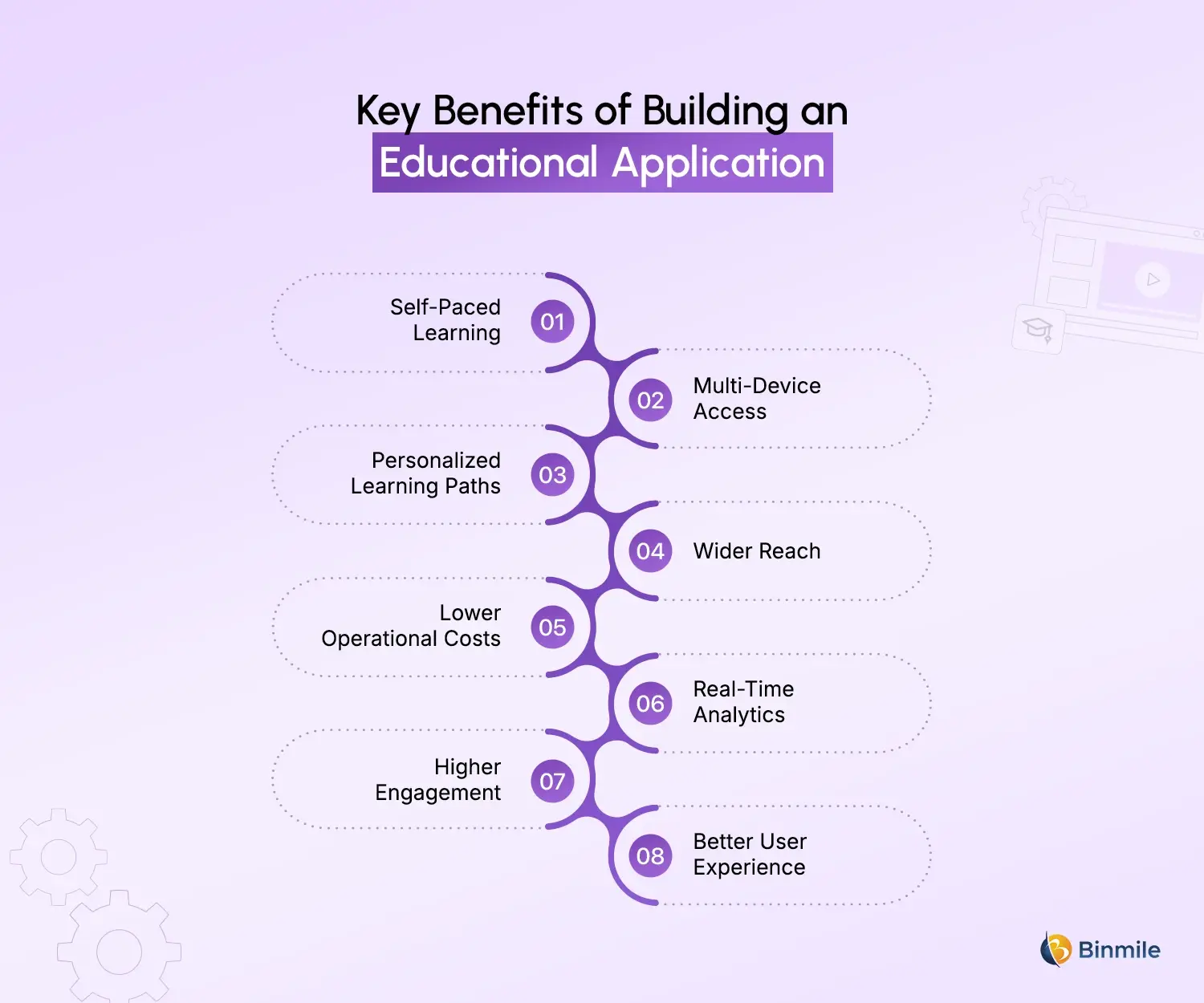
What are the Benefits of Building an Educational App
Educational applications offer value beyond convenience. Here are the benefits of building an education app
-
Self-Paced Learning
Educational apps let students learn without needing to stick to a rigid schedule. Students can pause lessons, go over topics, and advance at a speed they feel comfortable with. This enhances their understanding and reduces stress.
-
Multi-Device Access
Learning materials can be accessed on mobile phones, tablets, and computers. This makes learning seamless and flexible without being restricted to a particular location or device.
-
Personalized Learning Paths
Educational applications study how users progress and behave to give tailored recommendations on lessons to take. This assists students in concentrating on their weaker sections to ensure they end up achieving better results.
-
Wider Reach
Educational institutions can provide learning opportunities without being limited by physical constraints. A learning app system helps those organizations to access students throughout the world without any extra physical facilities.
-
Lower Operational Costs
Virtual training eliminates costs on physical venues, printed handouts, and travel for in-person training. With the help of learning software, organizations can achieve a more effective scale to their training initiatives.
-
Real-Time Analytics
The built-in analytics gives information on how active the learners are and how they perform. This gives educators the opportunity to monitor their learners and adjust the content.
-
Higher Engagement
Learning can be gamified by using aspects of game design like badges and rewards. This helps in motivating learners to complete the learning pathways in a course.
-
Better User Experience
On-demand access to learning materials ensures convenience and reliability. This consistency enhances customer experience and builds long-term trust.
A Detailed Process to Build an Education App Development Explained
Creating a high-quality educational application follows a structured development approach. Here is the step-by-step guide to creating an education app.
Step 1: Discovery and Planning
This step involves stakeholder and target audience identification and learning goals. Clear objectives go a long way to help determine the app type and potential monetization strategy. If you are going to build an education app for students, professionals, or enterprises, scope planning helps minimize scope creep and rework.
Step 2: Design and Prototyping
Educational mobile application development places a large emphasis on user experience. In order for learners to focus on the content, the interface needs to be intuitive and not require excessive time for navigation. Prototypes and wireframes assist in user flow validation.
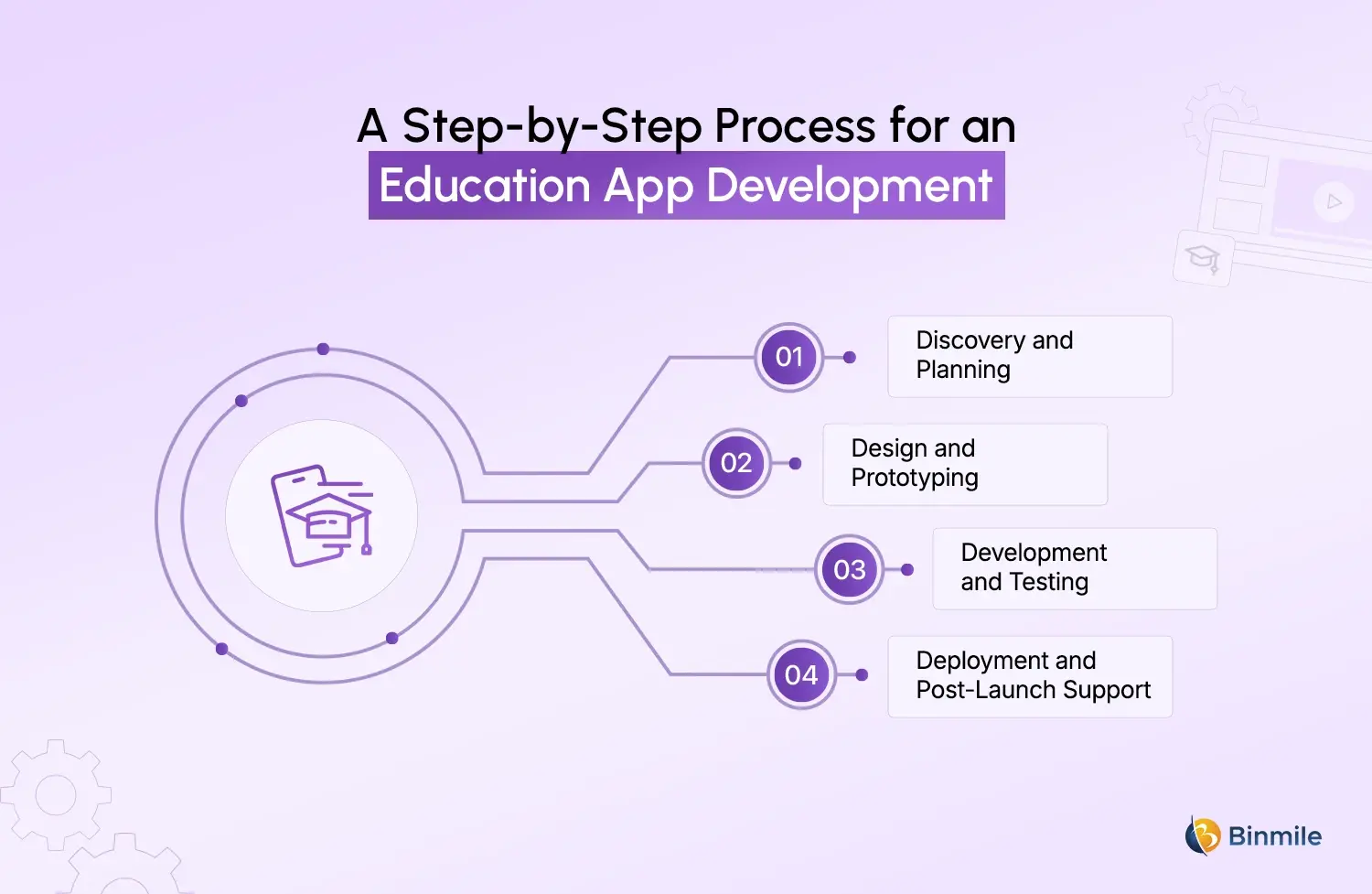
Step 3: Development and Testing
Integration and development of the frontend and backend systems occur in this step. Ensuring that the application is performing, scalable, and secure guarantees that the education app functions seamlessly across devices. In order to ensure that quality standards are met, an education app development company partners with many organizations.
Step 4: Deployment and Post-Launch Support
Once educational software is deployed, it needs sustained monitoring and continuous improvements that include bug fixes and updates on features to keep it competitive. Then, it will meet the needs of the learners, which are always changing.
Planning to build education app solutions that grow with your users and content needs?

What are the Must-Have Features in Educational Applications
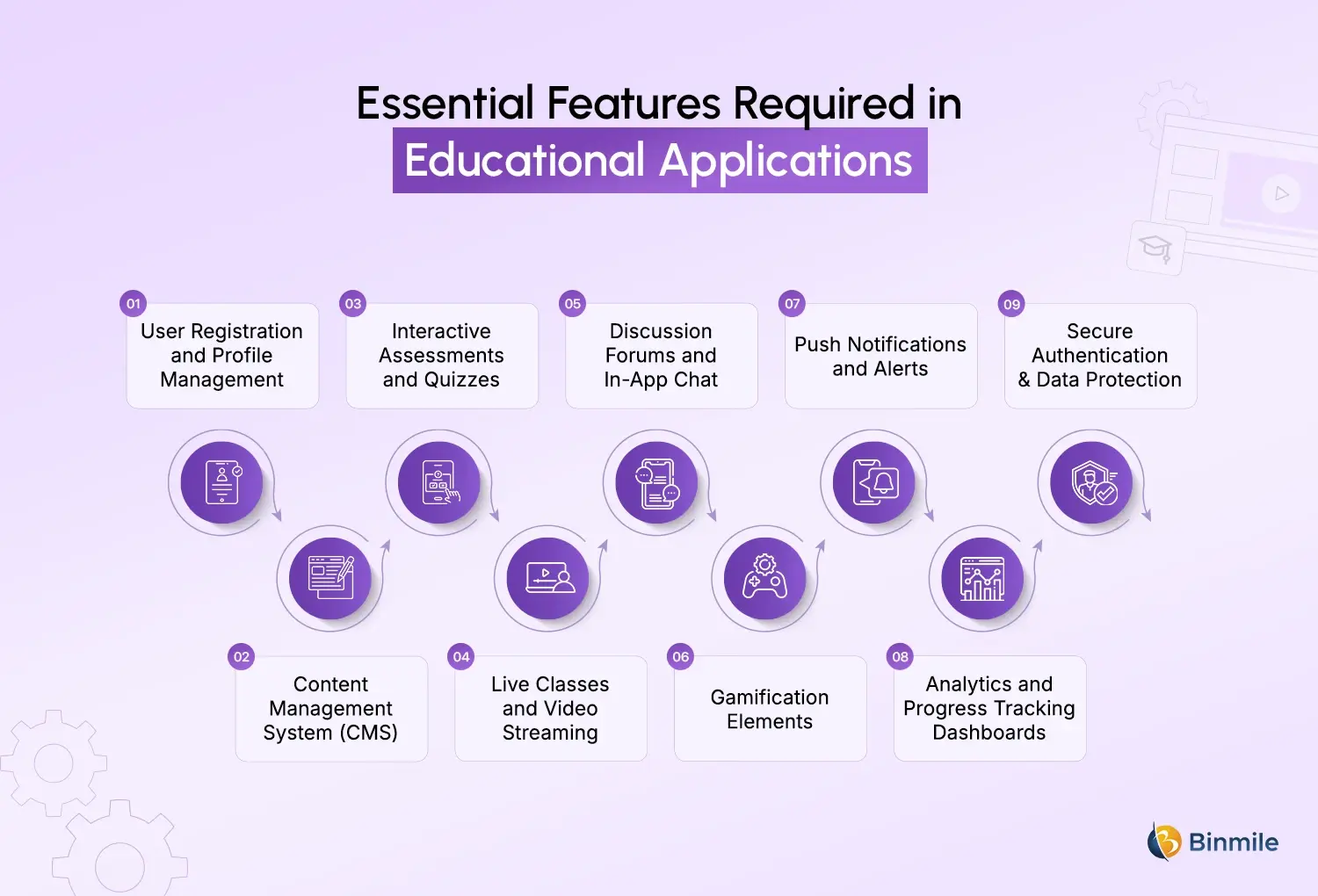
Every successful educational app includes a core set of features designed around usability and engagement. Here are some of the essential features in education applications
-
User Registration and Profile Management
The application allows all learners to generate accounts and handle their profiles. It helps the application understand progress, preferences, completed courses, and learning history to tailor a personalized learning experience.
-
Content Management System (CMS)
CMS allows educators and administrators to input, modify, and arrange learning materials such as videos, PDFs, quizzes, and lessons. It helps in keeping the content current, organized, and easy to handle without too much technical work.
-
Interactive Assessments and Quizzes
Quizzes, assignments, and tests complement learning and assess understanding. Added to engagement, interactive assessments provide feedback in real-time, which strengthens retention.
-
Live Classes and Video Streaming
Live sessions support real-time learning and direct interaction between learners and instructors. Video streaming is essential for virtual classrooms, workshops, and instructor-led training programs.
-
Discussion Forums and In-App Chat
The features foster peer learning and collaboration. Questions, ideas, and engagement with instructors can interlace learners within a community to enhance the learning experience.
-
Gamification Elements
Features like badges, points, rewards, and leaderboards motivate learners to stay consistent. Gamification in education makes learning enjoyable and increases course completion rates.
-
Push Notifications and Alerts
Notifications remind users about upcoming classes, assignment deadlines, new content, or progress milestones. This helps maintain learner engagement and reduces drop-offs.
-
Analytics and Progress Tracking Dashboards
Analytics dashboards provide insights into learner behavior, course performance, and engagement levels. Educators can use this data to improve content quality and learning outcomes.
-
Secure Authentication and Data Protection
Educational applications handle sensitive user data, making security essential. Secure login, data encryption, and compliance measures protect user information and build trust among learners and institutions.
Education App Development Cost Breakdown & Estimated Timeline
Here is the table that shows the breakdown of education app development and the estimated timeline to build one-
| App Complexity | Estimated Cost Range | Estimated Timeline |
|---|---|---|
| Basic Educational App | Lower investment | 3 to 4 months |
| Medium Complexity App | Moderate investment | 4 to 6 months |
| Advanced App with AI, Live Classes, Gamification | Higher investment | 6 to 9 months or more |
Education App Development cost depends on several factors, including UI complexity, backend architecture, third-party integrations, and security requirements. Cross-platform development often reduces both cost and time compared to separate native builds.
Businesses planning to build education app solutions should also consider ongoing maintenance, cloud hosting, and future feature upgrades. Working with experienced educational app developers helps manage cost without compromising quality or scalability.
What is the Technology Stack for Education App Development
Choosing the right tech stack determines app performance and scalability. For frontend development, frameworks like React Native and Flutter support cross-platform educational app development, while Swift and Kotlin are preferred for native builds.
Backend systems often use Node.js, Python, or Java to handle content delivery, user data, and analytics. Cloud platforms enable scalability, while databases like PostgreSQL or MongoDB store structured and unstructured data.
Emerging technologies such as Generative AI in Education enable adaptive learning and automated content creation. Extended Reality in Education adds immersive learning experiences through AR and VR. Modern educational software increasingly integrates these innovations.
Looking to design an engaging education app platform that learners actually love using?

How the Right Development Partner Makes a Difference
Choosing the right development partner can determine the success of your education app. Beyond technical expertise, teams with experience in application development services understand learner behavior, scalability challenges, and evolving EdTech trends.
A development partner that also offers support for hiring specialized resources, such as when you hire Android developer teams or full-stack engineers, can accelerate delivery and improve quality. Working with a seasoned software development company ensures your educational platform is built for long-term growth.
This is where Binmile’s experience in building scalable digital products quietly adds value. With expertise across educational software, enterprise mobility, and emerging technologies, teams like these help organizations transform learning ideas into reliable, user-centric education platforms that grow with demand.
Frequently Asked Questions
Educational apps include learning management systems, language learning apps, skill-based training platforms, exam preparation apps, and corporate training solutions. Each type serves a different audience and learning objective with customized features.
Education App Development cost typically ranges from basic to advanced, depending on features, platforms, and integrations. Simpler apps cost less, while AI-driven or live-streaming platforms require higher investment and ongoing maintenance.
Educational mobile application development usually takes three to nine months. Timelines depend on app complexity, feature set, platform choice, and testing requirements.
Cross-platform development is cost-effective and faster for most educational applications. Native development offers better performance and customization but requires higher investment and longer timelines.
Key trends include AI-powered personalization, gamification in education, microlearning, Extended Reality in Education, and increased demand for enterprise eLearning software development services.