Software projects today are expected to move fast, scale smoothly, and remain secure while meeting strict business expectations. However, many projects struggle to achieve these goals due to unclear planning, changing requirements, and unexpected challenges. When risks are not identified early, teams often face delays, cost overruns, and quality issues that could have been prevented with better preparation and foresight.
This highlights why risk management in software is no longer optional. It is a foundational practice that helps teams anticipate challenges, reduce uncertainty, and protect business value. In this blog, we will explore what software development risks look like, why managing them matters, the types of risks teams face, and how proactive strategies and modern risk management tools can help organizations deliver resilient and reliable software.
What are the Risks in Software Development?
Software development risks are potential events or conditions that can negatively impact a project’s scope, timeline, cost, quality, or security. These risks may come from technical limitations, unclear requirements, resource gaps, cybersecurity threats, or even external factors like regulatory changes and AI risks in business.
Unlike traditional projects, software initiatives evolve continuously. Changing user needs, frequent releases, and complex integrations increase exposure to software development risks and broader business risks in software engineering. Without structured risk management in software engineering, small issues can quickly turn into project-wide failures.
This is why effective risk management in software development focuses on identifying problems early, understanding their potential impact, and preparing mitigation plans before risks escalate.
Why Risk Management is Important in Software Development
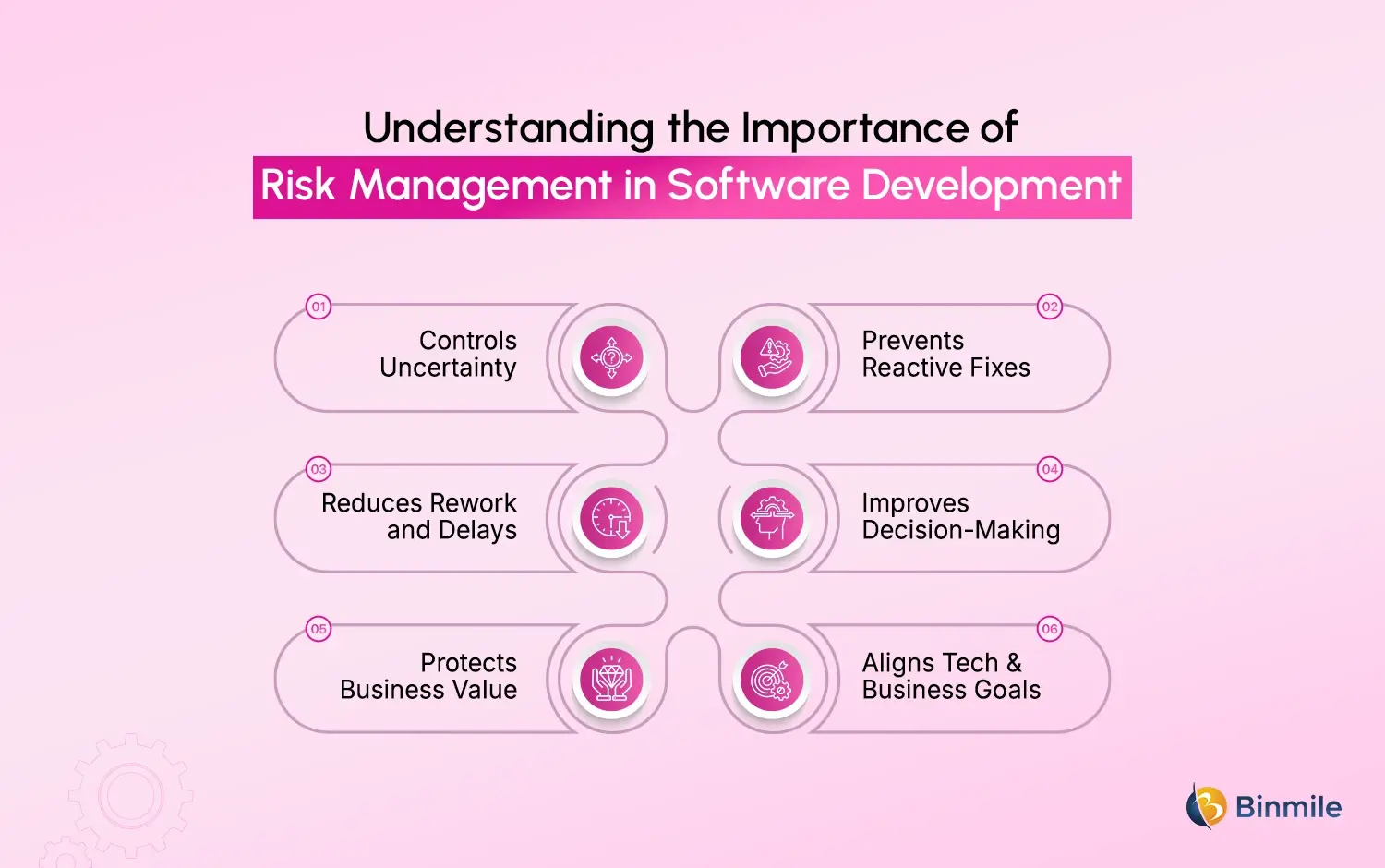
Risk management plays a central role in ensuring software projects stay predictable, controlled, and aligned with business goals. A structured risk management solution also supports compliance needs and long-term scalability. Here is why risk management is important
-
Controls Uncertainty
When it comes to software projects, there always seem to be changing requirements, new technologies, and shifting deadlines. With each new change accompanied by an increase in uncertainty, teams benefit from structured processes and risk management software that help predict possible outcomes and prepare for them in advance.
-
Prevents Reactive Fixes
Having no risk management leads to teams operating reactively to problems that have not yet happened. Developing reactively leads to barriers that create a flow of information, which in turn creates a stream of reactive adjustments and leads to a build-up of risks that are previously unstructured and paralyzing to the development.
-
Reduces Rework and Delays
Many delays happen due to avoidable mistakes like unclear requirements or technical gaps. By identifying these risks in advance, teams can reduce rework, avoid repeated fixes, and maintain realistic delivery timelines.
-
Improves Decision-Making
Without risk management, every stakeholder is kept in the dark on the potential risks that could be in place, what the impacts are, and what the trade-offs are. This leads to a major issue where assumptions are relied on in explaining potential investments, priorities, and timelines instead of having a clear basis.
-
Protects Business Value
Many unmanaged risks are budget outflows, poor quality of the product, and failing to meet compliance. A structured risk management solution helps minimize losses and maintain customer trust. Effective risk management leads to the business value being protected by the losses being minimized and the trust of the customers being maintained.
-
Aligns Tech and Business Goals
Risk management ensures that technical decisions support business objectives, including regulatory alignment through platforms like ServiceNow GRC, while keeping delivery outcomes predictable. By balancing development priorities with risk considerations, teams can deliver software that meets both operational needs and long-term business outcomes.
What are the Types of Risks in Software Development
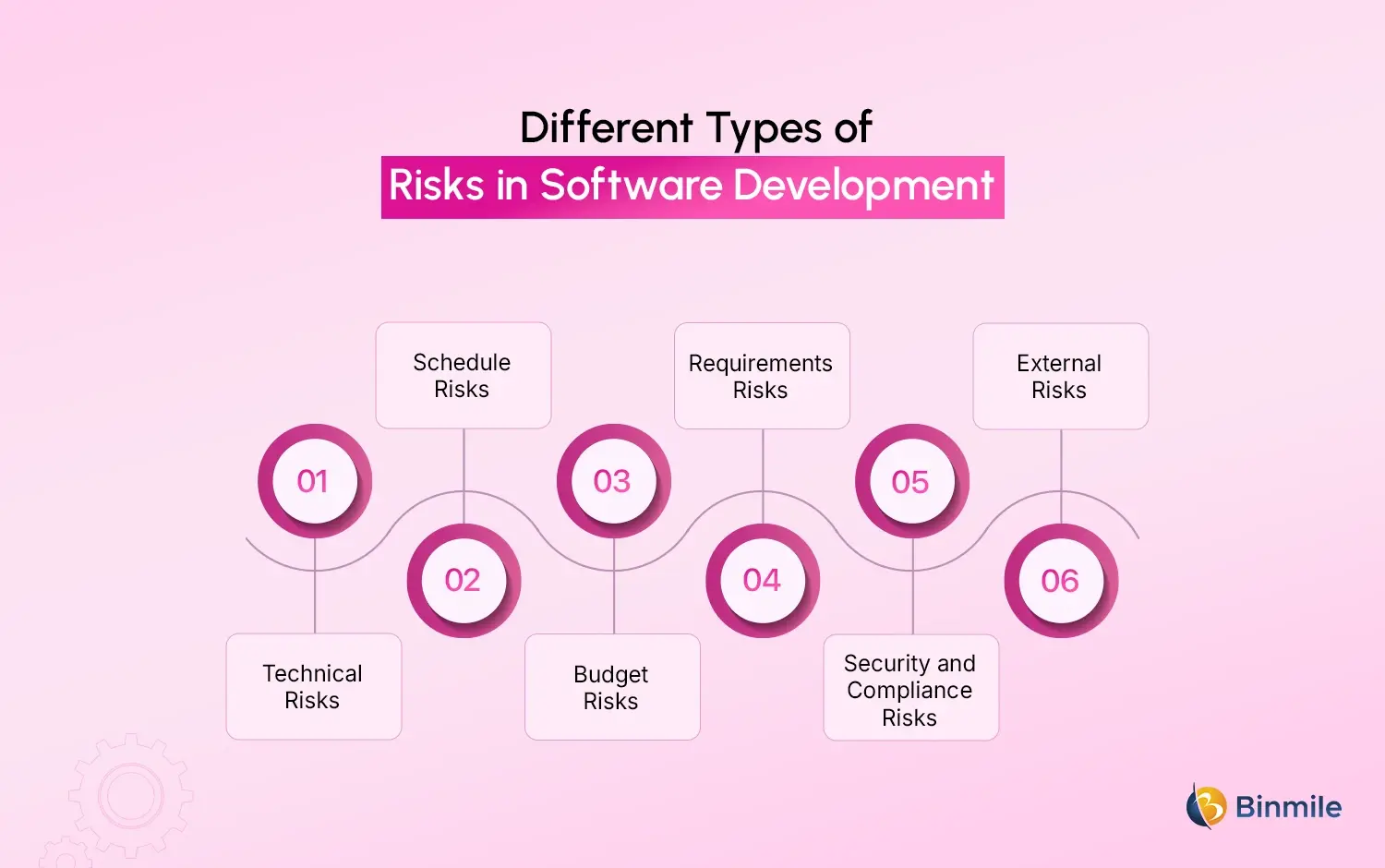
Understanding different risk categories is the foundation of risk management in software engineering and software project management. Each type uniquely affects the project.
-
Technical Risks
System architecture flaws, outdated technology, integration problems, and performance issues all fall under the category of technical risks. These issues are often the reason for instability or the inability of an application to scale as the need for it grows.
-
Schedule Risks
Delays and pushback of delivery dates can be attributed to risky timelines, dependent tasks that have yet to be completed, or the expansion of project goals. Such slippage in timelines results in a domino effect on subsequent business processes, often hindering their flow.
-
Budget Risks
Variable costs, unanticipated changes in the project scope, and the unproductive use of resources lead to the inefficient spending of project costs. Unplanned changes, variable costs, and inefficient resource usage directly impact ROI and contribute to business risks in software engineering.
-
Requirements Risks
Insufficient, unclear, and constantly evolving project requirements can lead to misalignment of all stakeholders’ and project expectations. These expectations require adequate effort during the lifecycle of a project to avoid extensive rework and dissent among invested parties.
-
Security and Compliance Risks
The adequacy of risk management, or the lack thereof, in sensitive and high-stakes environments has a direct correlation with potential threats. Weak risk management increases exposure to data breaches and regulatory failures, making governance risk and compliance software critical for sensitive environments.
-
External Risks
Market changes, vendor dependencies, and regulatory shifts introduce external risks. This includes supply-side dependencies that often require supply chain mitigation strategies supported by supply chain management software.
How to Identify Risks in Software Development Projects
Risk identification should start early and continue throughout the project lifecycle. Successful teams integrate risk reviews into planning, design, development, and deployment phases.
Workshops, stakeholder interviews, and technical assessments help uncover hidden vulnerabilities. Reviewing past project data and failure patterns also strengthens risk management in software development practices.
Modern teams increasingly rely on AI in Risk Management to analyze historical data, predict potential issues, and highlight risk patterns that human analysis might miss. These insights allow teams to act before problems surface.
Facing repeated delays or unexpected issues in your software projects and looking to build a stronger foundation for delivery?
How to Mitigate Risk in Software Development Projects
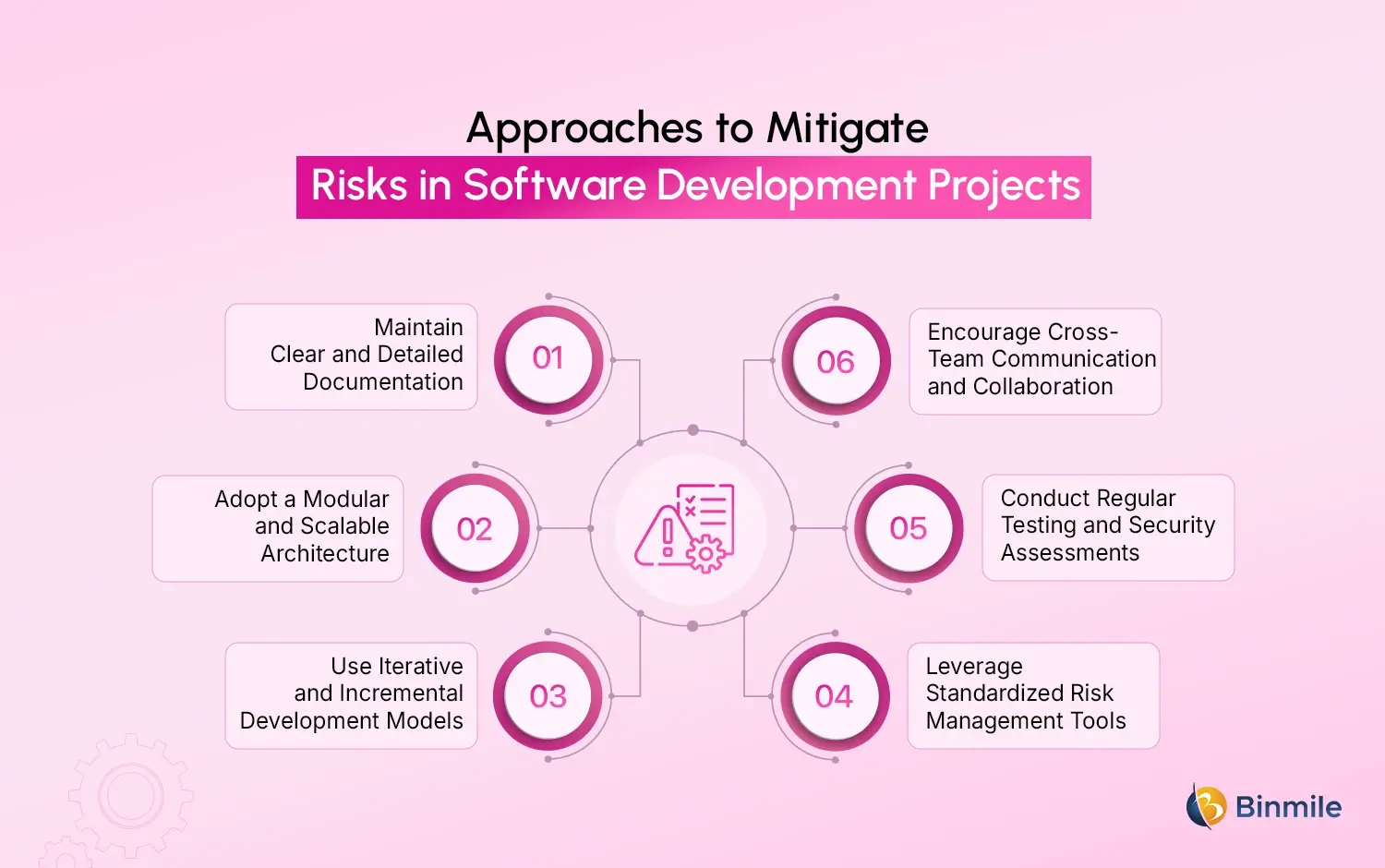
Risk mitigation focuses on reducing both the likelihood and impact of potential issues before they affect delivery. Here are the ways to mitigate risk in software development projects
-
Maintain Clear and Detailed Documentation
Well-documented requirements, assumptions, and workflows reduce confusion and prevent scope-related risks. Clear documentation ensures all stakeholders share the same understanding throughout the project lifecycle.
-
Adopt a Modular and Scalable Architecture
Breaking systems into smaller, independent components limits the impact of failures. If one module faces issues, it does not bring down the entire application, reducing technical and operational risks.
-
Use Iterative and Incremental Development Models
Iterative development helps teams detect risks early by delivering in smaller cycles. This allows faster feedback, early testing, and timely corrections before risks escalate.
-
Leverage Standardized Risk Management Tools
Dedicated risk management tools help track risks, assign ownership, and monitor mitigation progress in real time. This ensures risks are actively managed rather than overlooked.
-
Conduct Regular Testing and Security Assessments
Continuous testing, code reviews, and security audits identify vulnerabilities early, reducing performance, stability, and cybersecurity risks before deployment.
-
Encourage Cross-Team Communication and Collaboration
Transparent communication between engineering, product, and business teams ensures risks are addressed collectively. This prevents silos where risks remain hidden until they cause major issues.
What are the Risk Management Strategies That Actually Work
Not all risk management efforts deliver results. The most effective strategies are continuous, integrated into daily workflows, and supported by the right tools and ownership.
| Strategy | Explanation |
|---|---|
| Continuous risk monitoring | Regularly reviewing risks ensures new threats are identified as the project evolves, rather than relying on one-time assessments. |
| Risk prioritization | Focusing first on high-impact and high-probability risks prevents teams from wasting effort on low-impact issues. |
| Automation in risk tracking | Automated reporting and alerts reduce manual effort and ensure faster response to emerging risks. |
| AI-driven risk insights | AI analyzes historical data to predict potential failures, helping teams act before risks materialize. |
| Defined risk ownership | Assigning clear ownership ensures accountability and timely execution of mitigation actions. |
| Embedded risk reviews | Integrating risk reviews into sprint planning and delivery cycles ensures consistent and practical risk management. |
Discover how structured risk strategies can bring clarity, control, and confidence to your projects.
How the Right Technology Partner Strengthens Risk Management
Long-term success in risk management in software development often depends on experience, domain expertise, and the ability to anticipate challenges before they affect outcomes. Teams that work with partners who understand both engineering and business risks gain a clear advantage.
By combining structured delivery frameworks, AI-driven risk analysis, and deep expertise across enterprise software development, organizations can navigate complex projects with greater confidence. Binmile supports this approach by helping businesses embed risk awareness into every phase of software development, from planning and architecture to deployment and scaling. The focus remains on minimizing uncertainty while enabling faster, more secure, and more predictable outcomes for growing enterprises.
Frequently Asked Questions
Ignoring risks often leads to delays, cost overruns, security gaps, and poor product quality. Small issues grow into major failures when risks are not identified and addressed early in the software development lifecycle.
Schedule risks can be reduced through realistic planning, breaking work into smaller milestones, continuous progress tracking, and addressing dependencies early using proactive risk management practices.
Accurate estimation, scope control, continuous cost monitoring, and early risk identification help reduce budget risks and prevent unexpected expenses during software development.
Unclear requirements cause misalignment, rework, and delays. Managing requirement risks ensures teams build what users need while staying within scope and budget.
Technical risks can affect performance, scalability, and security. If not managed, they may lead to system failures, poor user experience, or costly redesigns.
Yes. Regulatory changes, vendor issues, and market shifts can disrupt timelines and priorities, making external risk monitoring a crucial component.
Risks should be reviewed regularly, ideally at every major milestone or sprint, to ensure new threats are identified, and mitigation plans remain effective.