Businesses across various industries are increasingly relying on smart, connected systems that enable employees to work more efficiently and leaders to make informed decisions. According to a market report, the global mobile enterprise application market is projected to reach $200.0 billion by 2029, growing at a 12.4% CAGR. This growing shift has increased the demand for solutions that streamline workflows and reduce dependency on manual processes.
In this blog, we will look at what enterprise mobile app development is, why companies choose it to improve operational performance, how the entire development process works step by step, and what trends are shaping the future of enterprise apps. You will also find quick answers to common queries about enterprise applications.
What is Enterprise Mobile App Development?
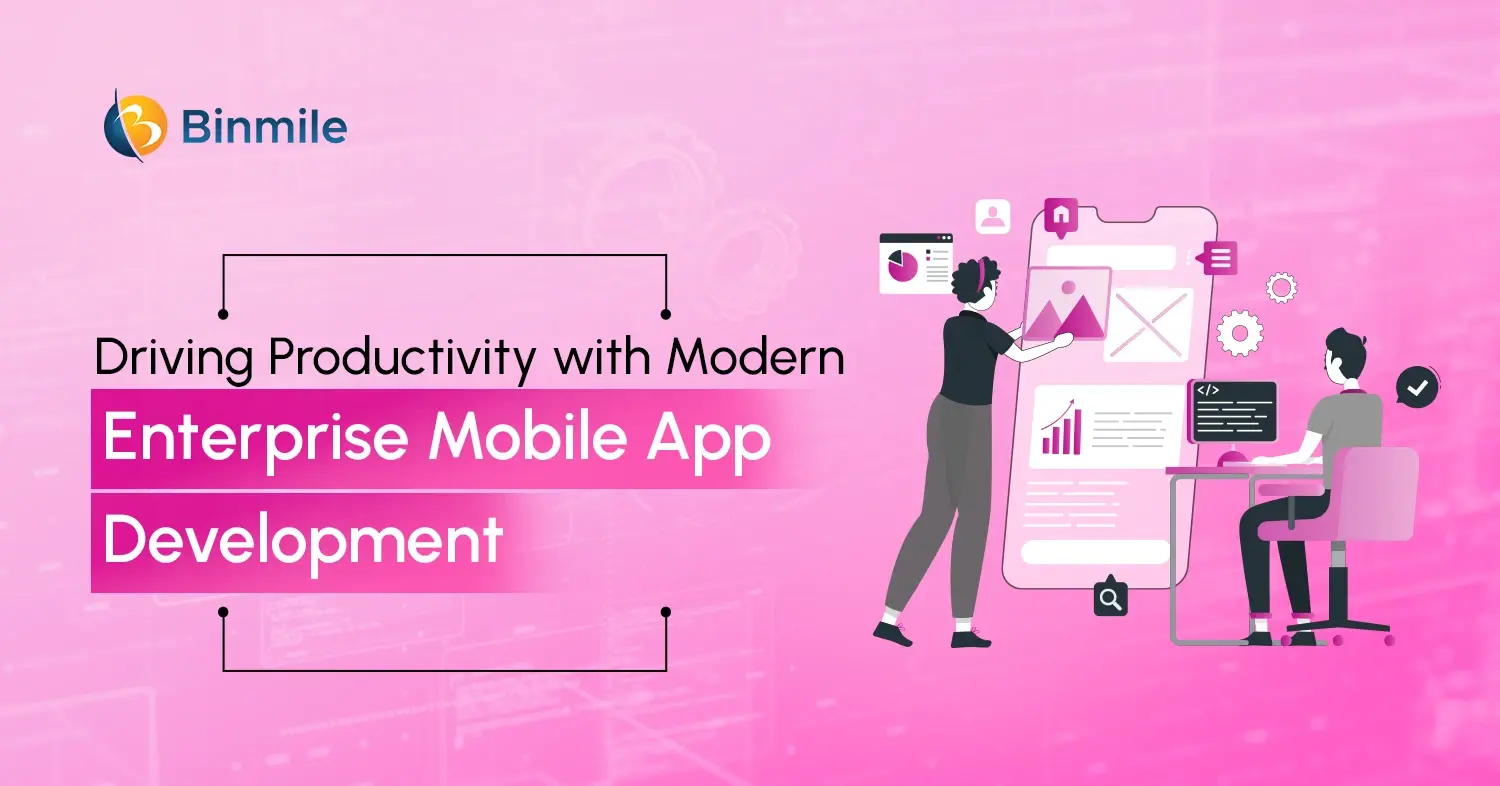
Enterprise mobile app development involves building secure, scalable, and integrated applications that support the internal processes of medium and large organizations. These applications are designed to improve workflow efficiency, help teams collaborate smoothly, and manage enterprise mobile devices in a unified environment.
Unlike consumer-facing applications, enterprise mobile applications focus more on automation, business logic, system integration, data governance, and role-based access. Developing these applications requires an enterprise application developer who knows both technology and business operations. Companies often collaborate with a custom mobile app development company to create and sustain these applications, particularly when the solution needs substantial integration with existing enterprise software applications.
Enterprise mobile applications include employee communication platforms, field service apps, workflow automation tools, inventory management systems, finance applications, and custom reporting dashboards. With the development of cloud, microservices, web applications, and modern APIs, these systems are more capable and more flexible than ever.
What is the Step-by-Step Enterprise Mobile App Development Process
Building a successful enterprise app requires a structured mobile app development process. The goal is to ensure the solution aligns with business objectives, integrates with existing systems, and provides long-term scalability.
Step 1: Requirement Discovery and Planning
Initially, business analysts, architects, and stakeholders determine the key objectives of the application. They describe the business processes, employees’ requirements, system interdependencies, and challenges of developing enterprise application(s). This step is crucial to preventing scope issues in the future.
Step 2: Architecture Planning and System Integration
For enterprise applications, the design of the architecture is more important than the design of the application. Developers describe the type of integration the application will have with enterprise software applications, application programming interfaces (APIs), security frameworks, and databases. Many companies today prefer cloud consulting to implement a scalable infrastructure. Microservices-based architectures are also popular because they facilitate updates and provide better stability.
Step 3: Security and Compliance Planning
Design authentication, authorization, encryption, data residency, and compliance controls early. Include audit trails and policies for enterprise mobile device management.
Step 4: UI and UX Design
The focus of the design phase is on simplicity of the application, the experience of the users, and clarity. Employees must navigate the application without confusion. Workplace applications must eliminate unnecessary steps and ensure important functionalities can be used instantly.
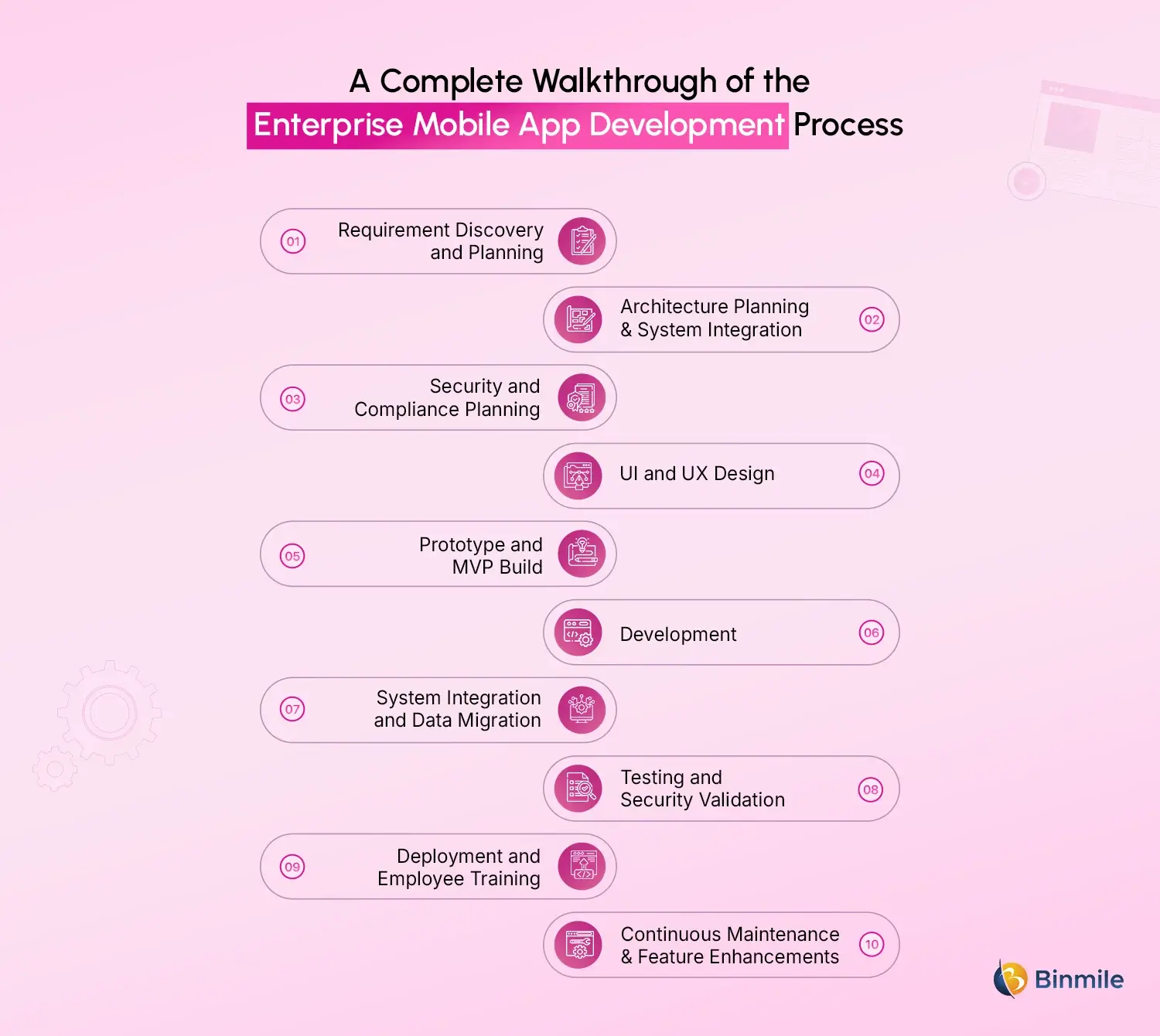
Step 5: Prototype and MVP Build
Develop a lightweight prototype or minimum viable product to test critical workflows and integrations. Use this to collect user feedback and reduce risk before full-scale development.
Step 6: Development
At this stage, the custom mobile app development company commences the actual coding of the application, including the building of front-end screens, the integration of application programming interfaces (APIs), the management of the database, and the development of the application’s backend systems. Performance, real-time data synchronization, and the ability to function offline are also critical design requirements of enterprise-grade applications, especially for employees in field roles.
Step 7: System Integration and Data Migration
Connect the app to ERPs, CRMs, identity providers, and other enterprise software applications. Migrate or map existing data carefully and verify data integrity.
Step 8: Testing and Security Validation
Quality control allows the application to work seamlessly on all devices and platforms. Enterprise security testing assesses the protection of your data, threat vulnerabilities, defensive security, and user access control. The system is dependable for operational regularity through functional and performance testing.
Step 9: Deployment and Employee Training
Once ready, the application is distributed via enterprise mobile device management systems or private application stores. Employees undergo training to facilitate the new workflow. This step is extremely important since enterprise mobile applications yield positive results only when staff members utilize them properly and feel comfortable.
Step 10: Continuous Maintenance and Feature Enhancements
Enterprise app development does not conclude when the app is launched. It involves constant updates, maintenance, security upgrades, and new features. Long-term custom software development services are what most companies go for if they want to keep their mobile apps maintained and updated, along with the rest of the systems.
Need a powerful enterprise mobile app development to accelerate your workflows and strengthen your operations?
Why Should You Build an Enterprise Mobile App for Your Business?
To improve efficiency in their operations, many industries have turned to mobile app development for enterprise. With the ability to access business systems via mobile devices, employees are able to complete routine assignments quickly and with greater precision.
With an enterprise app, employees are able to complete their work tasks from any location in the world. For instance, operations managers can approve requests and processes, review available stock, and create reports on the spot. Members of the sales team can revise entries in the customer relationship management (CRM) system immediately after each business meeting. New employees can complete HR onboarding processes without assistance. Uploading and securing data can be done without the intervention of finance employees. One of the greatest advantages of having an enterprise app is the security it can provide. Data breaches and leaks are kept to a minimum with the addition of user verification and access control, data encryption, and secured app access.
There are a number of advantages that businesses gain from teaming up with a custom mobile app development company in the USA and other parts of the world. They include: increased efficiency, reduction of human error, and improved decision-making as a result of having access to real-time data. With the improved functionality of modern business systems, the development of mobile apps for businesses makes it easier to improve employee collaboration and eliminate silos in organizations.
What are the Top Trends in Enterprise Mobile App Development
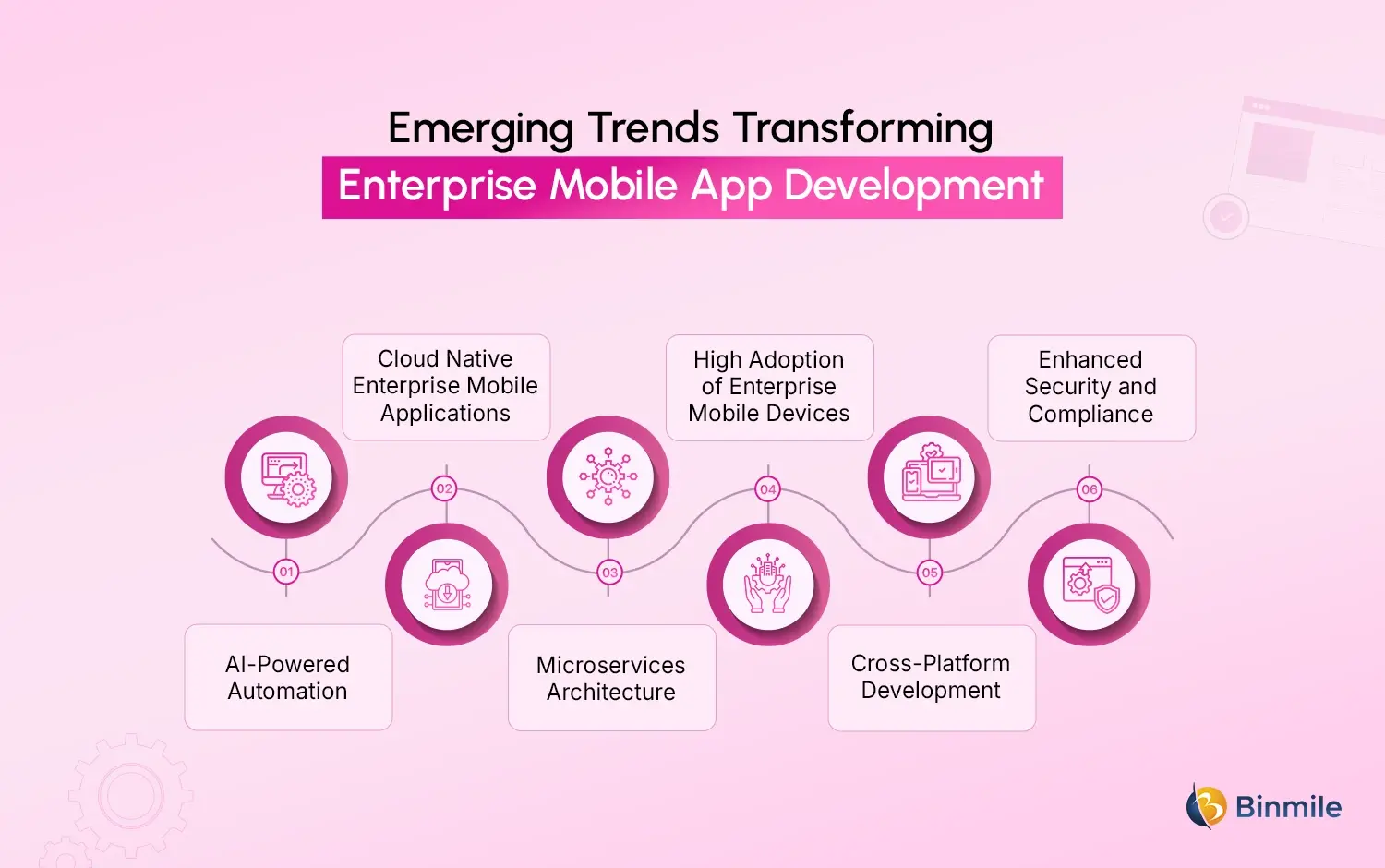
Enterprise systems are evolving quickly. Modern business environments demand faster processes, more automation, high mobility, and strong security. Here are some trends shaping enterprise mobile app development today.
-
AI-Powered Automation
AI has become a critical aspect of business transformation because of its ability to automate mundane tasks, draft reports, make predictions, assist with decision-making, and automate processes. Businesses use AI-powered chatbots to respond to internal inquiries, assist employees, and resolve issues.
-
Cloud Native Enterprise Mobile Applications
Due to the ease of scalability, minimal maintenance, and improved speed, organizations tend to favor cloud-first apps. Because it assists organizations in migrating from obsolete monolithic systems to cloud systems, cloud consulting has become a significant component of enterprise app development.
-
Microservices Architecture
Microservices web application development enables the decomposition of intricate enterprise applications, modularizing them. This allows quicker updates, improved downtimes, and more flexibility in the future for new features.
-
High Adoption of Enterprise Mobile Devices
Organizations now provide employees with secure enterprise mobile devices that allow for centralized authentication, encrypted communications, and remote control of applications. This approach provides more control over business applications and data.
-
Cross-Platform Development
Enterprises want their apps to work consistently on Android, iOS, and tablets. Cross-platform frameworks help reduce development costs and shorten time to market.
-
Enhanced Security and Compliance
Security remains a top priority. Enterprise apps now commonly include multi-factor authentication, biometric login, data encryption, secure APIs, and advanced monitoring systems to prevent breaches and ensure regulatory compliance.
Transform your day-to-day operations efficiently with a smart, future-ready enterprise mobile app solution tailored for your business.

How Binmile Can Support Your Enterprise Mobility Goals
The success of enterprise mobile app development depends on choosing a partner with strong technical expertise and an understanding of business operations. Organizations benefit most when they work with a team that can align technology with long-term objectives, ensure reliable integration with existing systems, and provide continuous improvements based on evolving business needs.
A reliable partner also brings experience across custom mobile app development, enterprise software development company best practices, cloud adoption, UI and UX engineering, and modern API ecosystems. This ensures the delivered app is not just functional but strategic.
For organizations looking to strengthen workplace productivity through enterprise mobility, working with a technology partner that blends strategy with execution becomes essential. Binmile offers this strength by helping companies streamline operations through advanced mobile solutions that integrate smoothly with existing systems and improve workflow performance.
Their team specializes in custom mobile app development, API led integrations, secure architectures, and cloud consulting, which helps businesses transform how their internal teams operate. By combining technical depth with a clear understanding of enterprise needs, Binmile provides the expertise required to build mobile solutions that support long-term digital growth without disrupting day-to-day business operations.
Frequently Asked Questions
The types of enterprise applications in the market are HR Management Systems, Customer Management Systems, ERP software, workflow automation software, field service management apps, Financial Management software, and Reporting dashboards.
Key benefits of enterprise mobile app development are enhanced efficiency, improved collaboration, minimal manual errors, fortified security, and aid in decision-making in real-time.
The cost to build an enterprise mobile app depends on the number and types of features, the complexity, the integrations, the design, and the development partner. Enterprise apps typically will have bigger budgets due to the required integrations and security.
Business processes that benefit most are operations, HR, Sales, Logistics, Field Services, Inventory, Finance, Procurement, and Approval-based Workflows.
Yes. Enterprise applications are built to provide seamless integration with ERPs, CRMs, databases, and other internal business systems via APIs and secure connectors.