Dating app development refers to the process of creating mobile and web-based applications that help users find romantic or social connections online. According to Grand View Research, the global dating app market is expected to exceed USD 14.42 billion by 2030. This surge reflects how people increasingly rely on technology to form meaningful connections, and under the hood of these services is a specialized process known as dating app development.
In this blog, we will explore what dating app development is, why building a dating app makes strategic sense today, key industry trends, the types of dating platforms, essential features, the development process, and how companies can benefit from expert dating app development services.
Why Building a Dating App is Beneficial in 2026
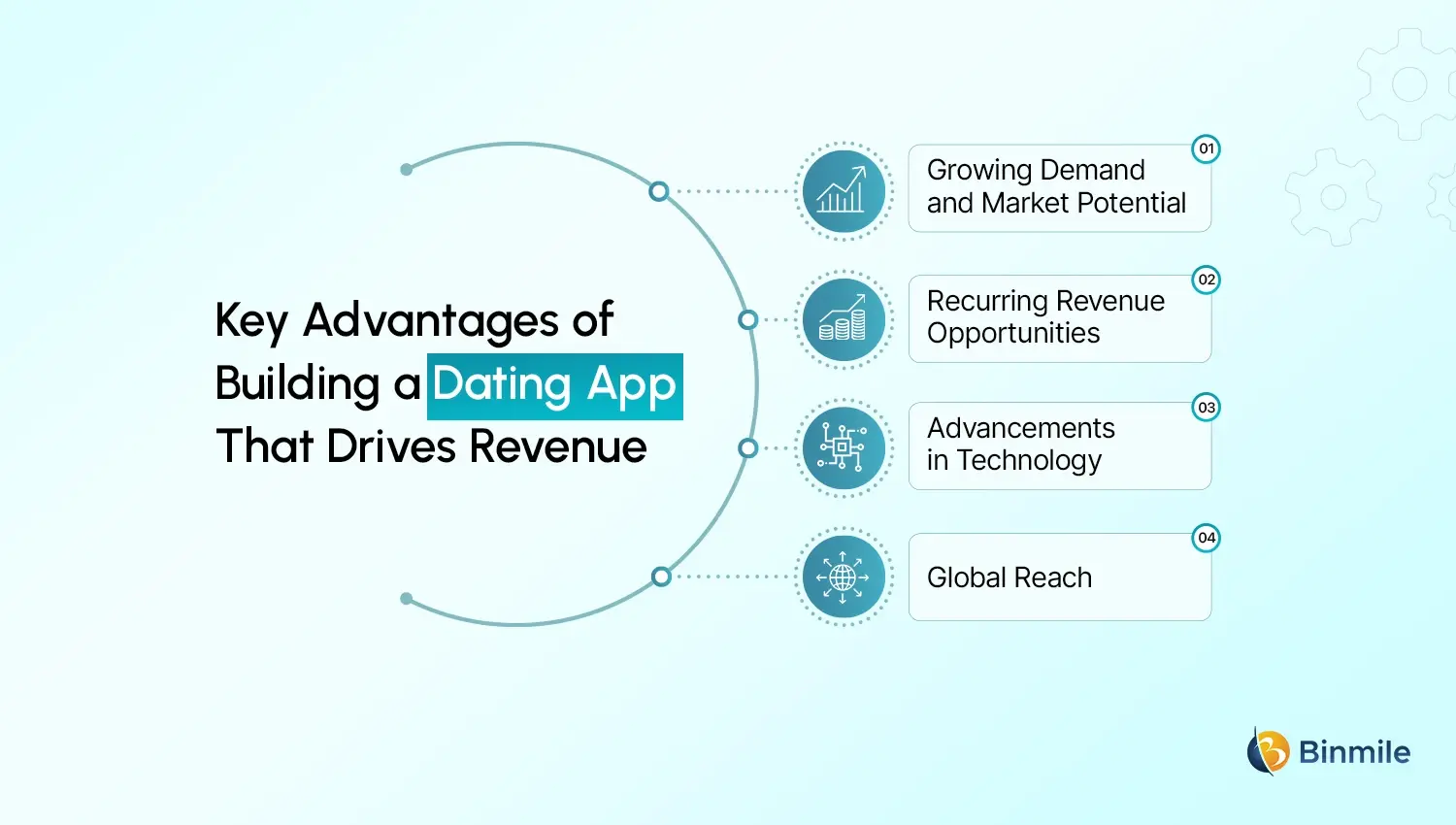
There are several reasons why entrepreneurs and businesses consider it strategic to build a dating app in 2026:
-
Growing Demand and Market Potential
There has been an increased demand for dating services across multiple market segments as people continue to use digital platforms for social engagements. The dating app industry has been growing beyond simply offering services for casual relationships. Additional niches to service include professional networking, faith-based connections, and interest-based communities.
-
Recurring Revenue Opportunities
Dating platforms can monetize their platforms in several complementary streams that include subscriptions, in-app purchases, advertisements, premium features, and partnerships.
-
Advancements in Technology
Greater improvements in matchmaking services and user retention are being fueled by AI-based services, real-time communication software, and advanced data analytics.
-
Global Reach
A professionally developed app by any mobile application development company can gain users from both local and foreign markets, offering scalability that many traditional businesses lack.
Key Trends in Dating App Development
The integration of user-centric design and the latest technological advancements has molded the dating app market in 2026. The ongoing advancements in Artificial Intelligence have allowed dating apps to provide personalized user experiences to allow for greater engagement and improved matchmaking. Users can now communicate in a variety of real-time formats that include messaging, voice, and video, to provide an authentic experience and allow for a seamless transition to in-person meetings.
Dating apps have increased their use of gamification techniques to enhance the user experience through puzzles, profile prompts, and reward-based engagement, helping users interact more naturally. Wearable tech combined with dating app gamification provides social networking experiences that enhance user profile depth for better matchmaking. Additionally, increased safety measures supports long-term user retention like automated moderation, cryptography, and identity verification.
What is the Dating App Development Process
Developing a successful dating platform with involvement of a dating app development company involves structured stages, each critical to delivering a robust product.
1. Ideation and Market Research
Step one involves building a solid foundation of research. Identifying a target audience and addressing the concerns of a target market is fundamental. Evaluating potential competitors and analyzing their strengths and weaknesses helps identify which features the app could benefit from and how to monetize it. Defining the challenges the app seeks to solve is critical for framing the res hall outcomes of the investment.
2. Strategy and Planning
Upon successful completion of the first phase, the app concept is prioritized, and a development plan is implemented. A development roadmap is created outlining major milestones in product development. This also includes identifying the optimal tech stacks and development methodologies as one of the essential dating apps strategies. Teams use this to estimate subsequent development sprints and set budgets to manage overall dating app development costs.
3. UX and UI Design
The emotional connection a user has with an app is mostly rooted in the visual design of the app. Mockups and prototypes are created to visualize design and experience interactions. App development journey mapping is also conducted to validate core user interactions before development. The focus of this phase is primarily towards minimalism and tightly integrated functionality.
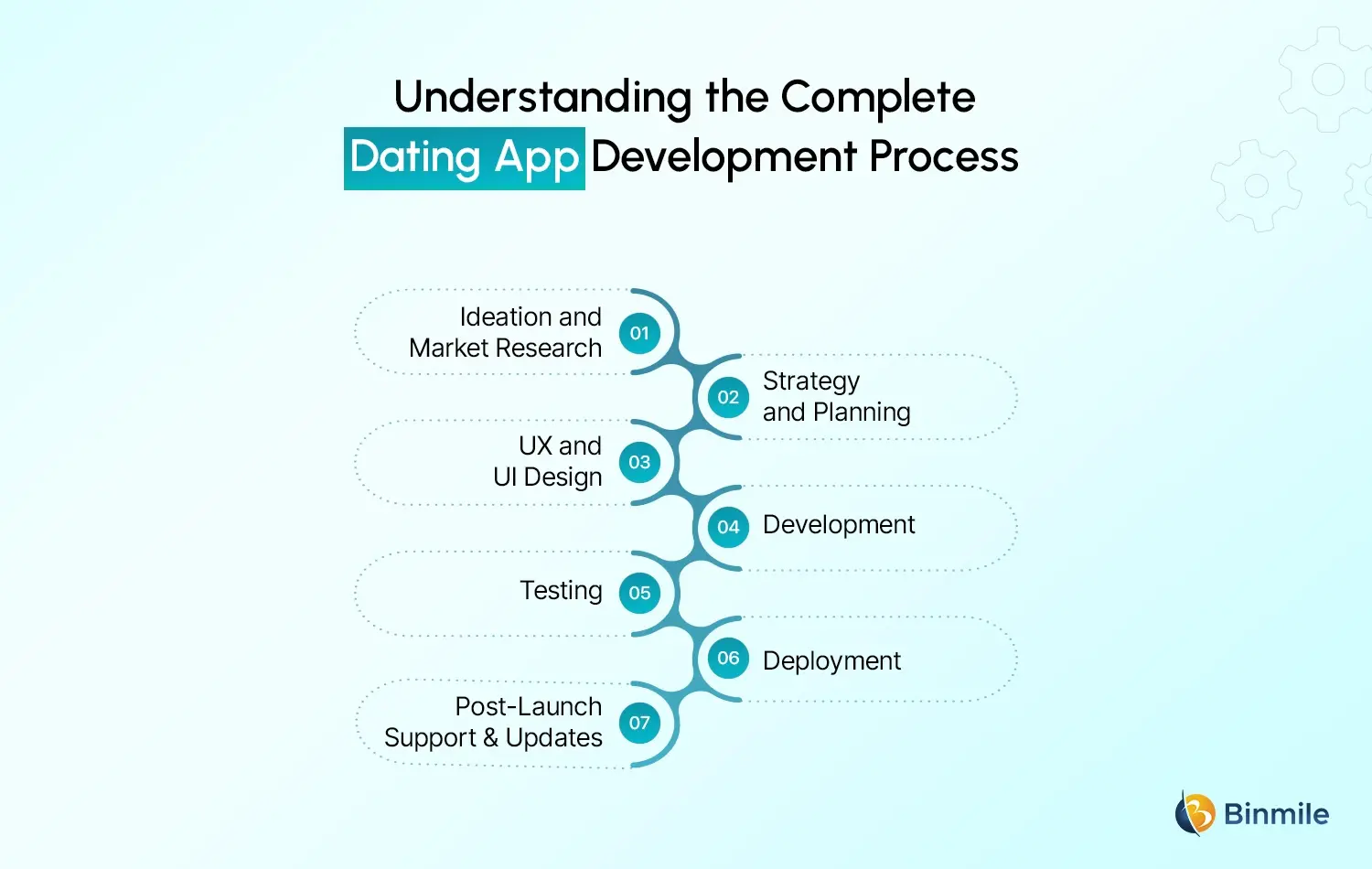
4. Development
In this phase, the developers integrate the front-end and back-end systems to fully build and deploy the app. Developers create matching logic, user profiles, chat systems, and admin dashboards. Based on the goals for custom app development, including app performance, scalability, and speed to market, developers will either use native, cross-platform, or hybrid development.
5. Testing
Testing checks that the app runs without problems on different devices and in different situations. Before releasing the app, the team runs through all scenarios to check for app performance, stability, and security to keep user data safe.
6. Deployment
Once testing is complete, the app is made available on web platforms and app stores. From launch, user acquisition, engagement, retention, and performance data are recorded and monitored.
7. Post-Launch Support and Updates
The app launch is just the first milestone of many to come. The app, to keep its relevance in the market, must be updated regularly in order to respond to user feedback, keep up with trends, and analyze performance data.
Need a custom dating application that delivers intuitive user experiences and scalable performance?
What are the Different Types of Dating Apps
A one-size-fits-all approach no longer works in this competitive space. Here are the major types of dating app categories:
| Type | Description |
|---|---|
| General Dating Apps | Mainstream platforms for broad audiences. |
| Niche Dating Apps | Platforms targeting specific interests, communities, or demographics. |
| Social Discovery Apps | Focus on broader social interaction, not just romance. |
| Location-Based Apps | Match users based on geographic proximity. |
| Interest-Based Apps | Connect users around common hobbies or passions. |
Choosing the right type depends on your target audience, long-term vision, and monetization strategy.
How to Define a Great User Experience Design for Dating Apps
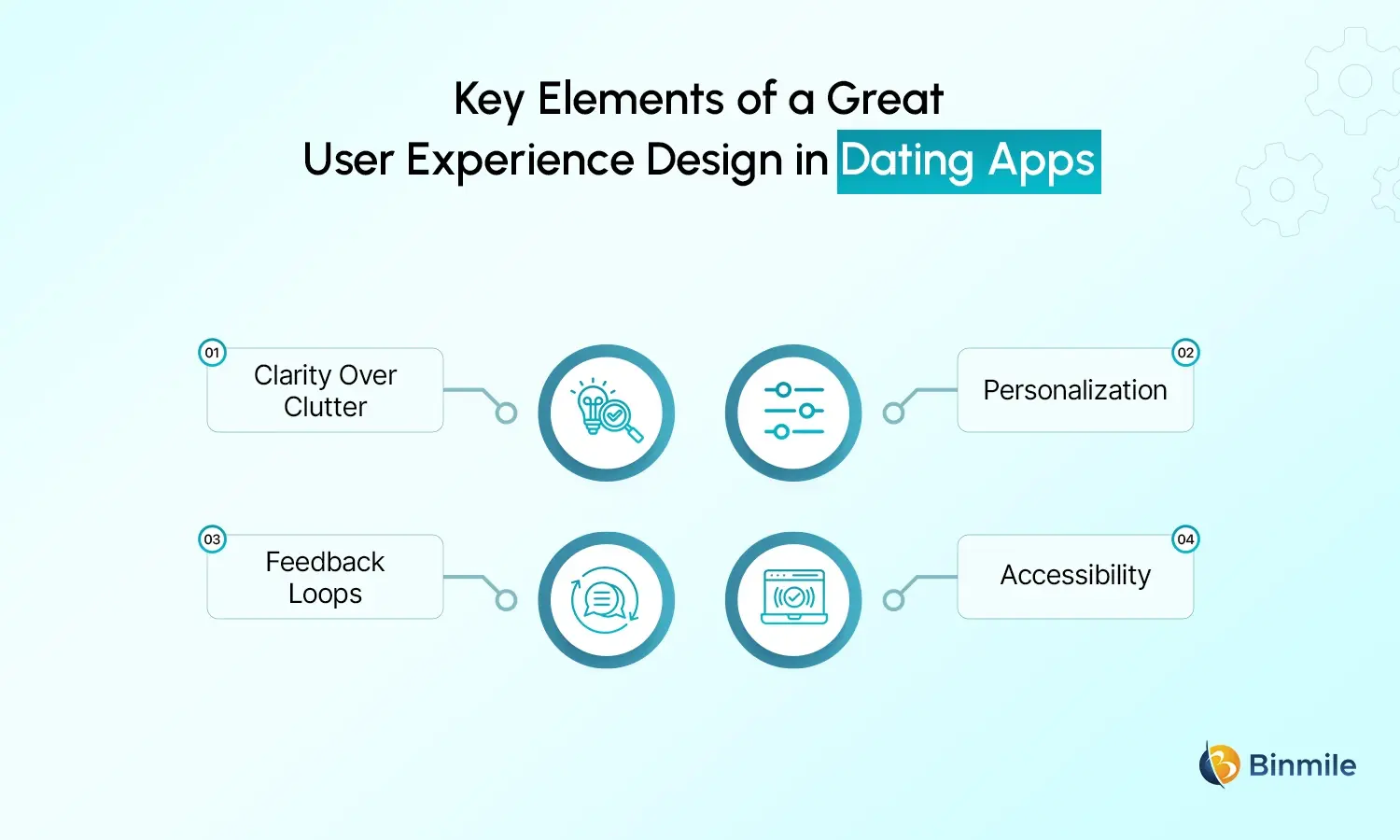
User experience is often the difference between a downloaded app and one that users actively engage with. A thoughtful design considers the emotional state of users seeking connection, making navigation intuitive and interactions meaningful. Key principles of a great user experience design for a dating app include:
-
Clarity Over Clutter
From the very first onboarding step, a user should be able to understand the functionality behind Android app development. A clean user interface, seamless user experience, and the ability to focus on the user’s primary goal, which is to connect with other users, are essential. Additionally, focusing on user profile details and minimizing any distractions, such as potential competing buttons, aids in increasing user confidence. Streamlined user experiences reduce onboarding drop-off rates and improve user retention.
-
Personalization
One of the reasons users choose the app is to feel validated, understood, and appreciated individually. Receiving customized matches, individualized profiles with specific prompts, and personalized content leads to a greater level of app interaction from the user. A user noticing the app’s behavior responses to their choices and actions creates a level of trust and enables long-term participation to increase. Users appreciate novel matches more than repetitive or irrelevant ones.
-
Feedback Loops
Positive reinforcement drives behavior. It promotes a sensation of interactivity and human-like responses to user activities and behaviors. Users appreciate and feel motivated to continue using and engaging with the app. Animations, nudges, and on-screen messages show users that the system is tracking their actions. This adds emotional connection and depth to users’ experiences, encouraging more actions and transforming user perception from passive to active.
-
Accessibility
Inclusive design ensures the app is usable by a diverse audience. This includes readable fonts, intuitive touch targets, color contrast considerations, and support across various devices and screen sizes. Accessibility also means designing flows that are easy to follow for users of different age groups and comfort levels with technology. When an app feels accessible, it naturally attracts and retains a broader user base.
What is the Future of Dating Apps Driven by Technology
The future of dating apps will include highly customized experiences, more ‘real’ interactive experiences, and thoughtful matchmaking that goes beyond basic criteria through the use of behavioral and contextual data, emotional analytics, and more. Enhanced virtual and augmented reality technologies will enable users to have direct interactions in more ‘real’ virtual spaces.
The more predominant AI development services are, the more important ethically sound practices of transparency, justice, and privacy protection will be. Dating apps will become more integrated social apps within which users can befriend and join virtual social events and communities, besides romantic matching. Enhanced technologies will simplify the discovery and nurturing of authentic human interactions.
Looking to integrate advanced matchmaking and secure real-time interactions into your dating app?
How Expert Help Can Complement Your App Vision
Creating a dating platform that stands out requires technical expertise, strategic thinking, and a deep understanding of user needs. That is where a professional software development company with experience in mobile application development services and custom app development becomes invaluable. They can guide you through every stage of your app development journey, from conceptualizing match logic to building scalable backend systems and designing engaging user interfaces.
Such partners can help you manage the dating app development cost effectively by recommending the right technologies, optimizing development workflows, and ensuring your app meets both current and future user expectations. Their experience with enterprise mobile application development and web application development services empowers you to go beyond basic features and incorporate advanced capabilities like AI-enhanced matchmaking and secure real-time interactions.
When you tap into a team that understands both business goals and technical constraints, your platform can deliver meaningful experiences that resonate with users and adapt to trends in the dating app industry. With AI in dating apps becoming more mainstream, expert development teams can integrate smart algorithms that personalize matches and refine user engagement over time.
Ultimately, a structured dating app development process guided by seasoned professionals ensures you launch a reliable, secure, and innovative application. It also positions your platform to compete with major players and adapt as user expectations evolve.
Frequently Asked Questions
AI enhances matchmaking by analyzing user behavior, preferences, and interaction patterns to deliver better match suggestions that align with each user’s unique interests and increase engagement.
The cost to create a dating app varies based on features, platform choice, design complexity, and development partner. Basic apps start lower, while feature-rich, AI-enabled platforms require more investment.
User safety and privacy are ensured through secure login protocols, data encryption, regular security audits, identity verification tools, and transparent privacy policies.
Yes, modern dating applications can support real-time chat and video calls. These features enhance interaction and can be integrated using secure communication protocols within the app.
Yes, experienced development teams can build apps with similar functionalities to Bumble and Tinder. They can tailor features to your unique requirements while ensuring scalability and user engagement.