Technical advancements in recent times have changed the landscape of the eCommerce industry. Businesses are finding ways to invest in strategies and solutions that help them revolutionize shopping experiences and maintain consistency across devices. However, the real goal is to find the right app framework for creating more robust, scalable, and high-performing apps. After all, eCommerce apps that offer smooth and uninterrupted customer shopping experiences across multiple devices effectively build stronger customer relationships and boost sales than those that do not. One such solution that has enabled them to achieve just that and more is cross-platform development for eCommerce apps.
The app framework is declared to be the future of app development. Why? This empowers developers to build apps that can run on multiple platforms using a single code system. This helps businesses provide a consistent and connected experience, reducing the app development cost without compromising quality. However, it does allow you to build an app that looks and feels genuinely native for Android and iOS, but it does not come without its drawbacks. So, if you are wondering what the pros and cons of cross-platform development for eCommerce apps are, or whether these frameworks’ drawbacks outweigh their advantages? We will help you understand this and discuss the advantages and disadvantages of using this approach for building your next mobile app.
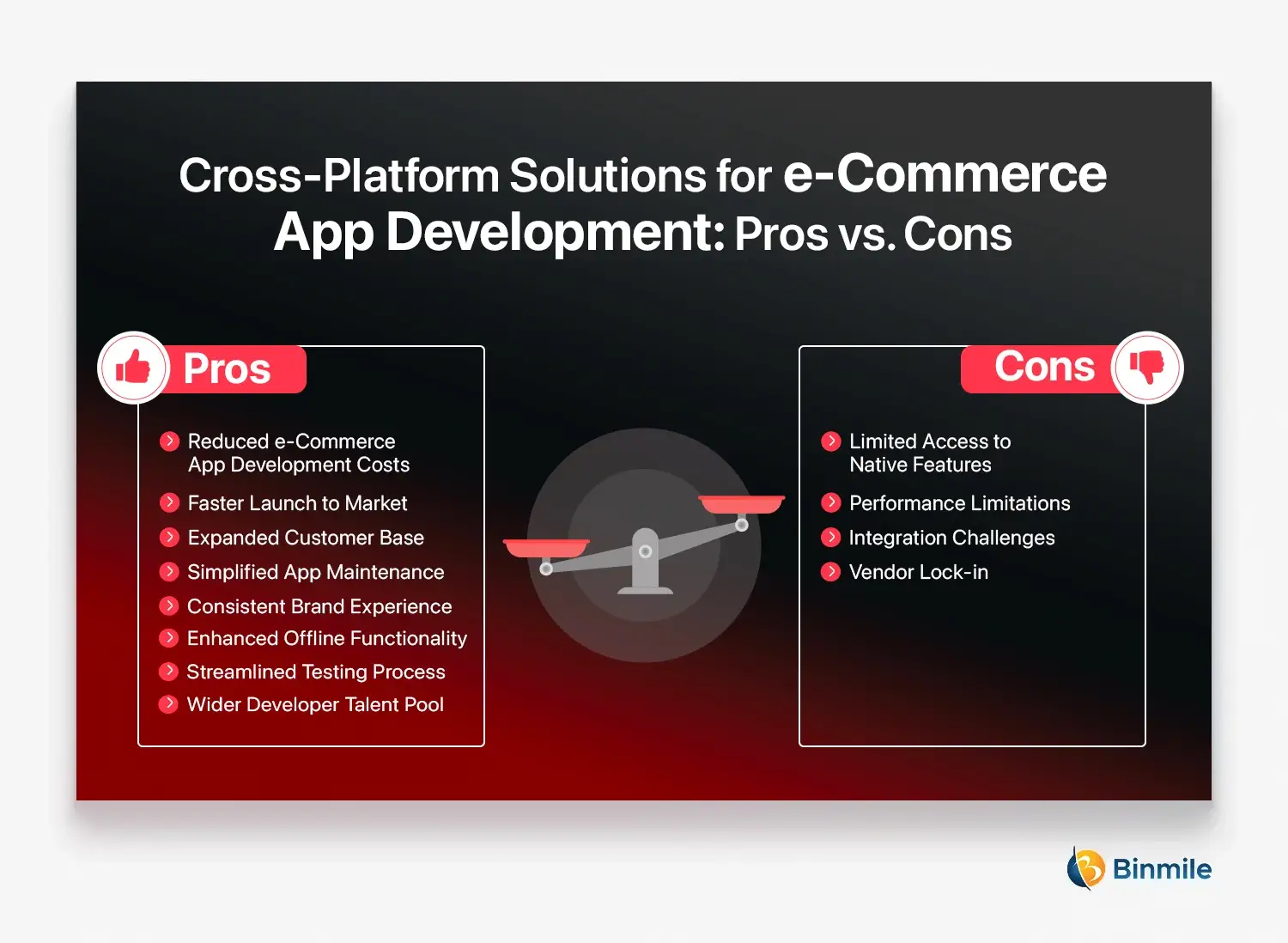
Exploring Cross-Platform Solutions for eCommerce App Development: Benefits vs. Challenges
eCommerce is booming, and having a mobile app is crucial for businesses of all sizes. But deciding how to develop that app can be tricky. Cross-platform development offers multiple benefits; however, is it the right fit for your e-commerce app? Let’s weigh the pros and cons to help you decide.
1. Reduced eCommerce App Development Costs
Traditionally, building separate native apps for Android and iOS requires two development teams with expertise in each platform’s specific languages and tools. Cross-platform development utilizes a single codebase, significantly reducing the number of developers needed and the overall eCommerce app development costs and time.
2. Faster Launch to Market
With only one codebase to manage, the development process for your eCommerce app becomes more streamlined. This allows you to get your app to market quicker, capitalizing on current trends and customer needs. A faster launch translates to reaching your target audience sooner and potentially gaining a competitive edge.
3. Expanded Customer Base
The mobile app market is largely divided between Android and iOS users. By developing a cross-platform app, you eliminate the need to choose between these audiences. Your eCommerce app becomes accessible to a much wider range of potential customers, regardless of their preferred mobile operating system. Thus, you are significantly increasing your customer base and revenue opportunities.
4. Simplified App Maintenance
Maintaining separate native apps for each platform can be a time-consuming and resource-intensive task. Bug fixes, feature updates, and patching eCommerce security threats – all need independent attention for each app. However, in cross-platform development, you work via a single codebase for both platforms. Therefore, updates and bug fixes only need to be made once, significantly streamlining the maintenance process and reducing long-term eCommerce app development costs.
5. Consistent Brand Experience
Customers expect a seamless brand experience across all touchpoints, including your eCommerce app. With cross-platform development, you can maintain a consistent user interface (UI) and user experience (UX) across both iOS and Android versions of your app. This enhances the users’ experience, reinforces brand recognition, and fosters their trust.
6. Enhanced Offline Functionality
While internet connectivity is increasingly prevalent, there may be situations where users have limited or no access. Some cross-platform frameworks allow for building apps with offline capabilities. This can be particularly valuable for eCommerce features like browsing product catalogs, wish lists, or saved shopping carts, allowing users to continue interacting with your app even when offline. Ultimately leading to a more positive user experience and potentially even higher conversion rates for your eCommerce app.
7. Streamlined Testing Process
Testing a single codebase across different platforms can be significantly more efficient in terms of cost and time compared to testing separate native apps for each platform. For example, when the SDLC team wants to develop an app for eCommerce, they can focus on a single set of tests instead of conducting separate tests for different platforms. Thus, allowing you to launch your eCommerce app with greater confidence in its functionality and user experience.
8. Wider Developer Talent Pool
Native app development requires developers with specialized skills for each platform. The pool of developers familiar with these specific languages and tools may be limited, depending on your location. Cross-platform development utilizes frameworks that have a broader range of developers familiar with them. This makes it easier to find qualified talent for both the initial development and ongoing maintenance of your eCommerce app.
Know the Difference: Cross-Platform vs Native App Development
Challenges of Cross-Platform Development
The following are some of the challenges that enterprises face during cross-platform development:
-
Performance Limitations
Cross-platform apps might not achieve the same level of performance and responsiveness as native apps, which can be crucial for eCommerce.
-
Limited Access to Native Features
Certain device-specific features, like cameras or fingerprint scanners, sometimes remain unavailable or have limited functionality in cross-platform apps.
-
Integration Challenges
Integrating third-party payment gateways or other eCommerce functionalities might require additional workarounds compared to native app development.
-
Vendor Lock-in
Some cross-platform frameworks might lock you into their specific development tools and processes.
When to Choose Cross-Platform for Your eCommerce App
Cross-platform development shines in several scenarios for eCommerce apps, so if you also want to develop an app for eCommerce, consider the following scenarios:
- Startups or businesses with tighter budgets can greatly benefit from the cost-effectiveness and faster development time offered by cross-platform solutions.
- If you are launching a minimum viable product (MVP) to test the market and gather user feedback, a cross-platform app allows you to reach both iOS and Android users efficiently.
- For apps that focus on basic functionalities like product browsing, ordering, and basic user accounts, cross-platform development can deliver a good user experience without significantly sacrificing performance.
- Cross-platform development excels at maintaining a consistent brand experience across platforms. If a seamless user experience across iOS and Android is a priority, this approach is ideal.
- If your eCommerce app does not rely heavily on device-specific features like advanced camera integration or fingerprint scanners, cross-platform development offers a viable solution.
Read Further: Q-Commerce App Development
Closing Statement
Without a doubt, cross-platform development offers a compelling option for eCommerce apps, especially for businesses with budget constraints or those looking for a quick launch. However, there are certain downsides to it that, as an eCommerce business owner, you must consider. We suggest you weigh the pros and cons based on your specific app’s needs and resources before making a decision.
After considering all of the positives and negatives, go for what is best for your mobile app’s requirements. Developing mobile applications that function across various platforms requires a combination of skill and scientific understanding. If the process seems daunting, consult a mobile app development company whose expertise in building world-class apps can help you launch a digital product for your eCommerce business that will create new milestones.
Frequently Asked Questions
Cross-platform eCommerce app development involves building a single application that runs on multiple operating systems, such as iOS and Android, using a shared codebase. This approach helps businesses accelerate development and reduce overall costs.
Cross-platform development offers several benefits, including faster time-to-market, lower development costs, simplified maintenance, consistent user experiences across devices, and broader market reach.
While native development provides platform-specific optimization and performance, cross-platform development enables businesses to launch apps on multiple platforms more quickly and cost-effectively. The right choice depends on business goals, budget, and performance requirements.
Popular frameworks such as Flutter, React Native, and .NET MAUI offer robust features for building scalable, high-performing eCommerce applications with a consistent user experience across platforms.
Yes, modern cross-platform frameworks can support enterprise-grade eCommerce applications with advanced features, secure payment integrations, real-time inventory management, and scalable architectures when implemented correctly.
An experienced development partner can help businesses select the right framework, ensure optimal performance, accelerate deployment, reduce technical risks, and build a scalable eCommerce solution that aligns with business objectives and growth plans.