The metaverse is no longer a concept limited to gaming or virtual meetups. According to a McKinsey report, the global metaverse market could generate up to USD 5 trillion in value by 2030, driven largely by enterprise adoption across retail, manufacturing, healthcare, and financial services.
This rapid growth signals a clear shift in how businesses view digital experiences. Metaverse App Development is becoming a serious innovation lever rather than an experimental idea. In this blog, we explore what metaverse app development means for businesses, the technologies behind it, how it fuels innovation, the process of building a metaverse-as-a-saas platform, real-world use cases, and how enterprises can move forward with confidence.
What is Metaverse App Development for Businesses?
Metaverse App Development refers to creating immersive digital environments where users can interact, collaborate, transact, and experience services in real time using avatars and virtual assets. It is more than 3D renderings for these companies. They are focused on creating usable and flexible metaverse solutions that meet operational and profitability targets.
A well-designed metaverse ecosystem allows enterprises to simulate real-world processes, host virtual storefronts, conduct employee training, and enable remote collaboration at a deeper level. Such environments integrate AR, crypto, and scalable cloud solutions to enhance their persistence and security.
To create custom solutions that reflect an industry’s peculiarities, organizations favor collaborations with specialized metaverse development firms. The goal is to create digital experiences and capture real business value for metaverse software designed for both business operations and customer-facing applications.
Which Technologies are Used in Metaverse App Development?
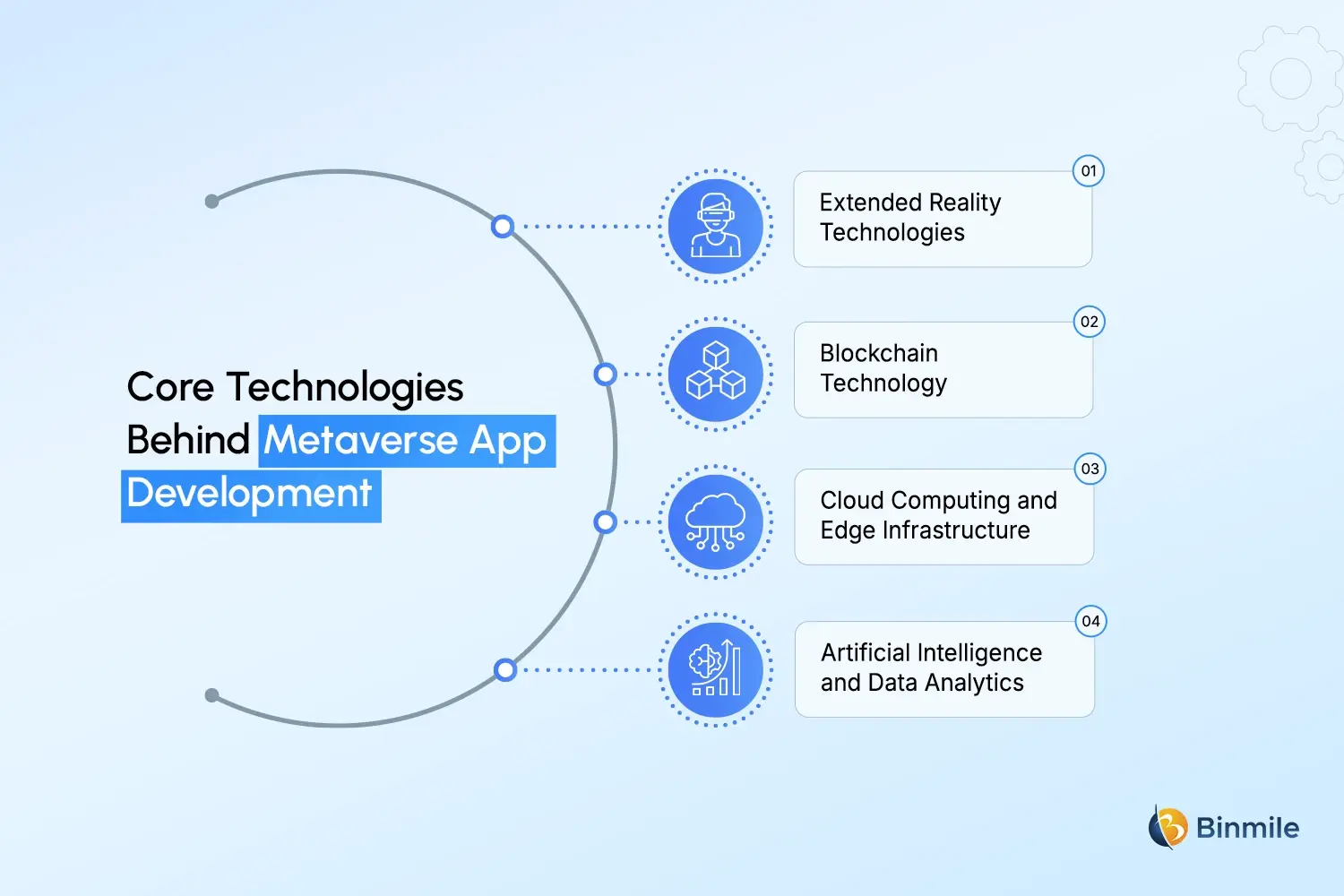
Metaverse App Development is built on multiple technologies working together to deliver immersive and scalable digital environments.
-
Extended Reality Technologies
AR App Development allows for the combination of digital elements over the real world, and Virtual Reality fully immerses the user in a digitally created environment. Combined, they form the visual and interactive foundation of almost all metaverse platforms.
-
Blockchain Technology
NFTs, digital ownership, and decentralized transactions are all possible because of the security blockchain provides. In a metaverse environment, the importance of trust and transparency is reinforced, and blockchain technology is essential for managing virtual assets.
-
Cloud Computing and Edge Infrastructure
The cloud provides flexible and reliable real-time computing resources. In order to mitigate deployment intricacies and shorten deployment timelines, most enterprises use a metaverse-as-a-software-as-a-service platform.
-
Artificial Intelligence and Data Analytics
Personalization, intelligent avatars, and predictive environments are all possible because of AI. Data analytics is a fundamental tool for metaverse experience optimization, as it provides insight to businesses about user behavior.
How Does Metaverse App Development Help in Driving Business Innovation?
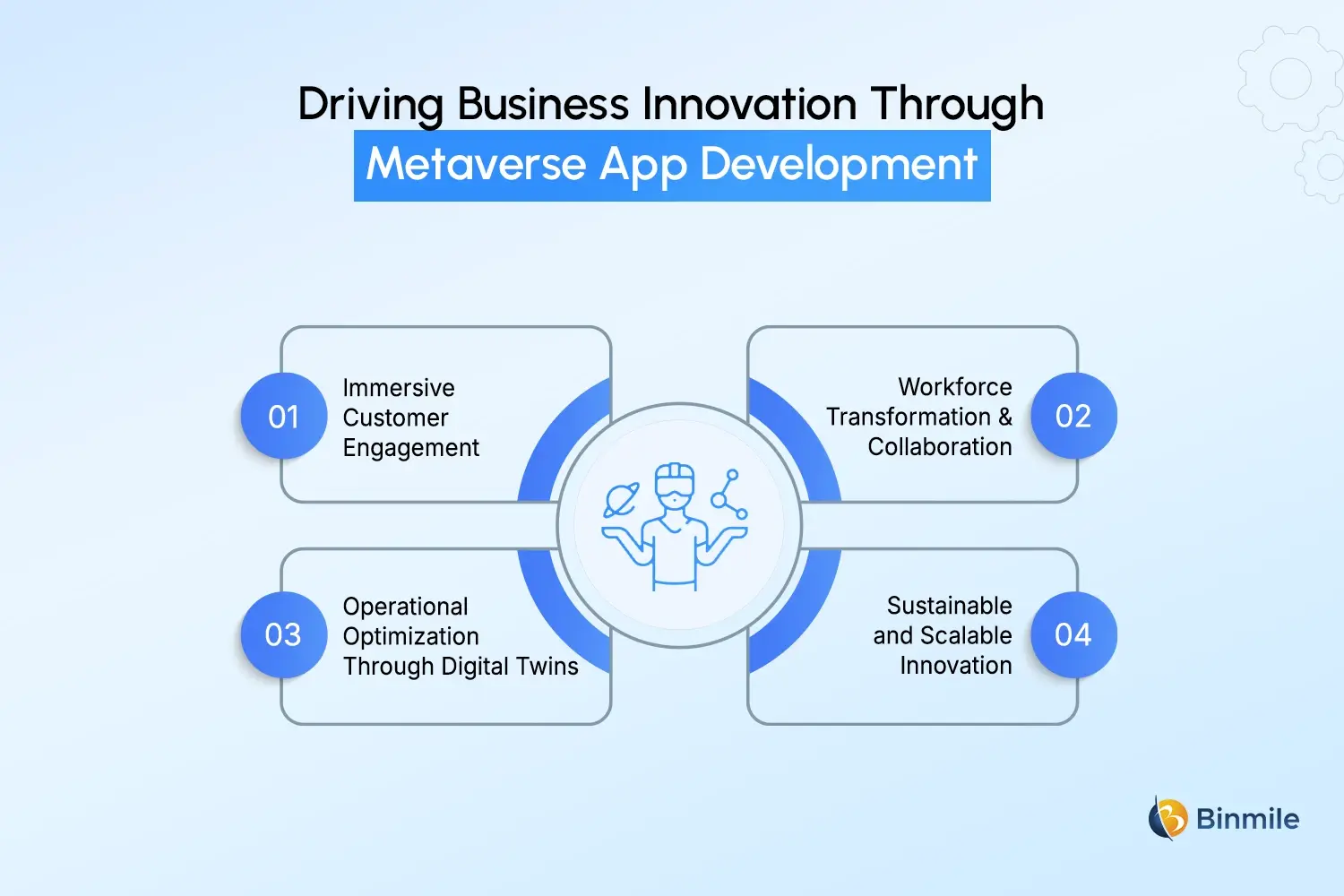
Metaverse App Development reshapes how businesses innovate by changing the way they engage, collaborate, and experiment.
-
Immersive Customer Engagement
Exploring services and products through virtual settings is more efficient than traditional digital mediums, as it helps customers understand, engage, and strengthen brand recognition.
-
Workforce Transformation and Collaboration
Cost-saving, time-efficient virtual training environments reduce onboarding time and training expenses while improving learning outcomes. Creativity and quicker decision-making collaboration are enhanced through seamless team digital workspaces.
-
Operational Optimization Through Digital Twins
In order to pinpoint inefficiencies and risks, businesses should conduct tests using digital replicas of factories, supply chains, and system practices before ambiguity is introduced in real systems.
-
Sustainable and Scalable Innovation
The right metaverse development partner works to align security, scalability, and ROI objectives with your innovation initiatives, ensuring that investments in the metaverse become drivers of sustainable growth rather than temporary innovations.
Ready to explore how Metaverse App Development can unlock new revenue and innovation opportunities?

What is the Process of Building a Metaverse-as-a-SaaS Platform
Developing a metaverse-as-a-saas platform requires a phased and strategic approach to ensure flexibility and long-term value.
Step 1: Business Alignment and Use Case Definition
The first phase is around identifying distinct business goals and determining which use cases most significantly drive impact, including customer interaction, employee onboarding, digital commerce, remote work, etc. This phase of work includes stakeholder alignment, needs assessment, and feasibility studies to ensure the metaverse solution fits into a broader metaverse app development guide strategy. This works to support business goals; it is not a digital sandbox to play with.
Step 2: Architecture and Platform Design
After goal setting, the next stage is designing the system architecture. This involves choosing an optimal set of technologies, designing user journeys, orchestrating data flows, and planning the interactions with other enterprise systems. The decisions made here have a long-lasting impact on the scope of the system’s architecture, the balance between cost, system performance, metaverse security, and the system’s overall development.
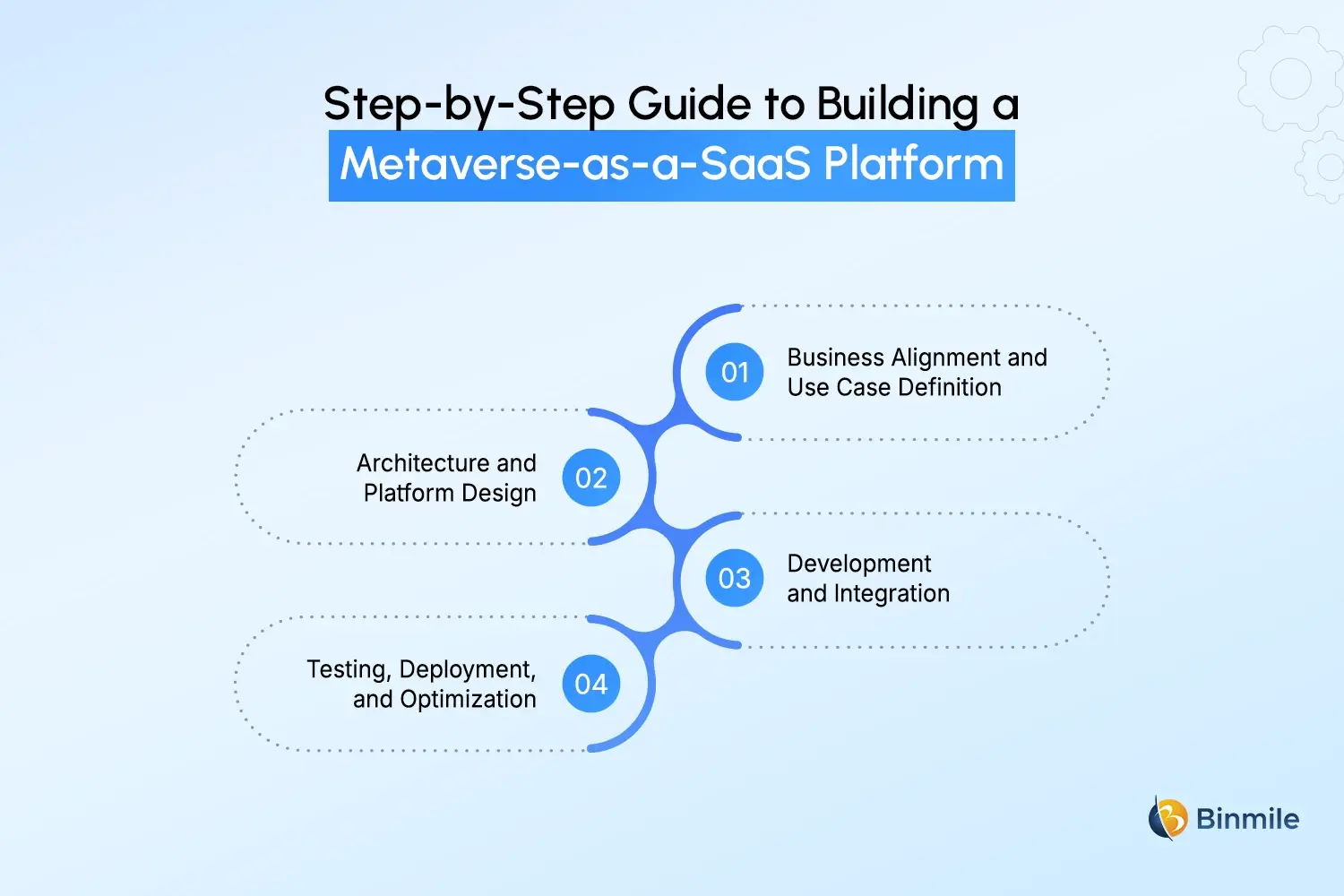
Step 3: Development and Integration
The key parts of the system have to be built: immersive 3D environments, the logic to control user interactions, backend systems, and various blockchain elements if they are to be included. The integration of customer relationship management (CRM) systems is also included, along with payment systems, analytical systems, and identity management systems. Using a modular design approach allows the metaverse platform.
Step 4: Testing, Deployment, and Optimization
Rigorous testing is conducted to ensure security, performance stability, and real-world usability across devices and networks. After deployment, continuous monitoring, performance tuning, and feature enhancements help refine user experiences. This phased optimization approach allows businesses to manage the cost of building a metaverse more effectively. Along with scaling the platform based on user adoption and evolving needs.
What are the Real-World Use Cases of Metaverse App Development
Metaverse App Development is already delivering measurable business value across industries by enabling immersive experiences, operational efficiency, and new digital engagement models.
-
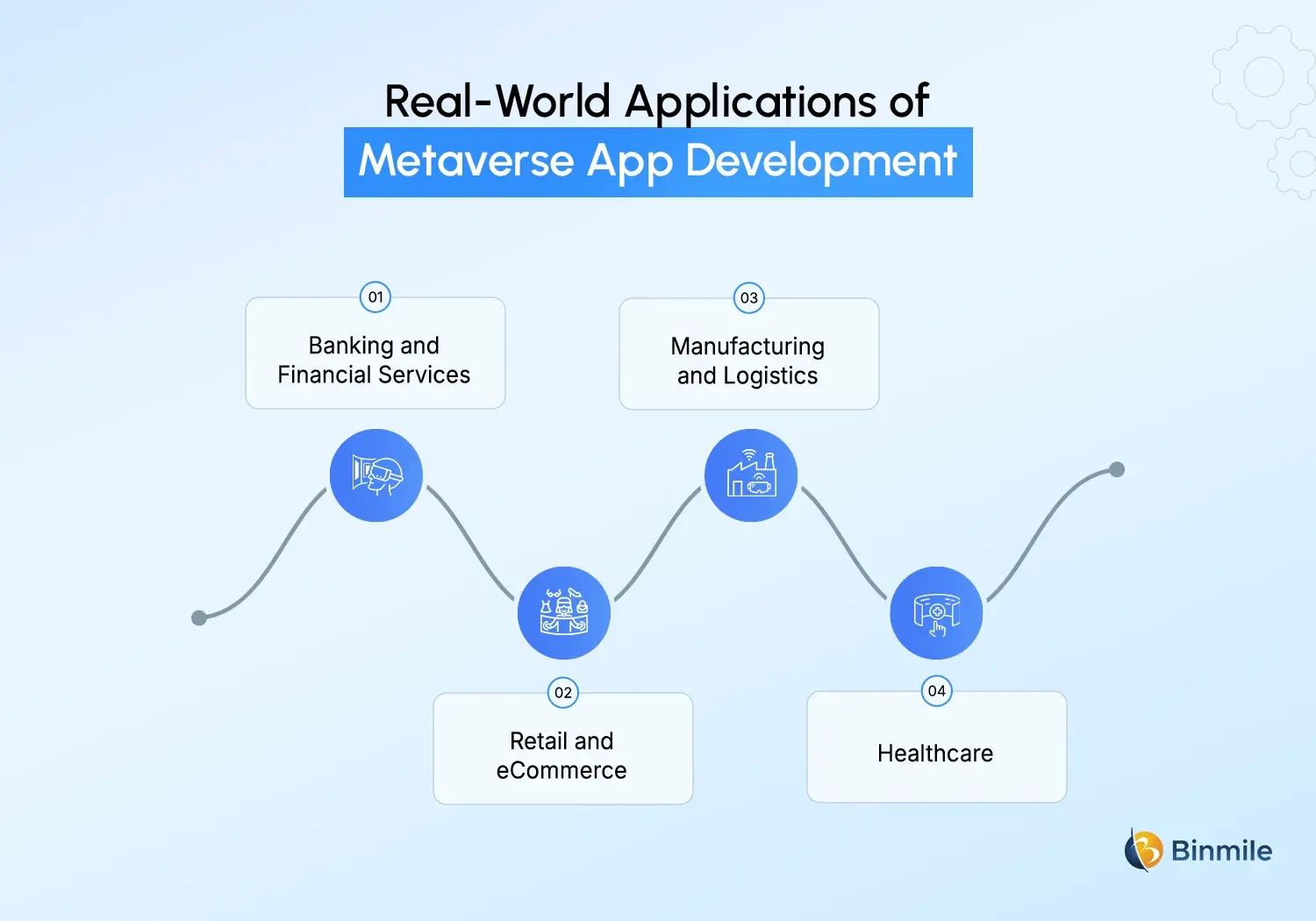
Banking and Financial Services
The Metaverse in banking enables virtual branches, immersive financial education, and secure digital interactions. Customers can familiarize themselves with bank services, grasp complicated financial products, and have advisor interactions in a more approachable and engaging environment. This bolsters trust and elevates customer satisfaction.
-
Retail and eCommerce
Retail and ecommerce brands harness metaverse platforms for virtual showrooms and customized shopping settings. Customers can deeply engage with products, delve into use case scenarios, and interact in real time with brands, aiding in the seamless integration of the physical and digital retail spaces. This leads to enhanced customer participation and boosts conversion rates.
-
Manufacturing and Logistics
Manufacturing and logistics organizations use digital twins and virtual simulations to monitor processes and fine-tune production lines. Thus, enhance visibility of the supply chain. Virtual environments reveal inefficiencies, minimize downtime, and enable preemptive measures to be taken in operations without real-world interruptions.
-
Healthcare
Healthcare providers implement metaverse solutions in medical training, therapy simulations, and patient education. Immersive environments support and facilitate the rapid development of medical skills for health practitioners. Additionally, interactive behavioral tools enable sophisticated simulations for patient education.
Across all industries, maximum value is achieved when metaverse application development is guided by clear objectives. Additionally, supported by reliable metaverse software development practices that align with the future of metaverse innovation.
Looking to build a scalable and secure metaverse platform that delivers real business outcomes?
How Enterprises Move Forward with Metaverse Innovation
As metaverse adoption accelerates, enterprises need partners who understand both technology and business context. This is where experienced software development services providers play a crucial role. The ability to design scalable platforms, integrate emerging technologies, and manage metaverse development costs efficiently determines long-term success.
Organizations working with teams like Binmile gain access to structured development frameworks, cross-industry expertise. Also, a practical approach to building secure, future-ready metaverse platforms. Rather than treating the metaverse as an isolated experiment, it becomes part of a broader digital transformation strategy that delivers tangible results.
With the right guidance, a metaverse development company can turn metaverse investments into sustained innovation, stronger customer relationships, and new revenue opportunities.
Frequently Asked Questions
The metaverse enables immersive engagement, real-time collaboration, and digital ownership. It helps businesses create interactive experiences, test ideas faster, and reach global audiences, making it a strong driver of innovation and long-term growth.
Retail, banking, manufacturing, healthcare, education, and real estate benefit the most. These industries use metaverse platforms for virtual experiences, training, simulations, and customer engagement that improve efficiency and user satisfaction.
The metaverse development cost for an MAAS platform depends on features, scalability, integrations, and security needs. Costs can range from mid-five figures to higher, based on customization and infrastructure requirements.
It enhances customer engagement, improves collaboration, reduces training costs, and enables digital experimentation. Enterprises gain faster innovation cycles and data-driven insights through immersive and interactive digital environments.
The highest ROI comes from use cases like virtual training, digital twins, immersive commerce, and remote collaboration. These areas reduce operational costs while improving productivity and customer experience simultaneously.