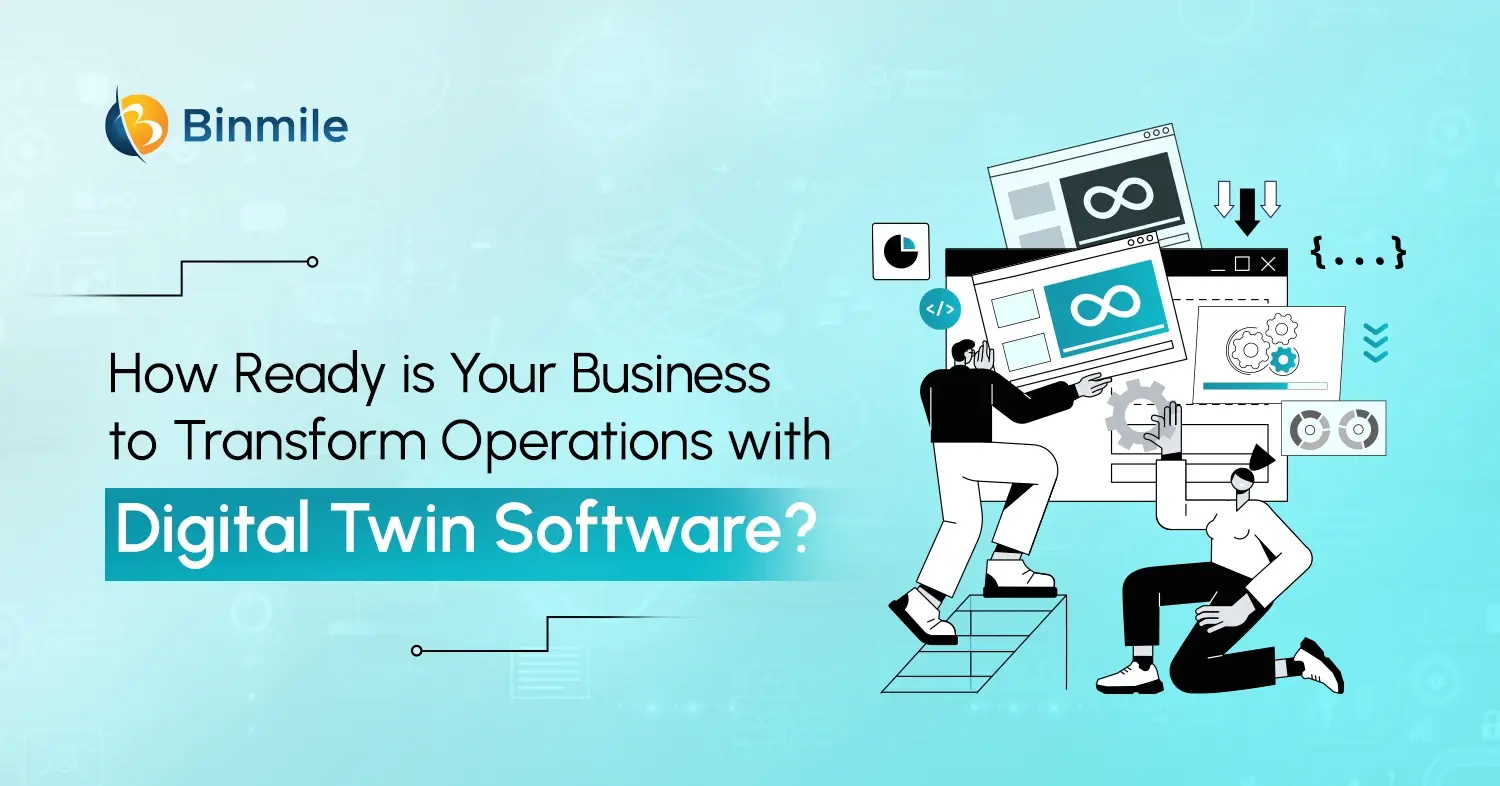
Manufacturers, retailers, logistics providers, and technology-driven enterprises are investing heavily in digital replicas of real-world systems. According to a report by Fortune Business Insights, the global digital twin market is projected to reach $259.32 billion by 2032, growing rapidly as companies look for better ways to simulate operations and predict outcomes before making real-world changes.
Most digital twin software solutions can be seen as another technology tool. But their growing interest stems from an increasing penchant for data-centric decision making and predictive operations. Companies want smart enterprise management. The need for predictive systems that help visualize operations, identify issues early, and optimize without the expense of costly mistakes is increasing.
This blog discusses the digital twin software technology, what enterprises see as its worth, what a digital twin can do for your business, the industries that are using the technology, and what signs indicate that your organization is ready to adopt it. Also included is the digital twin methodology, principal obstacles to implementation, and the business case for adopting modern digital twin solutions.
What is Digital Twin Software?
Digital twin software is a technology platform that creates a virtual representation of a physical object, system, or process. The sensors that are connected to the system, as well as the IoT (Internet of Things) devices and the Digital Twin modules, continuously provide their virtual counterpart with real-time updates, allowing the software to model the actual system.
Imagine this as a fully functional digital model. Every time the system changes, its virtual counterpart is updated instantly. For example, a factory can digitize its production line and create a virtual counterpart. Management can monitor the machinery, identify areas where production can be improved, and test new procedures, all without interfering with the real production process.
The most important Digital Twin development tool is the Integrator, which fuses IoT (Internet of Things) sensors, advanced analytics, simulation, and cloud-based digital twin technologies. This virtualization process enables engineers and analysts to interact with the process and conduct studies that can identify failures before the system breaks.
The most advanced digital twin software can model anything from individual pieces of equipment to an entire supply chain, and this is of immense value for organizations that are undergoing digital transformation at an enterprise level.
Why Enterprises are Investing in Digital Twin Software
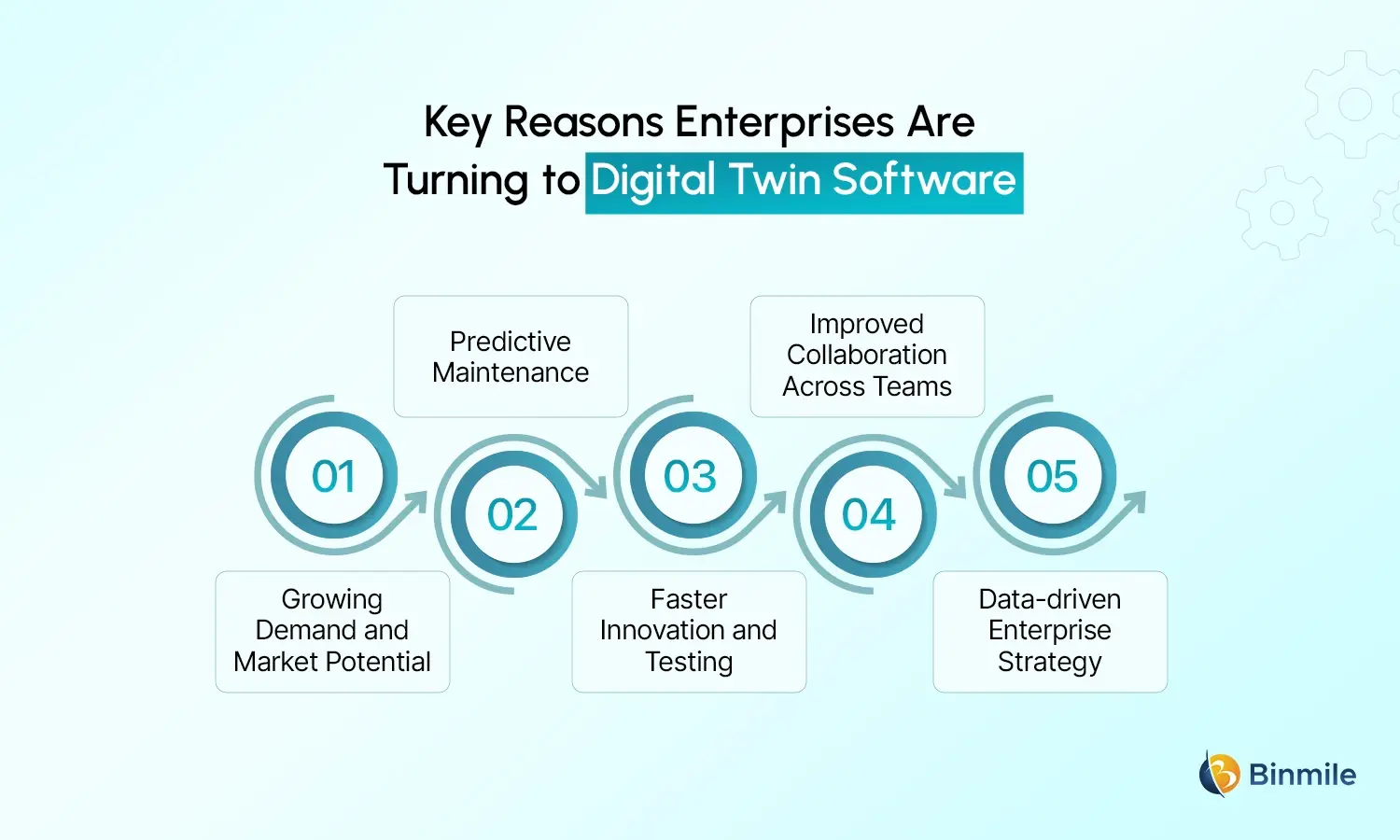
Enterprises are adopting a digital twin because they offer deeper visibility into operations and enable smarter decision-making.
-
Real-Time Operational Visibility
A digital twin allows companies to monitor physical systems continuously. Instead of reacting to problems after they occur, organizations can detect anomalies early and take preventive action.
-
Predictive Maintenance
With the help of AI models and historical performance data, digital twin technology can predict equipment failures before they happen. This reduces downtime and prevents expensive disruptions.
-
Faster Innovation and Testing
Testing operational changes in real systems can be expensive and risky. A digital twin allows companies to simulate changes safely. Engineers can experiment with new workflows, layouts, or machine settings without affecting production.
-
Improved Collaboration Across Teams
Operations, engineering, and management teams can analyze the same digital model. This improves coordination and allows faster decision-making.
-
Data-driven Enterprise Strategy
A digital twin helps transform raw operational data into actionable insights. This is why they are becoming a core component of the future of digital twin technology strategies across industries.
What are the Key Business Benefits of a Digital Twin
The value of a digital twin becomes clearer when businesses begin using it across operations. Below are some of the most significant benefits of a digital twin.
-
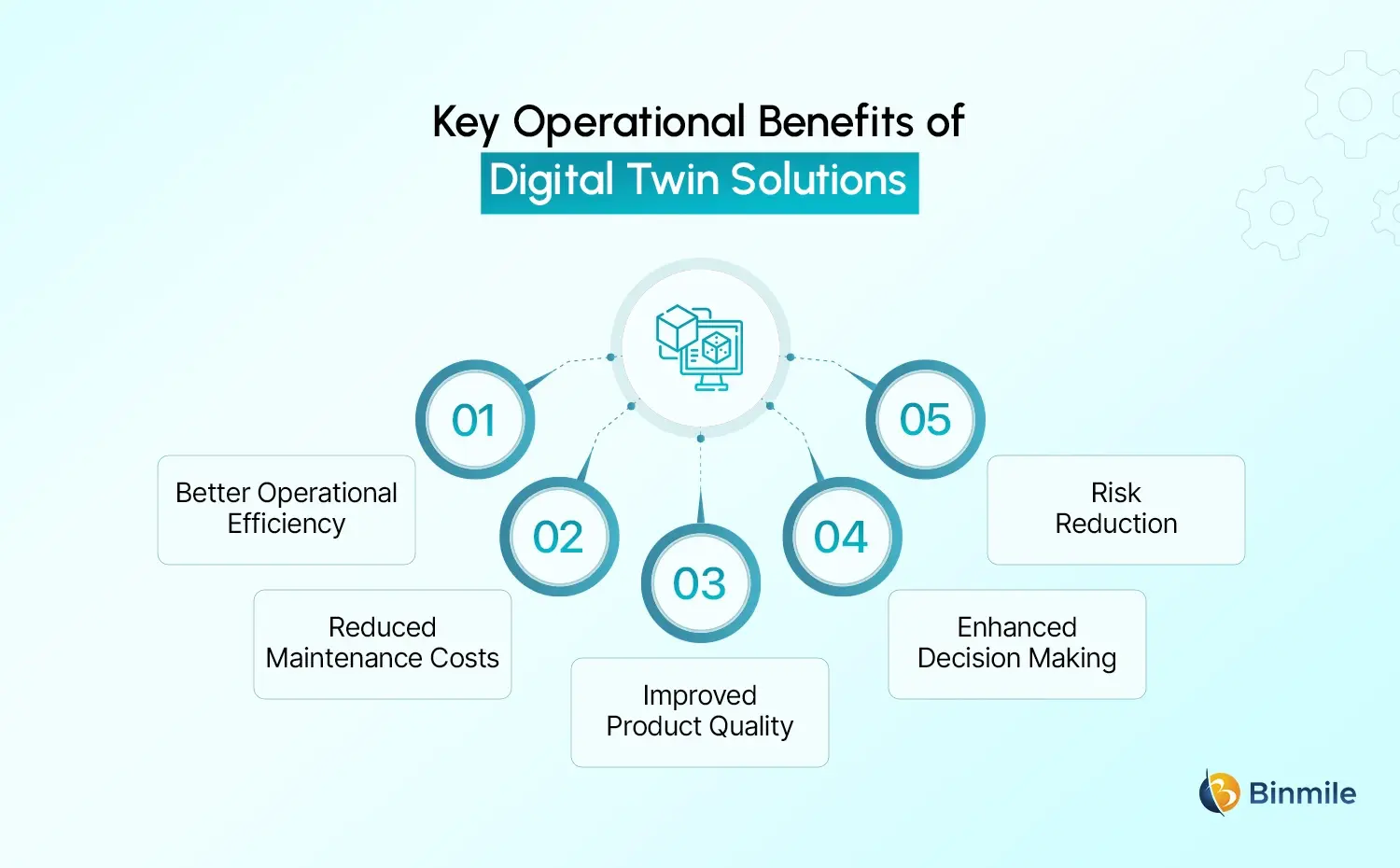
Better Operational Efficiency
The use of a digital twin offers a unique opportunity to track real-time changes of the system’s physical components. There is no longer a need to respond to changes after they occur. Instead, a digital twin allows companies to identify changes and respond to them proactively.
-
Reduced Maintenance Costs
Digital twin technology, coupled with artificial intelligence and the analysis of historical data, allows companies to identify potential breakdowns of equipment prior to their occurrence. As a result, there is a decrease in operational interruptions and a reduction in unplanned breakdowns.
-
Improved Product Quality
Changes in operating systems can be costly and present a significant risk to the business. A digital twin provides a means of implementing those changes in a simulated environment. Engineers can test various workflows, configurations, or operating parameters of equipment without disrupting the ongoing business processes.
-
Enhanced Decision Making
The collaboration and integrated decision-making of the operational, engineering, and managerial teams are improved by the use of a single digital model.
-
Risk Reduction
For the operational digital twin, the transformation of data is critical to the success of digital twin technology. Cross-sectional digital twin technology strategies data is operational in analytics for digital twin technology.
What are the Industries Getting the Most Value from Digital Twin Technology
While a digital twin can benefit many sectors, some industries are already seeing major advantages.
-
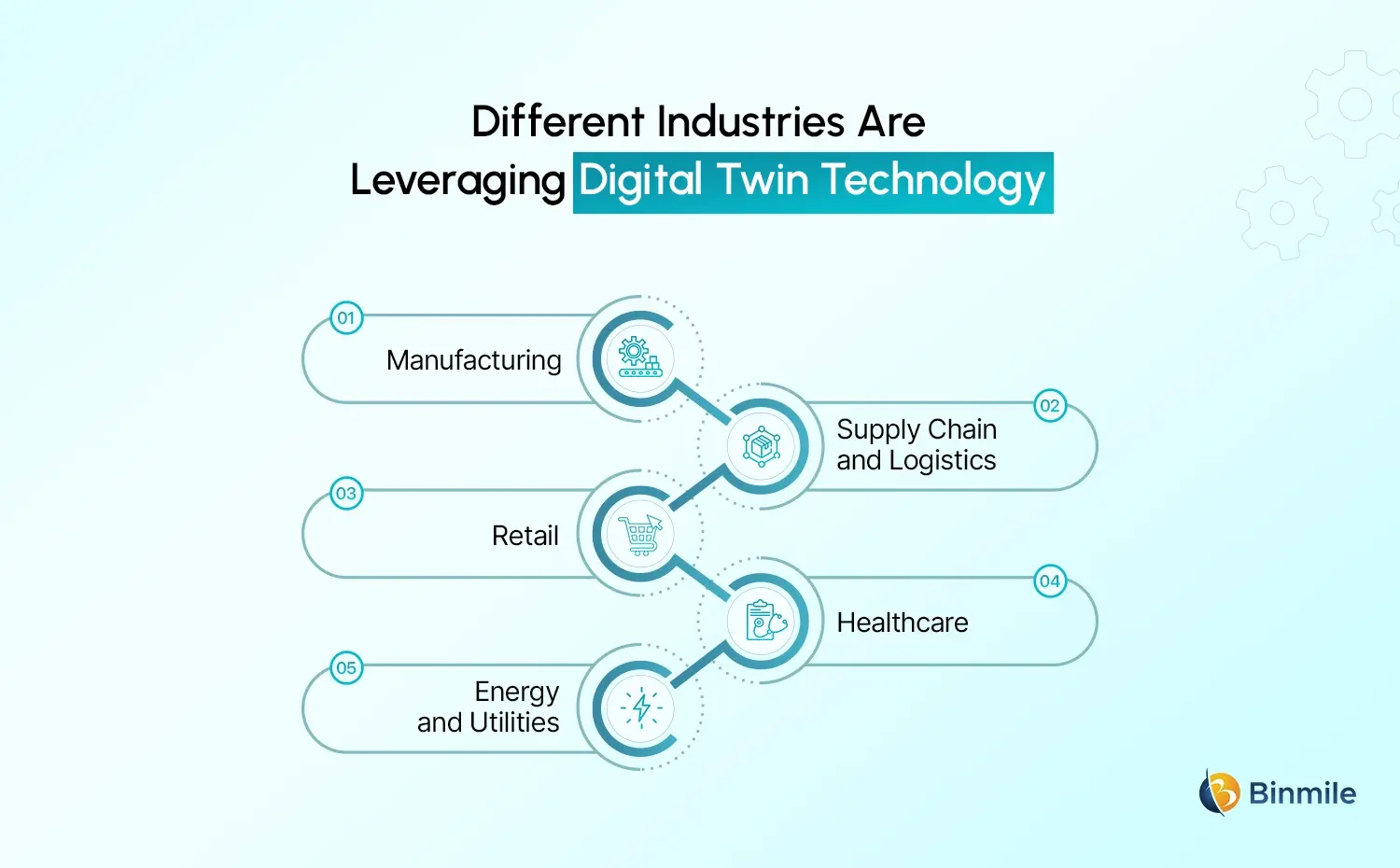
Manufacturing
Digital twin manufacturing software allows factories to track machine status, optimize production schedules, and minimize downtime. In addition, engineers can model factory configurations and the operational behavior of equipment to aid in the improvement of productivity.
-
Supply Chain and Logistics
A digital twin technology in Supply Chain Management is gaining traction, as businesses model digital representations of warehouses, transit, and distribution systems. With these models in place, they can better predict integration and streamline logistic planning.
-
Retail
Digital Twin Technology is utilized in retail to gain insights into consumer patterns, store designs, and inventory. This allows retailers to improve merchandise placement, optimize inventory, and enhance the overall shopping experience.
-
Healthcare
A digital twin is being investigated in hospitals for the monitoring of medical devices and the modeling of patient care. These systems assist in the operational efficiency of health care and the planning of care.
-
Energy and Utilities
A digital twin is used in the energy sector to monitor the infrastructure of power plants and grid systems. Real-time data is utilized to identify failures and optimize surveillance of energy distribution.
What are the Types of Digital Twin Technology
A digital twin can represent different levels of complexity depending on what organizations want to model. The following table explains the types of digital twin technology commonly used by enterprises.
| Type of Digital Twin | Description |
|---|---|
| Component Twin | Represents a single part or component of a machine, such as a motor or pump. |
| Asset Twin | Models a complete machine or equipment made of multiple components. |
| System Twin | Represents interconnected machines or production lines working together. |
| Process Twin | Simulates an entire operational process, such as manufacturing or supply chain operations. |
What are the Signs Your Business Is Ready for Digital Twin Software
Not every organization needs a digital twin immediately. However, certain conditions indicate that adopting the technology could deliver strong value.
-
Your Operations Generate Large Volumes of Data
Your systems already capture a considerable amount of operational data via sensors or software platforms, and you already have the groundwork for the implementation of a digital twin.
-
Your Organization Struggles with Operational Inefficiencies
Companies that have consistent and recurrent bottlenecks, equipment failures, or interruptions in the supply chain are candidates for digital twin simulation and predictive analytics.
-
You are Pursuing Enterprise Digital Transformation
A digital twin can be integrated within a broader enterprise digital transformation framework for companies that are already investing in cloud technologies, artificial intelligence as a service, and the Internet of Things.
-
Your Business Requires High Reliability
Digital twin technology is used in industries such as manufacturing, logistics, and energy to minimize operational downtimes and enhance the reliability of systems.
-
You are Investing in Innovation and Product Development
A digital twin can be used in the pre-launch phase of software that controls a complex physical system to test and refine the product digitally before the actual product is developed.
Looking to implement digital twin solutions that improve operational visibility and predictive insights?
What is the Digital Twin Implementation Process
Deploying a digital twin requires a structured approach. The digital twin process typically involves the following steps.
-
Identifying the Right Assets or Processes
Organizations begin by choosing the systems they wish to model. These may include machines, production lines, logistic networks, or customer environments.
-
Data Integration and Connectivity
The IoT sensors and enterprise software systems are integrated into the twin platform. Data pipelines are built to ensure the seamless flow of real-time information to the digital twin.
-
Building the Digital Model
With the digital twin development tools, engineers will have the means to construct the virtual equivalent of the physical system. This entails the combination of structural modelling, the rules governing the system’s behaviours, and the defining parameters for performance.
-
Simulation and Analytics Setup
Once the model is constructed, the simulation frameworks and analytical systems are added. These systems are what differentiate one organization from the other, as they provide the means to test operational scenarios.
-
Continuous Optimization
A digital twin improves with exposure to diverse scenarios. Organizations refine their models, improve their simulations, and broaden the coverage of additional assets.
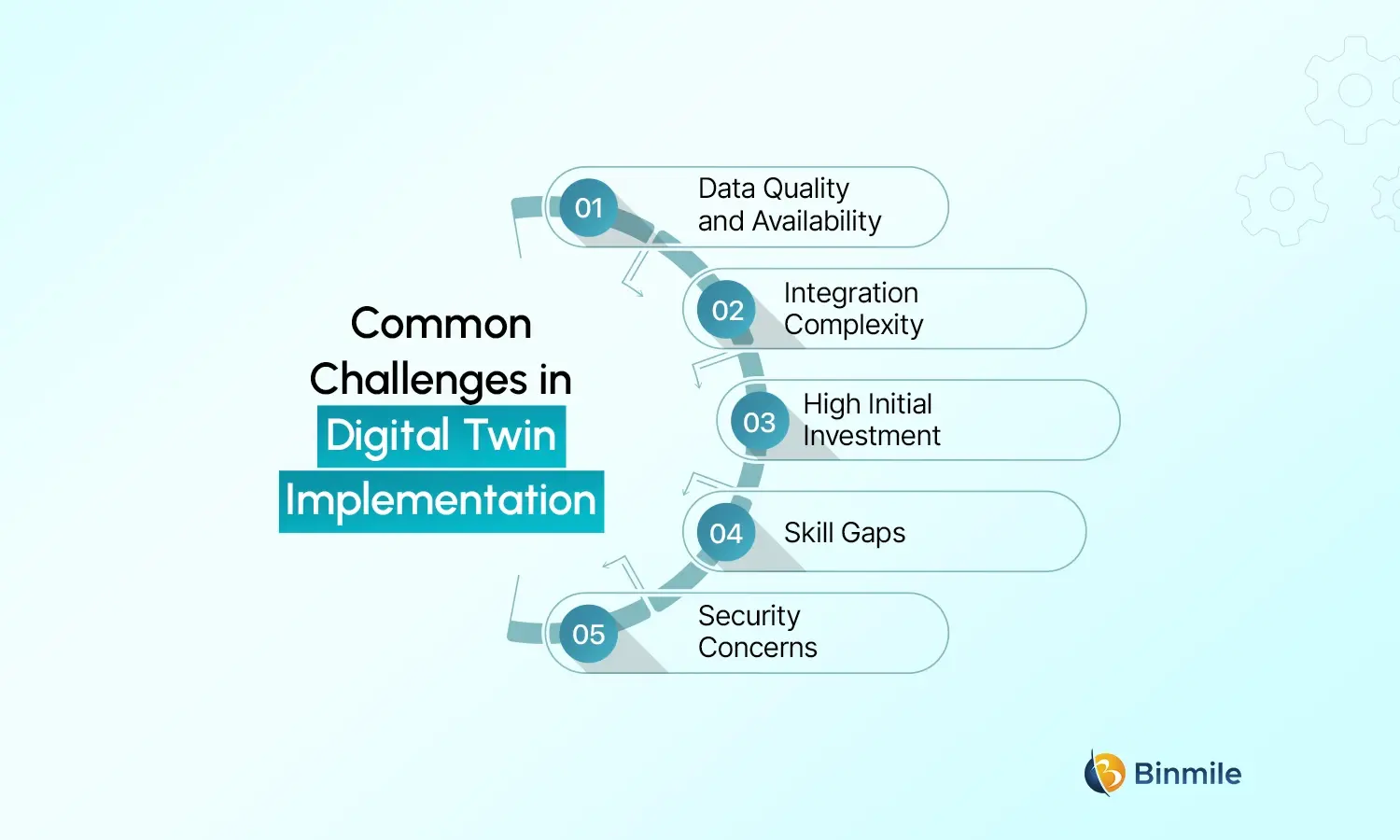
What are the Common Challenges in Implementation
Despite its benefits, implementing a digital twin can present several challenges.
-
Data Quality and Availability
The precision of a digital twin is reliant upon the accuracy of the underlying data. Simulation accuracy may suffer if there is inconsistent sensor data or if systems are fragmented.
-
Integration Complexity
Many companies still rely on using several legacy systems. The integration of these systems with the best digital twin software technology platforms can be very development-intensive.
-
High Initial Investment
The initial costs are due to the required infrastructure, sensors, cloud platforms, and development tools. However, the operational gains and efficiencies achieved in the long term are typically worth the initial costs.
-
Skill Gaps
Digital twin implementation requires specialized knowledge in several fields, such as data analytics, simulation modeling, and systems integration. Organizations may need to consider investing in learning or external partnerships.
-
Security Concerns
A digital twin to operational technology systems introduces additional concern for cybersecurity, as there are operating infrastructure and digital system interconnections.
Planning your next step in enterprise digital transformation with AI and digital twins?
Supporting Your Digital Twin Journey
A digital twin represents a growing category of technology becoming integral for modern businesses. The operational insights, efficiency, and resiliency toward disruptions gained from their use solidify their organizational value.
Engineering, including cloud and analytics, and software architecture at scale determine success in implementing this technology. In such instances, technology partners steeped in experience become invaluable.
Digital transformation programs of a complex nature often require technology consultants familiar with digital twin technology, Artificial Intelligence (AI) augmentation of processes, and enterprise platform construction. Organizations are outfitted with experts in software development, software product development, and intelligent automation, with the capacity to construct digital twin ecosystems at an operational scale.
Organizations interested in advanced operational intelligence seek partners such as Binmile, whose expertise in enterprise transformation, AI systems, and digital platforms allows organizations to develop and implement scalable digital twin ecosystems that sustain innovation over time.
Frequently Asked Questions
Digital twin software is used to create a virtual model of physical assets, systems, or processes. It helps organizations monitor performance, simulate operational scenarios, predict failures, and optimize workflows using real-time data and advanced analytics.
A digital twin analyzes real-time operational data and simulates different scenarios. This helps businesses identify inefficiencies, optimize processes, predict maintenance needs, and make better decisions that improve productivity and reduce downtime across operations.
Organizations typically need IoT sensors, data integration platforms, cloud infrastructure, analytics tools, and visualization dashboards. These technologies work together to collect real-time data, build digital models, and run simulations for operational analysis.
Implementation costs vary depending on the scale of deployment. While initial investments may include sensors, cloud platforms, and development tools, the long-term benefits, such as reduced downtime, improved efficiency, and predictive maintenance, often outweigh the cost.
Deployment timelines depend on project complexity and infrastructure readiness. Small implementations may take a few months, while enterprise-wide digital twin deployments involving multiple systems and integrations can take longer.
Yes. Most modern digital twin platforms are designed to integrate with ERP, CRM, IoT platforms, and manufacturing systems. Integration enables real-time data exchange, which improves the accuracy and usefulness of the digital twin model.